
Cebu Starts Swimming Again Wearing Ingenious Device Built Especially for An Injured Turtle
Guest Contributor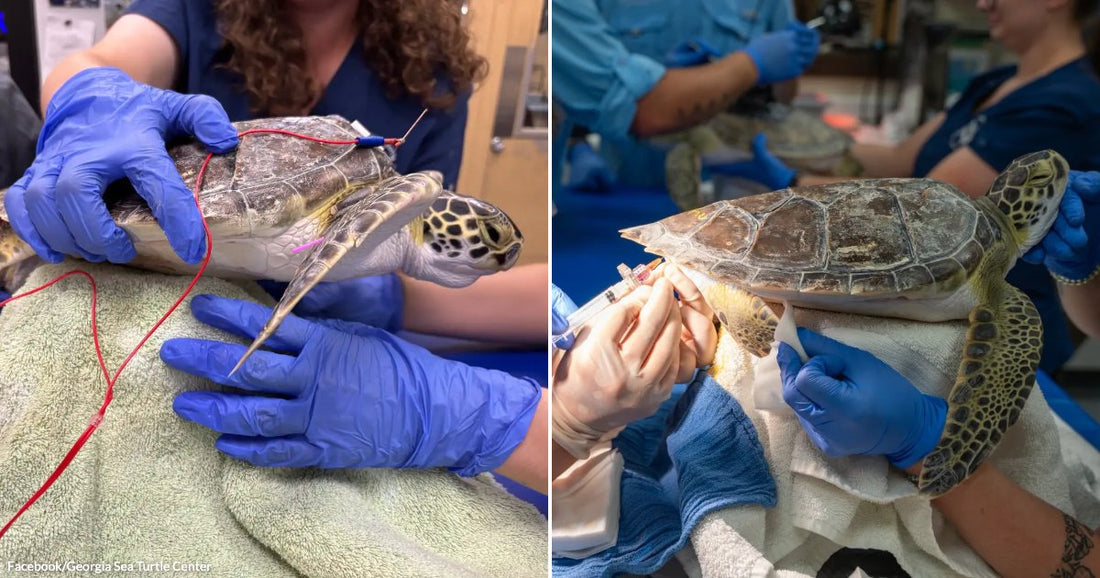
At the Georgia Sea Turtle Center on Jekyll Island, one young sea turtle is getting a second chance at life with help from veterinarians, rehabilitation experts, and a custom 3D-printed harness. The story of Cebu, a juvenile green sea turtle injured in a boat strike, is a powerful reminder of how veterinary innovation, patient persistence, and compassionate care can work together in modern sea turtle rescue.
Cebu arrived at the center in April after being struck by a boat, a common but devastating hazard for marine turtles. The collision left Cebu with severe spinal cord trauma that compromised the ability to swim. Staff at the Georgia Sea Turtle Center, who regularly care for injured turtles along the Georgia coast, quickly realized that this patient would need particularly intensive and creative support.

The director of the center, Jaynie L. Gaskin, described how critical Cebu’s condition was early on. The turtle was so weak that they could not safely swim in a tank at normal water depth. Instead, Cebu spent an extended period in very shallow water, and at first could not be placed in water at all. That level of fragility shows how serious spinal injuries are for an animal whose entire life depends on navigating the ocean, surfacing to breathe, and using powerful flipper strokes to move and feed.
Over time, veterinary care began to pay off. With close monitoring and specialized treatment, Cebu gradually stabilized. The Georgia Sea Turtle Center has a reputation for combining evidence-based medicine with careful, individualized care, and this case called for a wide toolkit. The team shared updates on Cebu’s care with supporters through social media, offering a window into what advanced wildlife rehabilitation can look like.

Facebook/Georgia Sea Turtle Center
By July, the center reported that Cebu was well enough to begin receiving weekly acupuncture treatments. According to their update, these sessions were designed to help improve flipper mobility after the boat strike injuries. Acupuncture for animals may sound surprising at first, yet it has become one more tool that some veterinarians use to support nerve function, circulation, and comfort for patients dealing with complex trauma.
Cebu’s shell injuries were also a focus. The plastron and carapace, the lower and upper parts of the shell, had been damaged in the collision. Healing such wounds on a turtle presents unique challenges since the shell not only protects vital organs but also plays a role in buoyancy and movement. To support this recovery, the team relied on cold laser therapy along with products like RediHeal and Silver Honey to promote tissue repair. As the shell continued to heal, Cebu also reached a major milestone. They were upgraded from a white tub to a tank, signaling improved stability and strength as part of their sea turtle rehabilitation journey.

Facebook/Georgia Sea Turtle Center
The care plan did not stop there. A short time later, another update shared that Cebu received stem cell therapy. This treatment can help address serious injuries by supporting the repair of damaged tissues and reducing inflammation, both crucial for spinal cord trauma. For a turtle that might one day return to the ocean, protecting and restoring nerve function and mobility is central to any hope of independent survival.
With these medical treatments underway, Cebu’s team turned to the next phase: physical therapy in deeper water. Relearning normal swimming patterns is essential for a turtle that has suffered spinal and flipper injuries. The goal was to recreate a more natural environment where Cebu could practice engaging their muscles, especially the front flippers, and begin rebuilding strength and coordination.
A major obstacle quickly appeared. Cebu still could not maintain proper buoyancy and position in deeper water without help. Flotation devices or a human handler could keep the turtle upright and near the surface, but both options had drawbacks. Being held for long periods was clearly stressful for Cebu. At the same time, long-term use of traditional flotation supports can place pressure on a turtle’s shell, which is already fragile and healing after trauma.
Instead of accepting that limitation, the Georgia Sea Turtle Center’s veterinary and conservation teams collaborated to design an alternative. They decided to create a fully customized 3D-printed harness specifically tailored to Cebu’s needs. The center already had 3D-printing capabilities within its conservation team, and for this case, those technical skills became a lifeline.
Gaskin explained that while the center had used harnesses for other patients before, Cebu required something entirely unique. The result was a lightweight harness that sits on top of the turtle’s back while a small flotation element rests beneath the body. Clickable buckles similar to those found on a standard pet harness keep the device in place, holding Cebu in a stable position without rigidly restricting movement.
When Cebu’s team tested the harness in the water, they reported encouraging early results. The new device seemed to provide just enough support while also letting Cebu move more freely. Crucially, it allowed the rehabilitation staff to adopt a more hands-off approach during physical therapy. That reduction in direct handling lowers stress for the turtle and frees up caregivers to closely observe swimming behavior and make adjustments as needed.
The center described how the harness is giving Cebu more chances to move independently, strengthen those front flippers, and practice natural swimming motions. At the same time, the added buoyancy helps ensure that Cebu can reach the surface to breathe without excessive strain. This combination of safety, independence, and controlled support could play a key role in building the endurance and coordination that life in the wild demands.
Although progress is evident, the team is careful not to overstate the outcome. Gaskin emphasized that Cebu still faces a long road ahead, and the possibility of eventual release into the wild remains uncertain. The prognosis is considered guarded, which reflects the seriousness of the initial injury and the many unknowns in long-term recovery from spinal trauma in sea turtles.
Yet the measured optimism in the team’s updates is hard to miss. From acupuncture and cold laser therapy to stem cell treatments and a custom 3D-printed harness, every intervention reflects an effort to give Cebu the best chance at a meaningful recovery. For people who care about ocean wildlife, this blend of medical science and compassion illustrates how far sea turtle rescue has come.
I found this detail striking: the same technology used to prototype consumer gadgets or engineering parts is now helping a single injured turtle regain the ability to swim. In practical terms, the harness is a tool. Symbolically, it highlights how innovation and empathy can intersect in wildlife medicine.
Even if Cebu never returns to the open ocean, the lessons learned from this case may benefit future patients facing similar injuries. Custom supports, gentle physical therapy in deeper water, and advanced treatment methods can all contribute to higher survival rates and better quality of life for sea turtles impacted by human activity, including boat strikes and entanglement. For now, Cebu continues to receive attentive care, and each small improvement in strength and mobility is a step toward whatever the next chapter will be.
Read more at https://www.goodgoodgood.co/articles/sea-turtle-rescue-3d-printed-harness-cebu