
9/11 First Responders Survived the Attacks Only to Face Cancer and Deadly Illness Years Later
Guest Contributor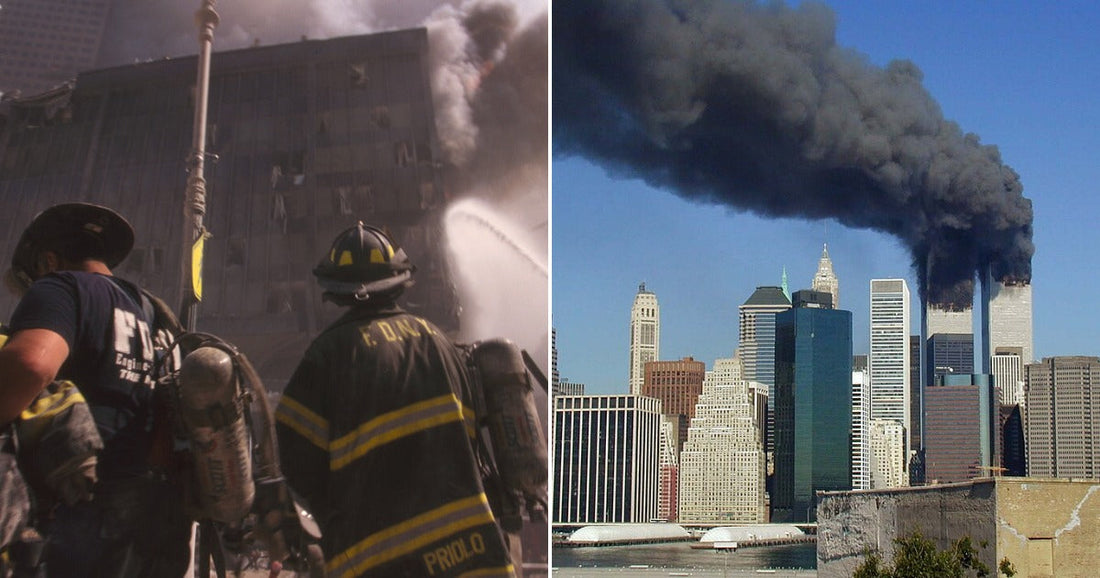
In the years since the terrorist attacks of September 11, 2001, a quieter catastrophe has unfolded among the 9/11 first responders who rushed into danger. Many of these firefighters, police officers, paramedics, and recovery workers survived that day, only to develop cancer, severe respiratory illnesses, and cognitive disorders long after the smoke cleared. Their story is not only about bravery and sacrifice, but also about a long, painful fight for recognition and support from the government they served.
When the planes struck the Twin Towers, New York City mobilized on a massive scale. More than 100 EMS units and private ambulances converged on Lower Manhattan. The NYPD and Port Authority deployed over 2,000 officers to secure the area. The FDNY sent at least 214 units, including over a hundred engines and dozens of ladder trucks, rescue companies, squad companies, and marine units, as they worked urgently to save lives in an environment of chaos and fear.

That day claimed nearly 3,000 lives in New York City alone, including 343 firefighters and paramedics, 23 NYPD officers, and 37 Port Authority officers. Over time, it became clear that the death toll did not end when the fires were finally extinguished. A growing number of 9/11 first responders have since been diagnosed with a range of serious illnesses directly tied to their exposure at Ground Zero, and many have died years after the attacks.
Studies have documented what survivors and their families had already begun to suspect. In 2020, Mount Sinai researchers reported significantly elevated cancer rates among workers who were exposed at the World Trade Center site. Police and other recovery workers faced cancer at about a 9 percent higher rate than the general population. Their risk of prostate cancer appeared 25 percent higher, leukemia 41 percent higher, and thyroid cancer an astonishing 219 percent higher.

Physical health was not the only concern. Another study, presented at the Alzheimer’s Association International Conference in 2020, found high rates of cognitive impairment among 9/11 responders. Many had what researchers described as a “brain age” roughly 10 years older than expected. This pattern suggested that responders might face heightened risks of dementia and Alzheimer’s disease and that these conditions could emerge much earlier in life than usual. As Dr. Benjamin Luft of the Stony Brook WTC Health and Wellness Program observed, the environmental exposures and intense psychological pressures surrounding 9/11 have had a deeply insidious effect on responders’ long-term health.
One of the most visible signs of this damage is the so-called “World Trade Center cough,” a severe respiratory condition that many responders developed after inhaling the toxic dust and smoke that enveloped Ground Zero. According to Dr. Michael Crane of the World Trade Center Health Program at Mount Sinai, some patients abruptly wake up unable to breathe. He described the air they were exposed to as a thick, terrible mix of burning jet fuel, plastics, metal, fiberglass, and asbestos. The phrase “witch’s brew” captured how unnatural and hazardous that atmosphere was for anyone working at the site.

As more responders fell ill in the years following 9/11, legal battles began to unfold. One early lawsuit started with a single police officer who developed leukemia after his service at the site. Attorney David Worby agreed to represent him at a moment when many considered it unpatriotic to challenge official assurances about the cleanup or the safety of the air. What began as one case soon grew into a class-action suit with thousands of plaintiffs.
The Environmental Protection Agency became a key focus of this litigation. Internal concerns about lingering asbestos, acid gases, volatile organic compounds, and heavy metals were raised as early as September 12, yet they were not reflected in public statements. On September 18, EPA head Christine Todd Whitman told New Yorkers the air did not pose a health hazard and that the city’s air and water were safe. Later, an EPA Inspector General report concluded that the agency did not have sufficient data to support such a sweeping reassurance and that the White House Council on Environmental Quality had encouraged more positive, less cautious language.

Ultimately, Worby filed suits against the City of New York, the Port Authority, and the EPA on behalf of workers exposed to carcinogenic dust. The legal struggle was steep, but the case resulted in a settlement of around $1 billion for roughly 8,000 clients. For many of them, the central grievance was that their illnesses were not only the legacy of terrorism but also the result of preventable failures and misleading assurances from institutions they trusted.
The fight for help did not end in the courtroom. Politically, the battle for long-term medical care and compensation was protracted and often contentious. The James Zadroga 9/11 Health and Compensation Act became a turning point. Named for a firefighter who died after inhaling toxic dust at Ground Zero, the act provided billions of dollars for medical treatment and support for 9/11 survivors and responders. Even so, its passage in 2011 was delayed by political disputes over cost.
Public pressure helped tip the balance. In 2010, comedian Jon Stewart dedicated an entire episode of The Daily Show to the issue, sharply criticizing lawmakers for stalling the Zadroga Act. His advocacy highlighted what many responders saw as an “outrageous abdication” of responsibility toward those who had risked everything. The act eventually passed and was extended in 2015 for 75 years, a major victory for long-term health coverage.
Yet one essential piece of the support structure, the September 11th Victim Compensation Fund, remained at risk. By 2019, the fund was in danger of running out of money even as more responders received devastating diagnoses. Stewart again joined the cause, this time partnering with retired NYPD detective Luis Alvarez, who was battling colorectal cancer linked to his service at Ground Zero.
Alvarez, already gravely ill, traveled to Capitol Hill to testify. He explained that the fund was not a windfall but a basic guarantee of care and security for families facing catastrophic medical bills and uncertain futures. His words, that he was “nobody special” and had simply done what all the other responders did, underscored the collective nature of the sacrifice and the shared burden of its consequences.
At the same hearing, Stewart condemned the sparse attendance by members of Congress. He pointed to the packed rows of sick and dying responders behind him and contrasted that with the nearly empty seats in front of him. His remarks framed the room as a stark metaphor for how difficult it had become to secure health care and benefits for 9/11 first responders.
The testimony of Alvarez and others had a powerful effect. The next day, lawmakers passed the Never Forget the Heroes Act, which extended the Victim Compensation Fund through 2090. The act was signed into law shortly thereafter, establishing a long-term commitment to support those whose lives were irrevocably altered by their service.
Even with these legal and legislative wins, the health crisis among 9/11 first responders is far from resolved. Medical experts warned early on that many cancers can take decades to develop. By 2020, hundreds of New York City firefighters had died of 9/11-related illnesses, and the NYPD had lost more than 200 officers to such diseases since 2011. Hundreds more continue to live with cancer and other chronic conditions that may worsen with time.
For many responders, the toll has been cumulative and relentless. Richard Dixon, who served with the NYPD on 9/11, pointed out that while dozens of officers were killed in the attack itself, far more have died since from related illnesses. The story of Luis Alvarez, who passed away in June 2019 just weeks before the fund he fought for was secured, represents countless others who did their duty at Ground Zero and later paid the ultimate price.
As the years pass and collective memory shifts, the phrase “Never Forget” carries new layers of meaning. It asks people not only to remember the shock and grief of that day, but also to recognize the ongoing health crisis facing 9/11 first responders. Their sacrifice did not end when the sirens stopped. It continues in hospital rooms, medical studies, and the quiet resilience of families living with loss.
Remembering 9/11 now means acknowledging both the immediate heroism of the response and the long, difficult journey that followed. It means honoring those who rushed in, listening to the science that documents their suffering, and supporting the systems that were finally created to care for them. Their courage remains one of the defining stories of that day, and the responsibility to uphold it belongs to everyone.