
A Life Saved by Innovation: Lung Transplant Journey with Northwestern Medicine
Guest Contributor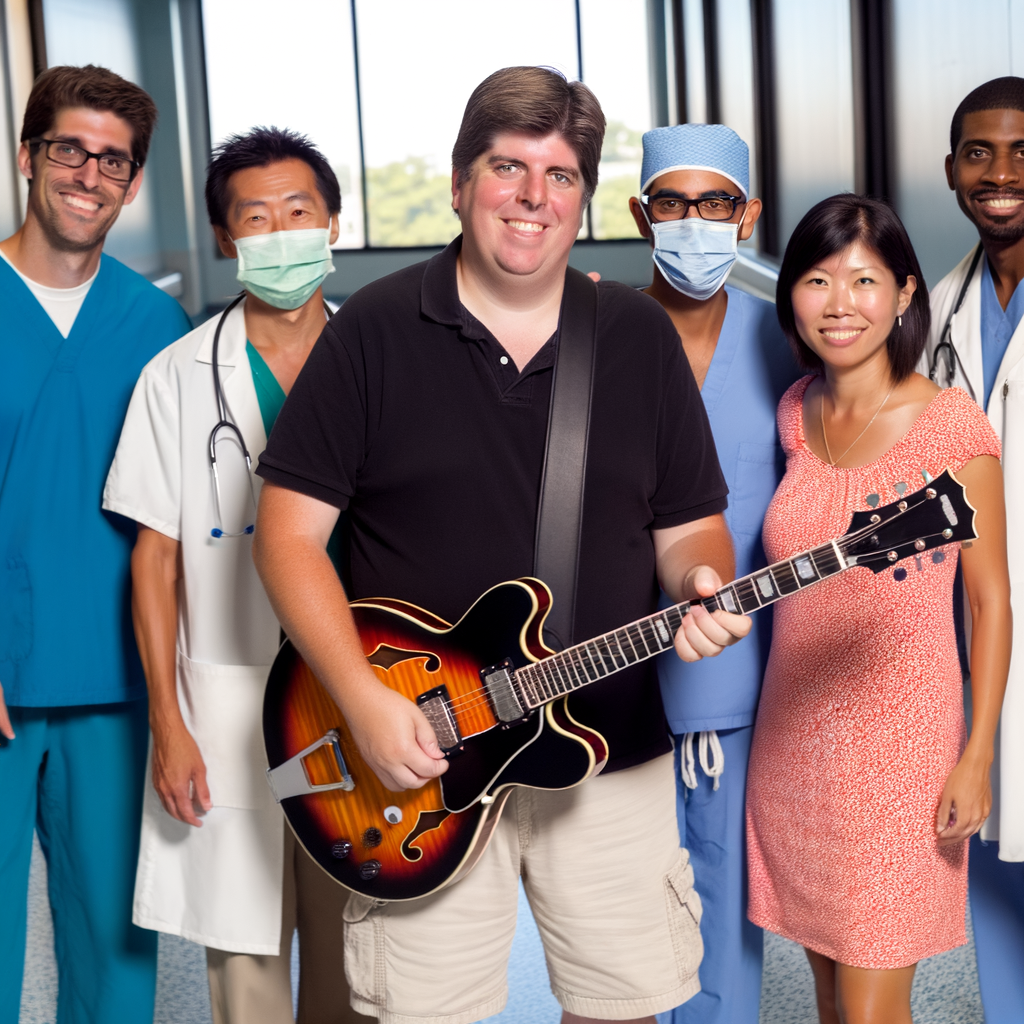
When Dean Comstock picked up a guitar at age nine, “Sweet Home Chicago” quickly became one of his favorite songs. Nineteen years later, the tune would take on a profound new meaning. Diagnosed with stage 4 lung cancer at just 28, Dean’s journey from Syracuse, New York, to Chicago wasn’t just a change of scenery—it was a fight for survival. His story, centered around a groundbreaking double-lung transplant, highlights the intersection of medical innovation, music, and hope.

Dean’s health crisis began in October 2023 with a persistent cough. Initial suspicions pointed to pneumonia or acid reflux, but by August 2024, the diagnosis was devastating: terminal lung cancer. With no history of smoking and an active life juggling three jobs, Dean was blindsided. His condition deteriorated rapidly, requiring supplemental oxygen and leaving few treatment options.

It was Dean’s mother, Jill Comstock, who first saw a glimmer of hope. Having undergone her own lung transplant in 2021 for pulmonary fibrosis, she reached out to her medical team. They informed her of a unique clinical trial at Northwestern Medicine in Chicago—one of the only programs in the country offering lung transplants to patients with terminal lung cancer. The trial, known as DREAM, represented a lifeline where few existed.
In March 2025, Dean arrived at Northwestern Memorial Hospital for evaluation. Under the care of Dr. Ankit Bharat, chief of thoracic surgery and director of the Canning Thoracic Institute, Dean was approved for the transplant. On May 8, he was listed for a double-lung transplant, and just eight days later, he received his new lungs.
Two months after surgery, Dean and his wife McKayla, a music teacher at Jordan-Elbridge High School, returned to their shared passion. In a clinic exam room in Chicago, Dean played guitar while McKayla sang “Sweet Home Chicago” for the very team that had saved his life. The performance was more than a thank-you—it was a celebration of life, resilience, and the city that gave him a second chance.
“The song has always been one of my favorite songs to play, and I really never knew why since I’m from Syracuse, New York,” Dean said. “But now that a team of surgeons, doctors and nurses in Chicago saved my life, the city and the song will always hold a special place in my heart.”
Dean will remain in Chicago for a year following his transplant to stay close to his medical team. He expressed deep gratitude for the donor who gave him new lungs, as well as his family, community, and care providers. “I’m so thankful to be able to breathe fresh air every day. I’m going to smell the roses a little bit more and enjoy life. Once you go through something like this, you learn how precious life really is,” he shared.
Dean’s case also sheds light on a troubling trend: a rise in lung cancer among young adults with little or no history of smoking. According to Dr. Bharat, “On a daily basis, we’re seeing more young people being diagnosed with lung cancer.” While smoking remains a significant risk factor, increasing numbers of patients like Dean are developing lung cancer without traditional risk profiles.
To address this, the Canning Thoracic Institute has launched a universal lung cancer screening initiative. The program aims to screen patients who meet specific criteria, even in cases where insurance does not cover the cost. The ultimate goal is to influence national screening guidelines, encouraging the U.S. Preventative Services Task Force to recommend annual screenings for a broader population.
“If lung cancer is causing the most deaths in this country, impacting smokers and nonsmokers, we need a universal screening program just like we have for breast and colon cancer,” Dr. Bharat emphasized. This push for early detection could be crucial in catching cases before they become advanced and more difficult to treat.
The DREAM Program itself represents a significant advancement in surgical oncology. Drawing on techniques developed during the COVID-19 pandemic, Northwestern Medicine’s team has performed over 50 lung transplants for patients with advanced lung cancer. The procedure involves placing the patient on full heart and lung bypass, removing both cancer-ridden lungs and lymph nodes, washing the chest cavity to eliminate residual cancer cells, and then implanting new lungs. This meticulous approach is designed to reduce the risk of recurrence, a common challenge in previous transplant attempts at other institutions.
Since the inception of Northwestern Medicine’s Lung Transplant Program in 2014, more than 600 procedures have been performed for conditions including COVID-19, cystic fibrosis, chronic obstructive pulmonary disease (COPD), and lung cancer. In 2024 alone, the center reported the shortest wait time for a lung transplant in the United States, with a median of just four days. That year, they completed 148 lung transplants—more than any other transplant center in the country.
Dean Comstock’s story is a powerful reminder of what’s possible when innovation meets determination. His journey from a grim diagnosis to a heartfelt performance of “Sweet Home Chicago” is not only a testament to cutting-edge medicine but also to the enduring strength of the human spirit. For those interested in learning more about lung transplants or screening options, Northwestern Medicine provides resources and support through their lung transplant program and 24-hour referral line.