
Lost Dog Found Half a Mile Offshore Just Minutes Before Rescuers Were Ready to Give Up
Guest Contributor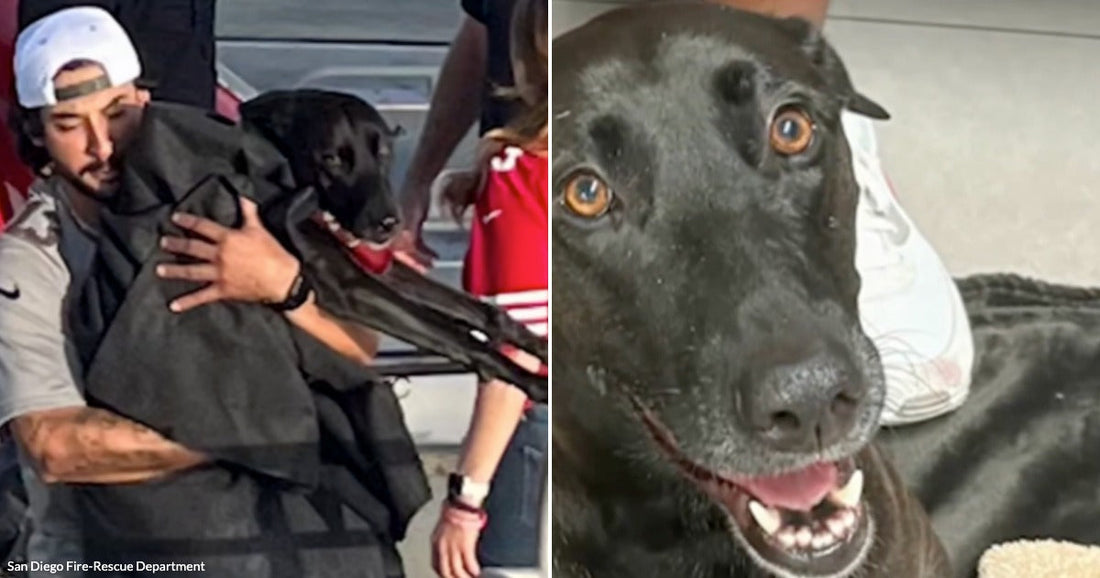
The rescue of a black Labrador-retriever mix named Sadie off the coast of San Diego is the kind of real-world story that quietly restores faith in people, preparation, and quick action. It carries an uplifting mood shaped by a tense search, a strong rip current, and the eventual relief of a family reunion on the shore. At the center of it all are a vacation gone wrong, a resourceful use of an Apple AirTag, and a lifeguard team determined not to give up on a dog in distress.
According to reports, Sadie’s family, Alexis Barcellos and Brandon Valdez, had traveled from their home in Los Banos, California, to enjoy some time in San Diego. They were staying at a vacation rental near Ocean Beach, a well-known stretch of shoreline that draws locals and visitors alike. At some point during the trip, Sadie escaped from the rental property and vanished, setting off a search that quickly moved from land to sea.

The couple had taken the precaution of putting an Apple AirTag on Sadie’s collar. That simple detail became a lifeline. The device did not provide pinpoint precision over the waves, but it did offer enough general location data to direct the worried owners toward the coast once they realized their dog was missing. Following that rough digital trail, they headed toward Ocean Beach, where events were already becoming more dangerous than anyone could have expected from an ordinary day by the water.
Witness accounts describe how surfers near a jetty spotted Sadie and tried to help her. For a brief moment, it looked as if the situation might resolve right there near the rocks. Yet, in a pattern that will be familiar to anyone who has seen a frightened animal near surf, Sadie re-entered the water. In doing so, she was caught in a strong rip current and pulled farther from shore, transforming a hopeful close call into a serious offshore emergency.
Rip currents are powerful, narrow channels of fast-moving water that flow away from the shore. While the article focuses on Sadie, the underlying risk is one that affects people as much as pets. These currents can develop quickly and carry swimmers or animals out beyond the breaking waves in a matter of minutes. It is easy to see how a black Lab, even one comfortable around water, could become exhausted under those conditions.
San Diego Fire-Rescue officials reported that lifeguards launched a search after receiving word of a dog in distress offshore. That detail transforms an already compelling story of a lost pet into one of coordinated professional rescue. The reports describe lifeguards and a rescue boat committing more than an hour to the search, scanning the ocean beyond Ocean Beach and working through the uncertainty of open water. The team eventually located Sadie approximately three-quarters of a mile from the beach, a distance that underlines just how forceful the rip current had been.

San Diego Fire-Rescue Department
Rescue personnel lifted Sadie onto a vessel and brought her back to shore. The image of a tired but responsive dog being hauled from the water is powerful. It speaks to the combination of skill and compassion that lifeguards bring to their responsibilities, which often extend beyond human swimmers. Many coastal agencies train for a range of rescue scenarios, and while the article does not go into these protocols in depth, this incident makes clear that animals in peril are part of their concern.
When Sadie reached land, observers reported that she was exhausted yet responsive. That outcome is remarkable considering how far she had drifted and how long she had been battling the ocean. From there, her story shifted from emergency response to follow-up care. She was evaluated by a veterinarian, who found that she had only minor injuries. For her owners, that evaluation must have been a critical moment of reassurance after the stress of tracking her location, losing sight of her, and then hearing about an offshore rescue effort.
Sadie’s eventual reunion with her family from Los Banos adds an emotional resolution to a story that could easily have ended differently. A vacation that began with a simple stay near Ocean Beach turned into hours of fear and uncertainty followed by relief on the sand. The role of technology, especially the Apple AirTag on Sadie’s collar, stands out as a quietly important factor. It did not guide rescuers directly to her position three-quarters of a mile out, but by helping Alexis Barcellos and Brandon Valdez realize that Sadie was near the coastline, it contributed to a more timely response and focused attention where it mattered.
There are some practical lessons here for pet owners who spend time near the water. While the article does not offer explicit advice, the events suggest that secure collars, modern tracking devices, and close supervision in unfamiliar environments can make a meaningful difference when something goes wrong. Coastal trips can feel carefree, yet open gates, new smells, and busy surroundings might encourage a curious dog to bolt. Once near the surf, especially around areas prone to rip currents, even a strong swimmer can find themselves quickly overwhelmed.
The story also shines a light on the kind of work lifeguards do that may not always reach the headlines. Many people associate lifeguards with crowded summer beaches and high-visibility rescues of swimmers in trouble. In this case, the subject was a single dog swept far offshore, yet San Diego Fire-Rescue lifeguards and a rescue boat dedicated more than an hour to searching for her. That persistent effort, together with the reports from concerned beachgoers and surfers who first tried to help near the jetty, created a chain of care that ultimately saved Sadie’s life.
I found this detail striking: Sadie was carried three-quarters of a mile from the beach, yet she was still able to respond when pulled from the water. That distance captures the power of the rip current and the urgency that must have driven the rescue team to keep looking even as time passed. It also underscores why awareness of rip current safety is so important. Whether the person at risk is a swimmer who misjudges the surf or a pet that slips out of a rental property, the ocean environment demands respect and preparation.
In the end, the rescue of Sadie off the San Diego coast is a layered story about a lost dog, a resourceful family from Los Banos, modern tracking technology, and lifeguards who treated a canine life with the same seriousness they would afford any human in distress. It is a reminder that behind every quiet headline about a “dog rescued in rip current” lies a network of people watching the water, answering calls for help, and staying on scene until the one who is missing is safely home again. Read more at https://losbanosenterprise.com