
💜 Thanksgiving Food Drive for Shelter Pets Help Us Feed 1 Million Shelter Pets!
Glucose Monitors Help Adults With Type 2 Diabetes Lower Blood Sugar Even When They Don’t Use Insulin
Guest Contributor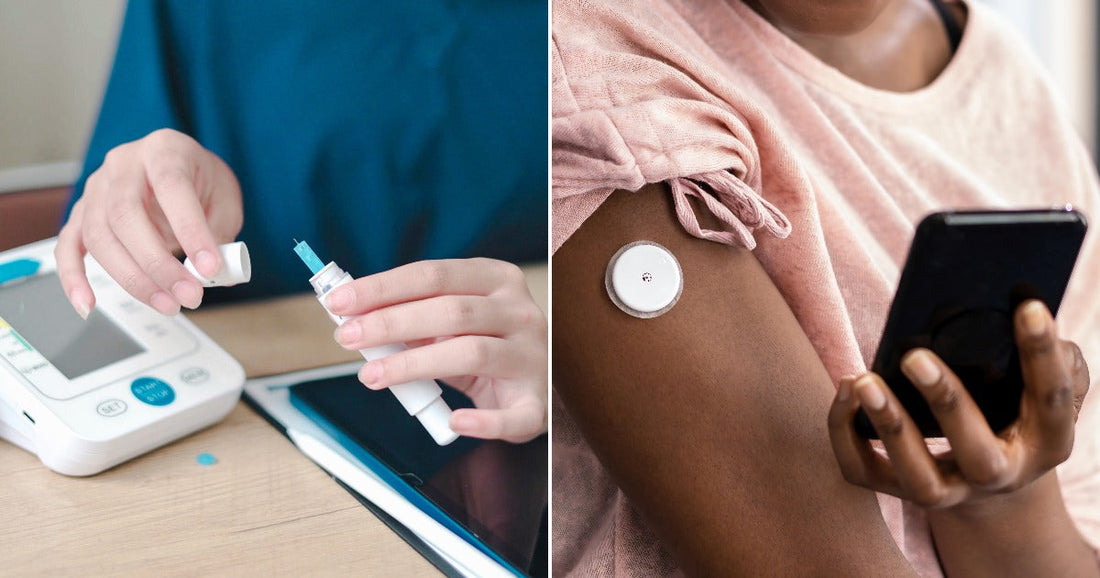
Continuous glucose monitoring is often associated with people who use insulin, but new research suggests that this powerful tool may also benefit adults with type 2 diabetes who are not on insulin therapy. In a recent randomized clinical trial, published in the New England Journal of Medicine, adults with type 2 diabetes using continuous glucose monitoring (CGM) saw greater improvements in their blood sugar control than those receiving routine diabetes care. For anyone wondering how to lower A1c more effectively or whether CGM is worth considering before starting insulin, these findings offer important insight.
The study, led by Tamara K. Oser, M.D., from the University of Colorado Anschutz School of Medicine, followed adults with type 2 diabetes over a 26 week period. None of the participants were using insulin. Instead, they relied on other therapies and were seen in typical primary care practices, which makes the results especially relevant to everyday clinical settings. Participants were randomly assigned either to use a CGM device or to continue with routine care, which usually involves periodic fingerstick checks and regular clinic visits.

There were 145 people in the CGM group and 138 in the routine care group. At the beginning of the study, both groups started with similar average glycated hemoglobin (HbA1c) levels. HbA1c is a key measure of blood sugar control over the prior two to three months and is central in type 2 diabetes management. Starting values were about 8.8 percent in the CGM group and 8.7 percent in the routine care group, which indicates that most participants had blood sugar levels above the commonly recommended targets.
Over the 26 weeks, those using continuous glucose monitoring saw their mean HbA1c level fall from 8.8 ± 1.3 percent to 7.2 ± 1.1 percent. By comparison, the routine care group experienced a smaller improvement, dropping from 8.7 ± 1.2 percent to 8.0 ± 1.4 percent. When researchers adjusted these results, they found that the difference in A1c reduction between the groups was 0.9 percentage points in favor of CGM. In clinical practice, nearly a full percentage point decrease in HbA1c is often considered a meaningful change that can lower the risk of diabetes complications.

Beyond A1c, the study looked closely at time in range, a measure that reflects how many hours per day blood glucose levels stay within a recommended span. For this research, the range was defined as 70 to 180 mg/dL. People in the CGM group spent a much greater percentage of time in this target zone than those in routine care. Specifically, the mean percentage of time in the 70 to 180 mg/dL range was 21 percentage points higher with CGM. For many individuals living with diabetes, more time in range can mean fewer symptoms, more predictable days, and potentially better long term health.
Safety is always a concern when changing how diabetes is monitored. One key issue is hypoglycemia, or low blood sugar, particularly when levels drop below 70 mg/dL or even below 54 mg/dL. The researchers compared how much time participants spent with glucose readings in these lower ranges. The difference between the CGM and routine care groups in the percentage of time that glucose levels were below 54 mg/dL was very small at −0.17 percentage points. For time below 70 mg/dL, the difference was −0.20 percentage points. Statistical testing showed that CGM was not only noninferior to routine care for low blood sugar risk, but in some respects superior, particularly for the below 70 mg/dL measure.

Roy W. Beck, M.D., Ph.D., from the Jaeb Center for Health Research, commented on the significance of these results. He noted that the consistency of benefit across a broad range of people and treatment regimens supports considering CGM much earlier in type 2 diabetes management, even before insulin is started. This perspective aligns with a growing interest in using technology not only to react to high or low readings, but to see patterns, adjust lifestyle choices, and tailor medications more precisely.
One aspect that stands out is how broadly applicable these findings may be. The trial took place in 22 primary care practices, which better reflects where most people with type 2 diabetes receive care, rather than in highly specialized clinics alone. Participants represented adults who were using various noninsulin regimens, so the benefits were not limited to a single type of medication or treatment plan. I found this detail striking because it suggests that continuous glucose monitoring could be integrated into many existing care models without needing a complete overhaul of current practice.
At the same time, it is important to acknowledge the context behind the research. Several authors disclosed relationships with the biopharmaceutical industry, and the study itself was funded by Dexcom Inc., a company that manufactures CGM devices. Industry funding is common in device and medication research, but it does call for careful interpretation of the results. The data as reported demonstrate meaningful improvements in HbA1c and time in range, with no signal that CGM increased serious hypoglycemia. Still, decisions about adopting new tools like CGM should take into account clinical guidelines, individual patient needs, access, cost, and insurance coverage.
For people living with type 2 diabetes who do not use insulin, these findings add to a growing conversation about how best to monitor blood sugar. Traditional fingerstick checks can provide important snapshots, yet they may miss fluctuations that occur between measurements. Continuous glucose monitoring, by contrast, offers a stream of information that can show how meals, activity, stress, and medications affect glucose over the course of each day. With the trial indicating that CGM can improve HbA1c and increase time in range without increasing time spent in very low ranges, this technology may become a more common part of early type 2 diabetes care.
Ultimately, the study points to a future where advanced monitoring is not limited solely to those already on insulin. Instead, CGM could be seen as a proactive tool that helps many adults with type 2 diabetes achieve better control sooner, potentially reducing the need for intensifying therapy later. Ongoing research, real world experience, and patient preferences will all shape how quickly this approach becomes part of standard practice. For now, the evidence reported here suggests that for adults with type 2 diabetes not treated with insulin, continuous glucose monitoring can offer a meaningful advantage over routine care.