
🚨Urgent: Missile Strikes Shelter in Ukraine! Rush Emergency Aid!
Sleeping Beside Your Dog May Be the Secret to Better Rest, New Research Suggests
Guest Contributor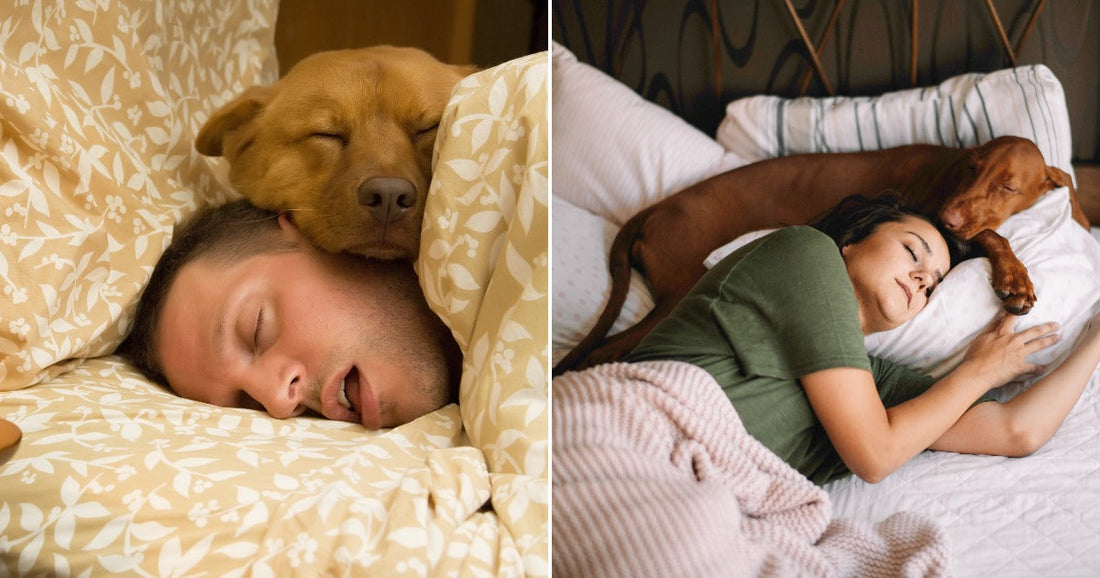
For anyone who loves to fall asleep next to a snoring, snuggling pup, a new study on co-sleeping with dogs offers surprisingly reassuring news. Far from sabotaging our rest, dogs in the bedroom do not seem to hurt human sleep quality or duration. In fact, people who sleep near their dogs may feel safer and more secure, and the disruptions that do occur at night appear to be caused more by humans than by their canine companions. For many households, that means a dog in the bed might go hand in hand with good sleep quality.
The research, conducted by a team at the University of Toronto, set out to measure what really happens when people and dogs share their nights. Previous sleep research has often linked pet ownership with poorer sleep or suggested that having a dog in the bed can cause more restlessness. This new work offers a different perspective, relying on objective tracking data rather than memory or perception alone.

The study followed 25 human volunteers and their 38 dogs, all living in southern Ontario. The dogs, a group of healthy huskies and malamutes, and their owners wore activity trackers similar to Fitbits for four weeks. Humans wore the devices on their wrists while dogs wore them on their collars. These trackers recorded nighttime movement and allowed the researchers to analyze how the sleep of each partner influenced the other.
Most of the dogs slept either on the bed or in the same room as their humans. A smaller number stayed in separate rooms. Using the devices, the research team focused on clear and concrete measures such as sleep duration and sleep quality, allowing them to compare what the trackers showed with what people felt and reported. The volunteers also completed surveys to describe their own sleep experience and any perceived disruptions. This blend of objective and subjective information created a fuller picture of what co-sleeping with a dog is really like.

One of the most interesting findings was the difference between what people thought was happening and what the trackers actually recorded. Many participants, especially those who slept with more than one dog, reported feeling that their sleep was interrupted. They believed that sharing a bed with multiple dogs left them more restless at night. On paper, they felt like they were not getting ideal rest, which aligns with common worries that dogs toss and turn or hog the covers.
The activity data, however, told a different story. When researchers compared people who slept with dogs in their beds to those who slept with dogs elsewhere in the room, there was no clear negative effect on how long or how well either the humans or the dogs slept. The perceived drop in sleep quality among some participants did not show up in the measurements. In other words, even if someone felt a bit less rested when they had several dogs on the bed, their sleep duration and objective quality scores did not back up that impression.

The timing of nighttime movement was also revealing. By studying “synchronized activity states,” or moments when both human and dog became active at roughly the same time, the team could see who typically moved first. The data showed that people were more likely to stir before their dogs did. Human movement often seemed to disturb the dog’s sleep, rather than the dog rousing the human. This finding goes against an earlier study from 2020 that suggested dogs might influence human nighttime movement more strongly. Here, the pattern indicated that human sleepers were actually the less considerate bedmates.
Interestingly, the researchers saw no meaningful difference between dogs sleeping directly in the bed and those resting nearby in the same room. That point challenges the idea that the bed itself is the problem and supports the notion that simply having a dog present, whether at the foot of the bed or across the room, does not inherently damage human sleep. At the same time, the study was relatively small and focused only on certain breeds, mainly huskies and malamutes, and more women than men took part. The authors noted these limitations, so broader research with more varied dog breeds and demographics would help clarify how universal these results are.
Earlier studies took a less optimistic view of co-sleeping with dogs. A 2023 paper in Human-Animal Interactions reported a link between pet ownership and poorer sleep overall. A 2017 Mayo Clinic study suggested that people slept better with a dog in the bedroom but not with the dog on the bed itself. In that light, the new study stands out because it does not find a measurable downside to dogs in the bed, at least for the group studied. The contrast highlights how much depends on research design, the populations involved, and whether scientists rely on self-reports or tracking technology to assess sleep.
Beyond the mechanics of movement and rest, there is another important piece of the story: how people feel. Co-author Ming Fei Li pointed out that humans who sleep with dogs often report feeling safer, a sentiment that might reflect a deep evolutionary relationship. Throughout history, dogs have signaled danger, guarded homes, and provided companionship through the night. That sense of security may not show up as numbers on a sleep tracker, but it matters to how people experience their bedtime environment.
Sleep experts also note that dogs may help shape healthier routines. Neurologist and sleep specialist W. Christopher Winter describes dogs as “zeitgebers,” or cues that help align a person’s daily rhythms. Regular feeding times, scheduled walks, and predictable evening wind-downs can gently nudge humans into more consistent patterns. I found this detail striking because it shifts the focus from individual nights to long-term habits. Many researchers emphasize that a stable sleep schedule can be as important for well-being as the total number of hours spent asleep.
Daily life with a dog often reinforces that consistency. A pup that expects breakfast at the same time every morning or waits by the door each night offers real-world prompts that support regular sleep and wake times. For people who tend to stay up late scrolling or struggle with erratic routines, a dog’s need for structure can double as a built-in reminder to turn off the lights. From that angle, co-sleeping with a dog and maintaining good sleep hygiene might go hand in hand rather than stand in opposition.
Of course, not all dogs make ideal sleep partners. A large dog can crowd the bed, taking over pillows, sheets, and precious legroom. Any dog might startle awake at unusual sounds or flashes of light and react with movement or barking. Some breeds, especially those with upper airway issues such as pugs, Boston terriers, and French bulldogs, can snore loudly. As Winter noted, canine snoring and even sleep apnea can be intense enough to disturb anyone trying to relax nearby. These realities mean that what works beautifully for one household might not be comfortable for another.
In the end, the emerging evidence suggests that co-sleeping with a dog does not necessarily reduce human sleep quality. For many people, the warmth, sense of safety, and structure that dogs provide may even support healthier rest. At the same time, personal comfort, the individual dog’s behavior, and any existing sleep issues should guide the decision about whether a pet belongs in the bed, in a nearby crate, or in a separate room. By balancing objective data with lived experience, this new work adds helpful nuance to a familiar bedtime question and invites people to look at their four-legged sleep partners in a new, more reassuring light. Read more at https://www.nbcnews.com/health/health-news/secret-good-sleep-dog-bed-tracker-research-rcna601679