
No One Should Have to Choose Safety or Their Pet Help Build a Safe Place !
Could Gut Bacteria Help Breast Cancer Spread? Scientists Investigate a Surprising Link
Guest Contributor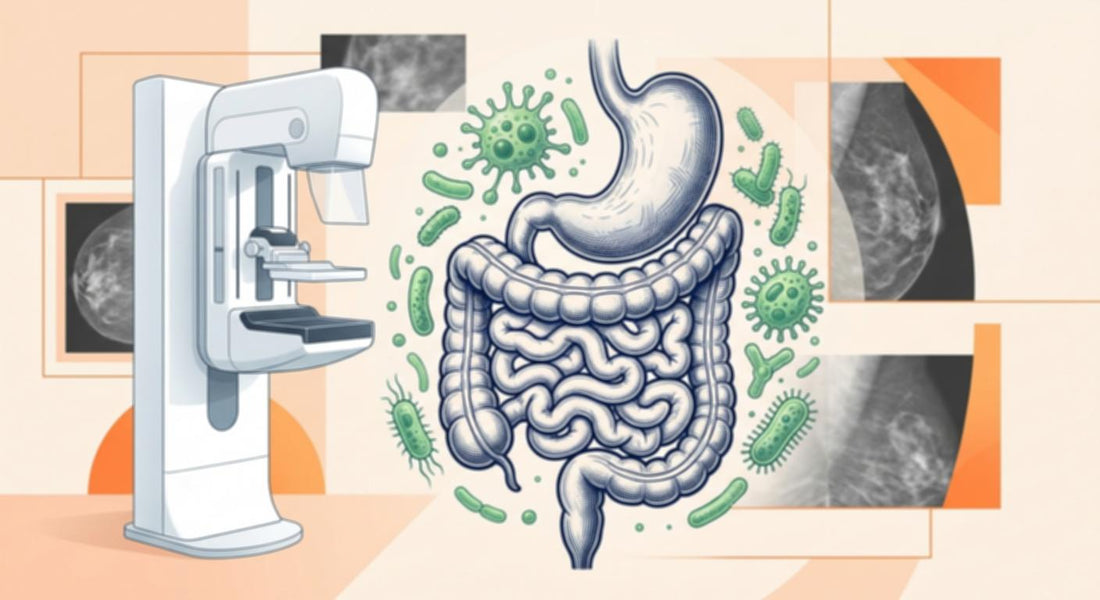
Could the health of the gut quietly influence whether certain breast cancers spread through the body? New research from the University of Virginia suggests that the answer may be yes, especially for hormone receptor-positive breast cancer. This common subtype of breast cancer has benefited from major treatment advances, yet metastasis remains a serious concern. The study highlights a surprising player in that process: the gut microbiome and its role in regulating bile acids.
Hormone receptor-positive breast cancer is defined by the presence of receptors for estrogen and/or progesterone on tumor cells. These receptors allow hormones circulating in the body to attach to the cancer cells and fuel their growth. For years, standard therapies have focused on blocking those receptors or lowering the body’s estrogen levels. According to the research team, these interventions have greatly improved outcomes and remain a cornerstone of care.

Even so, many patients with this subtype eventually face recurrence and the spread of disease to other parts of the body. A majority of people living with metastatic breast cancer were initially diagnosed with hormone receptor-positive disease, which underscores how urgent it is to understand why some tumors recur and others do not. As the researchers note, this is an unmet need for this form of breast cancer, despite modern therapies.
The group led by Melanie Rutkowski, an associate professor of microbiology, immunology and cancer biology at the University of Virginia, focused on a question that has often been overlooked: could gut health help determine who develops metastatic disease? They point to the gut microbiome as a potentially important factor. This diverse ecosystem of bacteria in the digestive tract is already known to influence metabolism, immunity, and inflammation. In this work, it emerged as a key regulator of a different system altogether, the production and circulation of bile acids.
Bile acids are molecules produced by the liver to help digest fats. On their own, they are not yet in their final form. After being released into the gut, they encounter specific bacteria that transform them into different types of bile acids. This transformation process helps regulate how much bile acid circulates throughout the body. There is a constant flow between liver and gut as these molecules are used, modified, and recycled.
When the gut microbiome is unhealthy, many of the bacteria that normally handle this processing are lost. According to the researchers, that loss disrupts the communication between the gut and the liver. As a result, the balance of bile acids circulating in the body becomes abnormal. Instead of being converted into a range of forms, primary bile acids begin to build up because there are fewer microbes available to transform them.
Bile acids are more than simple digestive helpers. They also act as potent signaling molecules that can alter the behavior of cells, including immune cells. The UVA team reports that when bile acid balance was disrupted in their models, there were inflammatory changes in breast tissue and in the lungs. Those inflammatory shifts resemble environments that are known to support metastasis, creating conditions that may make it easier for tumor cells to survive and spread.
The link between an unhealthy gut microbiome and breast cancer spread emerged clearly in the study’s animal experiments. In mice with an unhealthy gut, the buildup of primary bile acids was associated with greater metastatic spread of hormone receptor-positive breast cancer. The picture that forms is one in which gut dysbiosis, altered bile acid processing, and immune-related changes in distant tissues intersect in ways that favor metastasis.
One particularly hopeful aspect of the research is that the team did not stop at identifying the problem. They also explored a potential way to counteract it. The study examined drugs known as bile acid sequestrants, which are already approved by the U.S. Food and Drug Administration for other uses. These medications work inside the gut by binding bile acids, which are then excreted in feces rather than recirculating through the body.
When the researchers gave bile acid sequestrants to mice that had an unhealthy gut microbiome, they observed a significant reduction in metastatic spread. Because these drugs are already in clinical use and considered generally well tolerated, the authors suggest they might be candidates to improve outcomes for people with metastatic disease. I found this detail striking, since it links a familiar class of medications to a new and potentially important role in cancer care.

To see whether these findings might be relevant beyond animal models, the team examined records from women diagnosed with metastatic hormone receptor-positive breast cancer. Within that group, those who were already taking bile acid sequestrants had significantly longer survival than those who were not receiving these medications. This human data aligns with the mouse experiments and suggests that altering bile acid levels could influence the course of metastatic disease.
The researchers are careful about what comes next. They emphasize that the key question now is whether bile acid sequestrants could be used as a strategy to prevent breast cancer metastasis, not just to manage it after it occurs. That will require further studies to clarify who might benefit, when such drugs should be given, and how they might be integrated with hormone therapies and other standard treatments.
The study also made use of large-scale cancer data to understand events inside tumors at a molecular level. To do this, the team turned to The Cancer Genome Atlas, often referred to as TCGA. This extensive, publicly available project molecularly characterized more than 20,000 tumors across 33 cancer types. Researchers worldwide now use it as a reference library to link molecular features within tumors to patient outcomes.
In this case, the UVA scientists used TCGA data to ask whether signals related to bile acid activity inside breast tumors were associated with survival in women with metastatic disease. They found that tumors with high expression signatures of bile acid signaling were tied to significantly reduced survival compared with tumors that showed lower levels of that signaling. This reinforces the idea that bile acid pathways are not only active in the gut and liver but can also be reflected within the tumor itself in ways that matter for prognosis.
Altogether, the work suggests that gut health, the microbiome, bile acids, and immune responses may be more intertwined with metastatic breast cancer than previously appreciated. While it is too early to translate these findings into routine clinical practice for every patient, the research opens up new directions for treatment and prevention strategies. It also illustrates how looking beyond the tumor and into the broader systems of the body can uncover powerful influences on cancer progression. Read more at https://news.virginia.edu/content/qa-could-better-gut-health-help-fight-breast-cancer