
Axel Is Surrendered for Being Deaf and Grows Up to Serve With the National Guard
Guest Contributor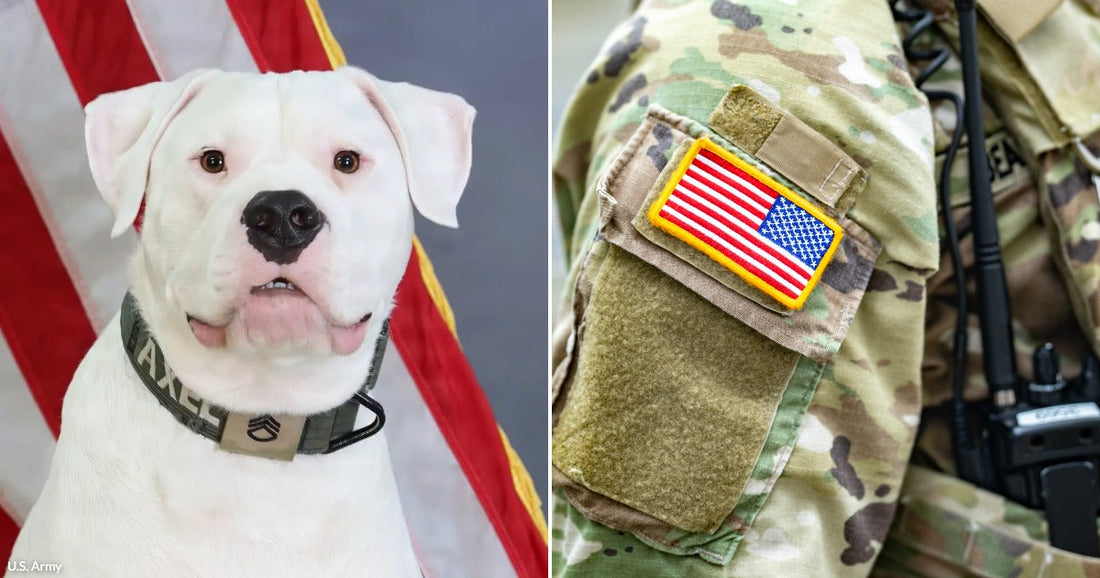
Axel may not hear the sound of marching boots or the rumble of military vehicles, but he has learned a different kind of language that speaks directly to the hearts of soldiers. The deaf Dogo Argentino has joined the Michigan National Guard as a ministry dog, preparing to deploy alongside the 1st Battalion, 125th Infantry Regiment. His story brings together resilience, trust, and the power of a unique human animal partnership, and it is a compelling example of how a ministry dog can support service members in meaningful ways.
At just 3 years old, Axel has mastered more than 50 hand signals and visual commands, including several based in American Sign Language. The Michigan National Guard reports that his handler, Sgt. Mollie Karazim, adapted his training to account for his deafness and taught him to respond to visual cues instead of spoken words. Axel’s work is not about detection or patrol. Instead, his role as a ministry dog centers on emotional and spiritual support for soldiers who are preparing for the challenges of deployment.

Axel’s path to the Michigan National Guard began in a shelter. According to the Guard, his previous owners surrendered him as a puppy after learning that he was deaf. For many animals, that kind of beginning can limit their opportunities. In Axel’s case, it became the foundation for an entirely different future. When Karazim adopted him, she did so with openness and curiosity, knowing that raising and training a deaf dog would be different from working with a dog who can hear.
Karazim describes the training process as one rooted in trust. Without verbal commands or the familiar sound of a human voice, Axel relies heavily on his bond with her. She explains that “he has to trust me,” and that this trust has been built since he was a puppy through consistent communication and shared experiences. I found this detail striking because it highlights how much intentionality goes into forming a working relationship with a dog who processes the world visually instead of aurally.

US Army
When Karazim originally joined the Michigan National Guard seven years ago, she hoped to serve as a canine handler. That role was not available in the state at the time, so she followed a different path and became a religious affairs specialist, collaborating with chaplains to support soldiers’ spiritual and emotional needs. Over time, she discovered a way to combine her interest in working with dogs with her existing position, which eventually led to Axel’s role as a ministry dog.
In describing Axel, Karazim notes that he is loyal, loving, and suited to an active lifestyle, qualities that she believed would fit well with an infantry unit. When she first adopted him, she trained him with an open mind, understanding that not every dog, even a well trained one, thrives in a military environment. She watched him mature, gauged how he responded to new situations, and evaluated whether he could successfully integrate with the soldiers he might one day support.

Over the past year, Axel has effectively become a part of the battalion’s routine. He has attended drill weekends, ridden in Humvees, spent time in the field, and interacted with soldiers across the unit. During these events he wears a dedicated vest and collar that indicate he is “on duty,” which helps set expectations for how he is approached and reminds everyone that he has a specific role to play as a ministry dog.
Karazim shares that having Axel embedded with an infantry unit has been a significant benefit. She calls him an “icebreaker,” explaining that his presence helps her connect with soldiers she might not otherwise reach. In a setting where some service members may be hesitant to open up about their stress, fears, or personal concerns, a calm, friendly dog can offer a nonjudgmental presence that makes conversation easier. The concept of a ministry dog in a military unit may sound unusual at first, but the Michigan National Guard’s account of Axel’s work suggests that he has become an important bridge between soldiers and the support services available to them.
Preparing a deaf dog for deployment is not as simple as bringing him along for training weekends. The Guard notes that Axel’s preparation required extensive training and specialized courses, along with specific adaptations to how Karazim communicates with him in busy, potentially distracting environments. Visual attention cues, clear hand signals, and consistent routines are essential, particularly in settings that may be loud or chaotic for those around him, even if he cannot hear the noise himself.
Financially, much of the investment in Axel’s training and care has come from Karazim personally. That detail underscores the level of dedication involved in turning a surrendered shelter puppy into a well prepared ministry dog who can accompany an infantry battalion on deployment. It also reflects the belief that Axel’s presence has real value for the soldiers he supports. While the article does not detail every aspect of his training, it makes clear that his readiness has not been taken lightly.
As a ministry dog, Axel’s work is not tied to rank, position, or specific mission tasks. Instead, he supports the broader well being of the unit. Ministry and chaplain programs in the military often focus on listening, providing comfort, and being present in times of stress or uncertainty. Axel helps enhance that presence. When soldiers interact with him, they are invited, in a subtle way, to slow down for a moment, to smile, or to talk with his handler. Across long training cycles and deployments, those small moments can matter.
Karazim describes the entire experience as “incredibly rewarding,” sharing that Axel has been “a great asset to the ministry” and that he has helped “make everyone light up.” That phrase paints a vivid picture of how this deaf dog, who once faced an uncertain future in a shelter, now brightens the days of the people around him while serving in uniform alongside them. It also highlights the broader idea that service and support can look different than many might initially expect, and that unconventional paths can still lead to deep impact.
Axel’s story carries several quiet but powerful themes. It speaks to adaptability, as both handler and dog have learned to communicate in a way that works for them. It reflects resilience, showing how a perceived limitation, like deafness, does not define potential. It also illustrates how the modern military recognizes the importance of emotional and spiritual support, not only through chaplains and religious affairs specialists, but also through carefully trained animals like ministry dogs who help make that support more accessible and personal.
In the end, Axel is more than a symbol. He is a working member of the Michigan National Guard, a companion to his handler, and a source of comfort to soldiers who train, travel, and soon deploy with him. His presence on drill weekends, out in the field, and eventually overseas demonstrates how compassion, creativity, and commitment can transform one dog’s story into a source of light for an entire battalion. Read more at https://www.bigrapidsnews.com