
💜 Thanksgiving Food Drive for Shelter Pets Help Us Feed 1 Million Shelter Pets!
First-Time Right Whale Mom Brings the Calving Season's First Baby to Florida Waters
Guest Contributor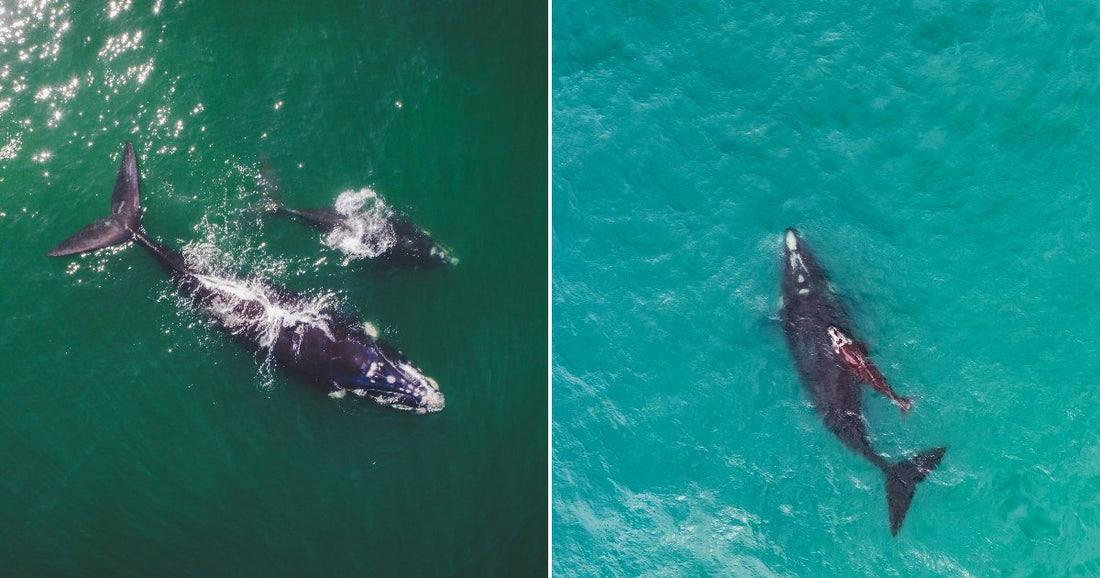
Along the quiet waters off St. Augustine Inlet, the first right whale calf of the 2026 to 2027 season has arrived early, offering a rare moment of hope for a species on the edge. North Atlantic right whales are critically endangered, and every birth matters. This first mother and calf sighting, confirmed by researchers as a 16 year old female known as Curlew and her newborn, marks an important beginning to the calving season and highlights why real time reporting of right whale sightings is so vital to their survival.
The Georgia Department of Natural Resources reports that Curlew is a first time mother. Her calf appeared slightly ahead of the usual North Atlantic right whale calving season, which typically runs from mid November through mid April. The early timing is significant. It means the whales have begun using the Southeast calving grounds before many of the protections and monitoring efforts that are designed to keep them safe are fully in place.

Researchers identified Curlew from photos taken by boater Sean Roberts. His images showed a right whale mother and calf close to the surface, close enough that he later reflected on how fortunate it was that the water was calm and visibility good. He wrote that the whales were right there before anyone on the boat realized what they were seeing. That detail underscores how easily even a whale of enormous size can go unnoticed in open water, especially when conditions are rough or when people are distracted.
Curlew is part of a very small club. According to the Georgia Department of Natural Resources, she is one of only 72 breeding females in the entire North Atlantic right whale population. Named because they were once considered the “right” whale to hunt, these whales now number only about 380 individuals. Every one of those 72 breeding females carries outsized importance for the future of the species. When just a few dozen animals are responsible for the next generation, each successful calf is a conservation milestone.

The calving grounds for these whales are centered off the northern Florida and southern Georgia coast. Each year, North Atlantic right whales travel south along the Atlantic coast from feeding grounds off New England and Canada to give birth and nurse their young in these comparatively warmer, quieter waters. The journey itself is long and full of risk, and those risks are not limited to natural predators or storms. Human activity significantly shapes the fate of these animals.
Another well known female, a whale biologists call Calvin, has already been spotted migrating south toward the same calving grounds. Her progress is a reminder that Curlew and her calf will not be alone in these waters for long. More whales are on the way, including other expectant mothers. The article also notes Silt, another female whose previously undetected calf from the last season was only confirmed in Canada weeks before Curlew’s calf appeared. That discovery brought last season’s calf total to 24, a hopeful number yet still modest for a species in such precarious shape.

Despite this hopeful news, the timing of Curlew’s arrival comes with a serious challenge. The whales have reached the region before the activation of the seasonal reduced speed zones designed to protect them. These speed restrictions help lower the risk of vessel strikes, which are among the leading causes of injury and death for North Atlantic right whales. Mother and calf pairs spend a lot of time near the surface. That habit keeps the calf close to its mother for nursing and care, but it also leaves them more exposed to boats, especially in busy shipping and recreational areas.
The Department of Natural Resources explains that mobilizing seasonal field teams for aerial surveys and vessel based monitoring involves many logistical steps. Aerial surveys, which help scientists locate and track whales from the air, are not scheduled to start until December 1. Shifting those schedules by a few weeks is not as simple as flipping a switch. Until those crews are active, researchers are relying heavily on people who are already out on the water to serve as their eyes.
Marine agencies urge all mariners to be particularly watchful in the coming weeks, especially in the Southeast U.S. calving grounds. For boaters, that means using caution, posting a lookout, and giving whales plenty of space whenever they are seen. Real time reporting of right whale sightings, especially with verifiable information like photos and coordinates, allows trained teams to respond when possible. Vessel based crews can use that information to monitor the animals, confirm identifications, and in some cases help divert traffic away from particularly vulnerable mother and calf pairs.
What stands out is how much this conservation effort depends on cooperation between scientists, regulators, commercial vessels, recreational boaters, and coastal communities. Researchers bring decades of experience, long term monitoring, and structured surveys. Mariners bring their presence on the water each day, especially in the shoulder weeks before formal protections and monitoring are fully active. When a recreational boater like Sean Roberts takes clear photographs and reports what he sees, that single moment can ripple outward, helping confirm a new calf, track a mother’s health, and refine our understanding of when and where these whales are most at risk.
Long term monitoring is crucial for a species like the North Atlantic right whale. By tracking abundance, habitat use, reproduction, and health over many years, scientists can assess whether conservation measures are working and where new threats are emerging. Entanglement in fishing gear and vessel strikes remain two of the most serious human impacts, but the details of where, when, and how those threats play out change over time. Reliable data from both formal surveys and community reports forms the backbone of any strategy to reduce harm.
North Atlantic right whales hold a special place off Georgia’s coast. They are recognized as Georgia’s official state marine mammal, a symbolic role that reflects both their ecological importance and their vulnerability. Seeing the first calf of the season arrive early is inspiring, but it also comes with a responsibility to recognize how fragile this success is. With only a few hundred whales remaining and only dozens of breeding females, every calving season counts and every individual calf carries a piece of the species’ future.
In this context, Curlew’s first calf represents both a celebration and a call to care. For people who live, work, or play along the Atlantic coast, small choices on the water can make a significant difference. Slowing down in known calving areas, staying alert for blows or backs at the surface, and sharing sightings with the appropriate hotlines or authorities can all help. The story of this first right whale calf of the season is not just about a single mother and newborn, but about a shared effort to give this species a chance to recover and thrive again in the waters they have traveled for generations. Read more at https://thecurrentga.org/2026/11/14/first-right-whale-calf-of-the-season-spotted-2/