
Mom Hides a Recorder in Her Autistic Son’s Backpack and Hears Educators Mocking Him
Guest Contributor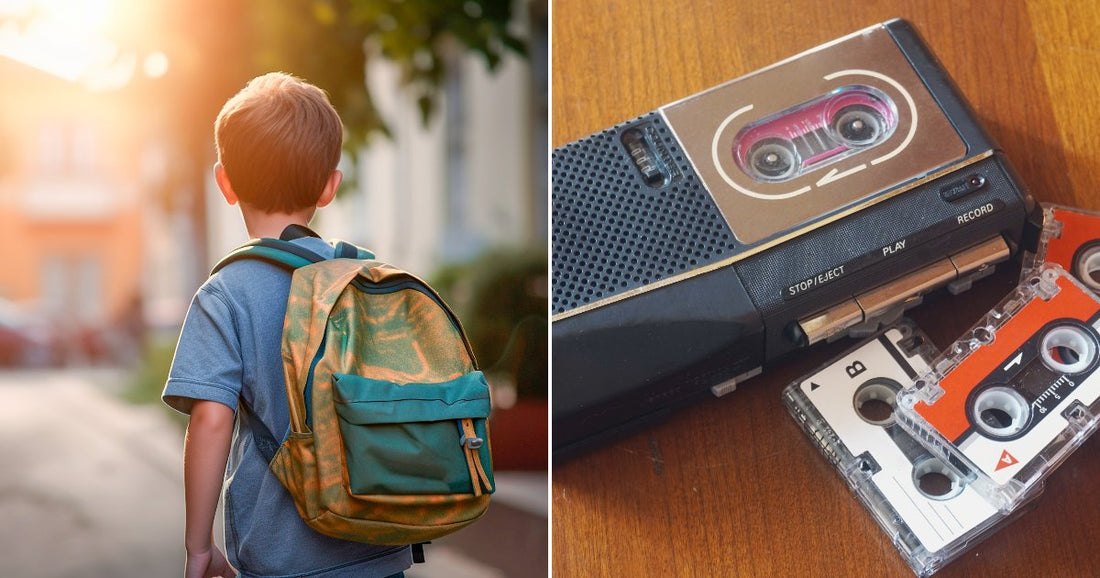
The story of two educators fired after mocking an autistic student in their care has shaken many families who rely on specialized schools to support their children. At Hope Academy in Baton Rouge, a school that advertises services for students with learning disabilities, autism spectrum disorders, ADHD, and other cognitive disabilities, a 12-year-old boy’s mother uncovered an audio recording that raised disturbing questions about how vulnerable children are sometimes treated behind closed doors. For parents searching for safe options for special needs education, the details of this case are especially painful to read.
The incident began when the student’s mother, Milissa Davis, noticed a sudden and troubling change in her son’s behavior. Her child, who is severely autistic, had become aggressive and started wetting the bed. Concerned and unsure what was happening at school, she decided on a step that many parents might only consider in moments of deep worry. She placed a recording device in her son’s backpack to capture what his day sounded like when she was not present.

When Davis listened to the recordings, she said she was devastated by what she heard. She described wanting to “cry” and “scream” after discovering the comments and tone captured on the device. The realization that her child may have faced such treatment repeatedly without her knowledge weighed heavily on her. The audio, which she later shared with a local news outlet, reportedly included a teacher and a teacher’s aide speaking to and about her son in ways that would alarm any parent.
In one portion of the audio, an adult is heard asking the student why he has not written anything down, then adding that this is “why you can't sit with everyone” and instructing the child to “tell your momma that.” In another clip, an adult can be heard mocking the noises the student makes. Perhaps most starkly, a voice is recorded saying, “Let's see what they do with him in f****** public school. He was going to go to Live Oak Middle. Uh ah, he wouldn't make it for a minute.” These remarks, directed at a student with severe autism, raise concerns not only about professional conduct but also about basic empathy and respect.

Hope Academy markets itself as a place that “specializes in teaching students with learning disabilities, autism spectrum disorders, Asperger syndrome, ADHD, down syndrome, cognitive disabilities, and dyslexia.” Families who choose such schools often do so hoping that the teachers and staff will be trained to support children whose needs are not always fully met in traditional classrooms. In this case, that promise appears to have been deeply undermined by the conduct captured in the recording.
Davis decided to seek legal help. Her attorney, Charlotte McGehee, spoke strongly about what she heard, calling the treatment of the child “horrified.” McGehee noted that one of the worst things someone can do is “take advantage of the infirm, or a disadvantaged child,” stressing that children with special needs require additional protection. According to McGehee, formal complaints with the Department of Education are planned, and “all legal remedies” will be explored.
The mother’s goal is not only accountability for what happened to her son, but also to alert other families to potential warning signs. She encouraged caregivers of children with special needs to pay close attention when a child’s behavior changes, particularly if they become more anxious, aggressive, or show signs of distress like bedwetting. Davis suggested that families look closely at the situation to understand why a child might be acting differently, emphasizing that “no child deserves to go through” what she believes her son endured.
Following the public release of the recording, Hope Academy responded with a written statement from its principal, Linda Stone. The school stated that it has been dedicated to educating students with special needs for more than a decade and that it provides “a vital resource” at cost with staff who are committed to that mission. The school also asserted that the audio shared on social media appeared to be “a compilation of audio clips” and that many segments involved “private conversations between two adults with no other persons/children present.”
The statement described the conversations on the recording as “regretful” and said that the individuals involved “are either no longer with the school or will no longer be with the school after this semester.” One employee was fired immediately and another was set to be terminated at the end of the school year. Hope Academy emphasized that the parent did not first bring the recording to the school before posting it online and said that Davis had declined invitations to meet and discuss the steps the school claims to have taken. The school urged the public not to allow “the actions of two persons” to define its overall reputation or long-standing mission.
This response reflects a tension that often arises in such situations. On one side is a family who feels that the only way to protect their child and inform others is to make the evidence public. On the other is a school that wants the opportunity to address issues internally and defend its broader record. From the outside, what stands out is the power imbalance at the heart of the story. A child with severe autism is uniquely dependent on adults to advocate for and protect them, and trust in those adults is central to any successful special needs education program.
The Hope Academy case highlights how fragile that trust can be. Parents of children with autism and other developmental disabilities often rely on specialized schools precisely because mainstream environments may not be equipped to offer the level of support their children need. When an incident involves educators mocking or belittling a student, the sense of betrayal can extend beyond one family and resonate across the wider special needs community. I found this detail especially striking: the mother had to resort to secretly recording the classroom to understand what her son was experiencing, a step that suggests a profound breakdown in confidence.
At the same time, the school’s assertion that this behavior does not represent its overall values points to another important consideration. Many teachers and aides in special education work with deep dedication and patience. The actions of a few can overshadow years of effort by many others. The critical question that remains for families and communities is how schools can build systems that prevent such conduct, respond quickly if it occurs, and create environments where students with disabilities are genuinely safe and respected.
This story also serves as a reminder of the importance of listening carefully to children’s behavior and emotional cues, particularly for those who have difficulty communicating verbally. Whether in specialized schools, public schools, or private programs, safeguarding students with special needs requires not only policies and training but also a culture of empathy where mocking or dismissive language has no place. Parents, educators, and administrators all have a role in shaping that culture and ensuring that trust is not taken for granted.
Ultimately, the case out of Hope Academy is about much more than a single recording. It raises hard questions about accountability, transparency, and the daily reality of special needs education. As investigations and potential legal actions proceed, many families will be watching closely, not only for outcomes in this particular situation but for signs that institutions entrusted with vulnerable children are willing to examine themselves and improve. For the child at the center of this story and for others like him, that commitment to change is what matters most.