
🚨Urgent: Missile Strikes Shelter in Ukraine! Rush Emergency Aid!
Emma Heming Willis Says Bruce Still Knows His Family Despite a Common Misconception About Dementia
Guest Contributor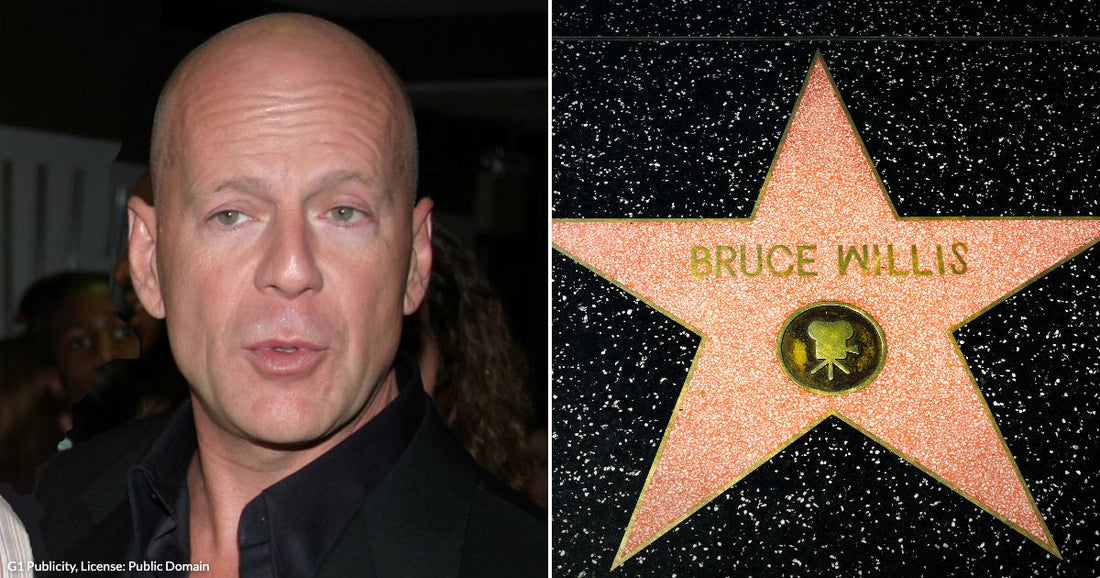
When news broke that Bruce Willis had been diagnosed with aphasia and later frontotemporal dementia, public concern quickly turned into a swirl of assumptions. One of the most persistent has been the belief that dementia always equals memory loss. In a recent conversation on The Bossticks podcast, Bruce Willis' wife Emma Heming Willis addressed that misconception directly, offering a clearer picture of what his condition really looks like and what it means to love someone living with frontotemporal dementia.
Emma explained that Bruce does not suffer from the kind of memory loss many people associate with dementia. The detail that Bruce Willis knows who she is has resonated with many fans, because it counters an image shaped largely by portrayals of Alzheimer’s disease in popular culture. She noted that people often ask whether he still remembers her, and she responded by pointing out that he has frontotemporal dementia, not Alzheimer’s. That distinction is at the heart of the misunderstanding she wants to correct.

G1 Publicity, License: Public Domain
Alzheimer’s disease is the most widely known form of dementia, and Emma acknowledged that familiarity. She emphasized, however, that frontotemporal dementia, often referred to as FTD, is different. According to her, Alzheimer’s is the most common form of dementia overall, but FTD is the most common form of dementia for people under the age of 60. That contrast helps explain why so many are unfamiliar with frontotemporal dementia and why misconceptions about Bruce Willis’ dementia have spread so easily.
In Bruce’s case, the public timeline began with a diagnosis of aphasia in 2022. Aphasia is a language disorder that affects a person’s ability to communicate. The following year, his family shared that his condition had progressed to a diagnosis of frontotemporal dementia. Shortly afterward, Bruce, known worldwide for roles in films such as Pulp Fiction, The Sixth Sense, and the Die Hard franchise, stepped away from acting. From that point forward, Emma has taken on a very public role as his advocate and as a voice for caregivers who are living through similar experiences.
Emma described the emotional landscape of caregiving for a partner with dementia as a continual process of loss and adjustment. She explained that any form of dementia tends to take from the person over time. The changes may unfold slowly, but they accumulate. She spoke of “consistently in grief” as a phrase that fits the reality of many caregivers. It is not just a single moment of mourning but an ongoing series of smaller farewells to abilities, routines, and parts of the relationship that used to feel effortless. I found this detail striking because it widens the focus from the disease alone to the human experience surrounding it.

Even with that grief, Emma described a progression in her own ability to navigate this new life. Over time she has become more used to what their days look like now, more practiced at sitting with the hard parts and moving alongside the disease instead of trying to outpace it. That kind of acceptance does not mean resignation. Instead it reflects a quiet, practical resilience that will be familiar to many caregivers, whether they are looking after a partner, a parent, or another loved one.
Her candid reflections extend to the question of what Bruce himself understands about his condition. Earlier this year, during an appearance on the Conversations With Cam Podcast, Emma explained that he is not aware that he has frontotemporal dementia. She linked this to a neurological concept known as anosognosia, which can occur in FTD and other types of dementia. Anosognosia refers to a change in the brain that prevents a person from recognizing what is happening to them. To friends and family, this may look like denial or stubbornness, especially when someone insists they are fine and resists going to the doctor. Emma stressed that in many cases it is not denial in the emotional sense. Instead, the person’s brain is changing in ways that limit self-awareness.
Because of this, Emma said that Bruce never connected the dots that he had this disease. From her perspective, that lack of awareness is something of a mercy. She shared that she is happy he does not know about it, framing it not as avoidance, but as an aspect of the condition that may spare him some emotional distress. It is a complex thought that many caregivers might quietly relate to, holding relief and sadness at the same time.
Their family life continues to shape how Emma understands her role. She and Bruce married in 2009 and have two daughters together, Mabel, who is 14, and Evelyn, who is 12. Bruce is also the father of three adult daughters with his ex-wife Demi Moore: Rumer, 37, Scout, 34, and Tallulah, 32. This blended, multigenerational family now surrounds Bruce during his retirement from acting, and Emma’s public advocacy often reflects her focus on both his well-being and the emotional needs of their children.
In March, Emma channeled her experience into a more formal effort by launching the Emma & Bruce Willis Fund. The fund is dedicated to raising awareness of frontotemporal dementia, supporting promising research, accelerating discovery, and providing resources for caregivers. This step highlights how personal stories, like that of Bruce Willis and his family, can become catalysts for broader understanding. It also reinforces the message that dementia education and caregiver support are vital parts of any conversation about these conditions.
Emma’s remarks invite the public to look beyond headlines and stereotypes. The idea that dementia is a single, uniform experience mainly defined by memory loss is deeply ingrained, yet stories like Bruce’s reveal a far more varied reality. Frontotemporal dementia can affect behavior, language, and personality in ways that are often confusing or invisible to outsiders. By clarifying that Bruce Willis does not have Alzheimer’s and that his dementia manifests differently, his family is helping people recognize the diversity within dementia itself.
For fans of Bruce Willis, there is a bittersweet comfort in hearing that he knows his wife and remains held by his family’s care. For caregivers who listen to Emma describe being “consistently in grief,” there may be recognition and a sense of solidarity. Her willingness to speak plainly about loss, adaptation, and the unknowns of the future helps make space for others to name their own experiences. In doing so, she brings nuance and humanity to a subject that is often spoken about only in statistics or whispered in fear.
Read more at https://www.aol.com/articles/bruce-willis-wife-emma-heming-000836000.html