
Loggerhead Sea Turtle Swallows Survives Multiple Fishing Hooks, But Surgeons Give Her A Second Chance
Guest Contributor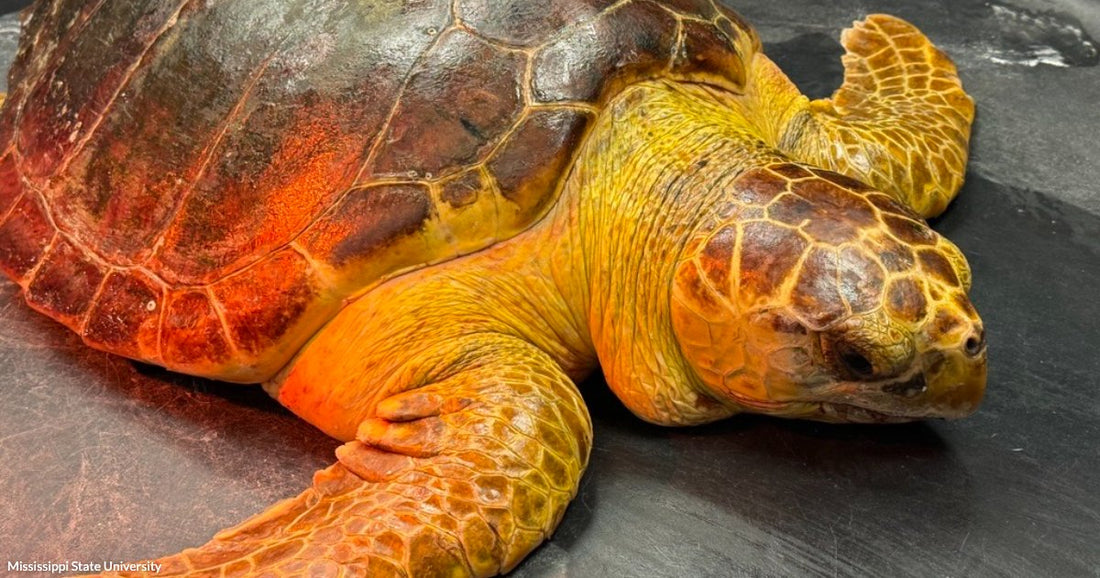
Endangered sea turtles are getting a fighting chance at recovery thanks to a powerful collaboration between coastal rescuers and specialists at Mississippi State University’s College of Veterinary Medicine. In a story that feels both urgent and hopeful, clinicians at MSU are using advanced CT imaging and veterinary expertise to treat endangered sea turtles that arrive with severe injuries and hidden internal threats. This blend of field rescue and high-tech care shows how much coordinated effort it takes to help even a single marine animal return to the wild.
Recently, two patients arrived at Mississippi State University College of Veterinary Medicine (MSU CVM) after being rescued by the Institute for Marine Mammal Studies (IMMS) stranding team in Gulfport. One was Sawyer, an adult male Kemp’s ridley sea turtle, widely recognized as the smallest and most endangered sea turtle species in the world. The other was Alfonzo, a subadult green sea turtle. Their cases, although very different, highlight the complex challenges endangered sea turtles face when they collide with human activity and natural illness.

IMMS recovered both animals on the coast and then worked closely with MSU CVM clinicians, who have been providing their medical support. Debra Moore, DVM, an assistant clinical professor at MSU CVM’s Global Center for Aquatic Health and Food Security, explained that the stranding team brought the turtles in for CT scans so the veterinary specialists could get a clearer picture of what was happening inside their bodies. That kind of detail can be the difference between guessing and making a targeted, life-saving plan.
Alfonzo’s story began in November 2025, when he was found in Alabama with a fishing hook embedded in one of his flippers. A single visible hook would be concerning enough, yet radiographs taken later revealed there was more going on. Additional hooks were lodged inside his gastrointestinal tract, turning a straightforward external injury into a far more complicated internal crisis. When Alfonzo arrived at MSU, the team performed a full triage and reviewed the radiographs taken on the coast. Those images revealed three more hooks in his intestinal tract.

Mississippi State University
At first, the clinical team monitored the intestinal hooks closely, trying to determine whether they were moving through his system or stuck in place. Unfortunately, it became clear that the hooks were lodged and not progressing. This is where the advanced CT imaging at MSU became crucial. CT scans allowed the team to pinpoint the exact location of each hook and to understand how they were interacting with surrounding tissues. With that information, clinicians could carefully plan the next steps in Alfonzo’s care, including whether surgical intervention or other specialized procedures would be required.
Sawyer’s case shows a different side of sea turtle medicine. He was found floating in the Mississippi Sound and rescued after responders noticed he had lost most of a front flipper. A missing flipper is a serious injury that can affect a turtle’s ability to swim, forage, and evade predators, yet further diagnostics revealed that his challenges went well beyond a visible wound.
According to Moore, who has worked with sea turtles for 35 years, Sawyer was also suffering from pulmonary bullae and lung disease. These conditions were linked to a significant bacterial infection and compounded by the presence of parasites living in his bronchi. For a marine animal that depends on strong, healthy lungs to surface and breathe, this combination of disease processes is especially dangerous. The MSU CVM team initiated treatment with injectable and oral antibiotics, addressing the infection while monitoring his overall clinical status and respiratory function.
Both Sawyer and Alfonzo are expected to require extended treatment and ongoing medical decisions guided by their clinical progress. After their initial diagnostics and interventions at MSU, they will continue to receive care at Gulfport with the IMMS and associated teams. The plan is for them to return to MSU CVM as needed for surgical procedures or additional imaging. Moore explained that much of the work is done on the coast, yet when a case requires specialized equipment or more advanced interventions, the animals are transported back to the university.
This is not the first time Mississippi State University has stepped in to help save an endangered sea turtle from life-threatening complications involving fishing gear. In July 2024, MSU CVM provided care to another Kemp’s ridley sea turtle known as Toast Malone. In that case, an endoscopy had revealed a fishhook in the turtle’s stomach. The hook was identified and removed by MSU clinician John Thomason, DVM, MS, DACVIM (SAIM). Toast Malone had already received treatment at MSU twice before the 2024 incident and had been microchipped so his recovery could be tracked and monitored over time.
Reflecting on that earlier case, Thomason emphasized the broader responsibility humans have when they encounter marine animals. He noted that human contact with marine life is inevitable, particularly as people increasingly move into or use coastal environments. In his view, this reality creates an obligation to help animals in distress, especially when the cause of that distress is tied, directly or indirectly, to human activity. I found this perspective striking because it frames rescue and rehabilitation efforts not as extraordinary events, but as a natural response to our presence in marine habitats.
The partnership between IMMS and MSU CVM also underscores the importance of organized response systems for marine emergencies. Each state along the coast has a designated stranding agency responsible for rescuing sick or injured marine life. In Mississippi, that role belongs to the Institute for Marine Mammal Studies. When someone encounters a sea turtle or other marine animal in distress, contacting the appropriate stranding agency connects that animal to a network of responders, veterinarians, diagnostic tools, and rehabilitation facilities.
Stories like those of Sawyer, Alfonzo, and Toast Malone bring together several key themes. They highlight the vulnerability of endangered sea turtles to injuries from fishing gear and infections that are not obvious at first glance. They show how advanced imaging, such as CT scans, can reveal hidden problems and guide precise treatment decisions. They also demonstrate how long-term monitoring, microchipping, and repeat visits can give these animals multiple chances to recover and thrive.
Most of all, they remind readers that every rescued turtle represents a coordinated effort involving field responders, veterinary specialists, diagnostic teams, and rehabilitation staff. For endangered species like the Kemp’s ridley sea turtle, each successful outcome matters not only to the individual animal, but also to the long-term survival of the species. By supporting coastal stranding agencies, respecting marine habitats, and responding appropriately to animals in distress, people can contribute to a larger story of protection and recovery in our shared oceans.