
Trump’s VA Eyes Psychedelic Treatments for Millions of Veterans as Safety Questions and Practical Barriers Remain
Guest Contributor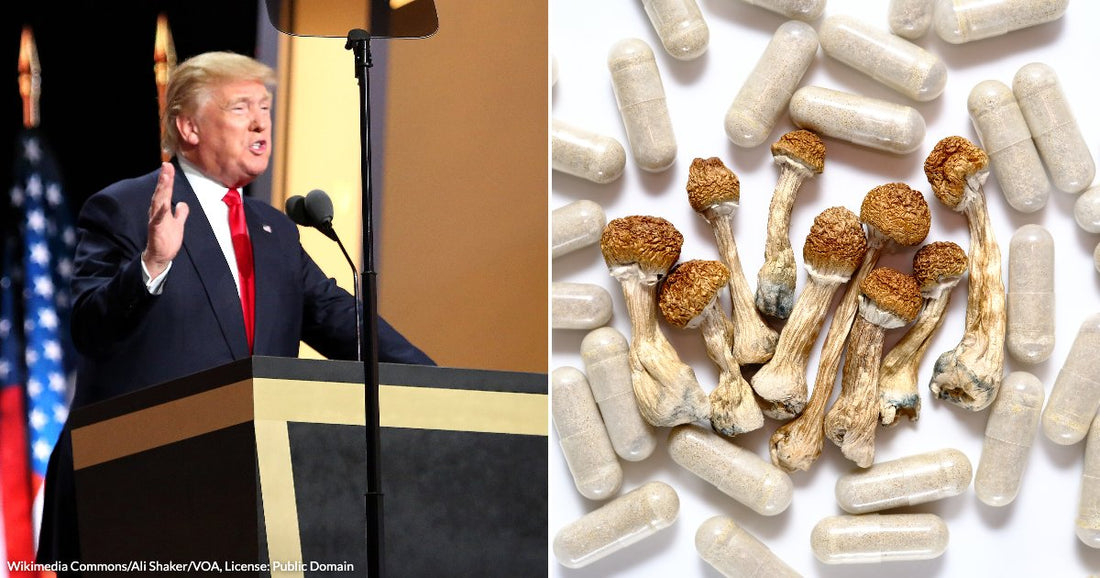
In a moment that could reshape how the United States approaches mental health care for veterans, former President Donald Trump has doubled down on a push to expand access to psychedelic drugs as potential treatments. Psychedelic-assisted therapy, once confined to the fringes of medical research, is now being discussed at the highest levels of federal leadership. Trump’s recent update on Truth Social highlights ongoing efforts to fast-track drugs such as ibogaine, psilocybin, and MDMA as options for veterans struggling with PTSD, depression, and traumatic brain injuries. For many readers, the idea of psychedelic drugs for mental health may sound surprising, yet this initiative has swiftly become a centerpiece of a broader debate about how the nation supports those who served.
Earlier this year, Trump signed an executive order directing federal agencies to expedite research, clinical review processes, and possible therapeutic pathways for selected psychedelic substances. Central to this agenda is ibogaine, an unconventional drug that has drawn interest for its potential to address complex psychological trauma. The executive order allocated 50 million dollars in federal support to study ibogaine and related substances, specifically focused on veterans whose mental health conditions have not improved with existing treatments.

Wikimedia Commons/Ali Shaker/VOA, License: Public Domain
In his Truth Social post, Trump described the executive order as a very important step to accelerate medical treatments for serious mental illness. He emphasized that the policy targeted psychedelic drugs, naming ibogaine directly. According to his post, veterans and what he called true American heroes joined him in the Oval Office, alongside podcast host Joe Rogan, to highlight the impact they believe such therapies can have. Trump portrayed the initiative as rooted in personal stories from service members who have exhausted conventional options and are seeking alternative ways to heal.
Trump also announced what he characterized as a historic development. He said that Secretary Kennedy had received a gift from the University of Miami, which provided the federal government with its original 1994 Ibogaine Investigational New Drug application. In regulatory terms, that application represents an early pathway into the Food and Drug Administration’s formal process for assessing a drug’s safety and efficacy. Trump’s post argued that this transfer would offer direct access to foundational FDA authorization materials and accelerate ibogaine’s development as a medical treatment in the United States. He called the move huge and extended special thanks to the University of Miami for acting to help Americans as quickly as possible.

The former president framed this update as part of what he described as incredible progress since the April executive order. He cited significant research funding from the Department of Health and Human Services, collaboration between HHS and the Department of Veterans Affairs, and ongoing FDA guidance as evidence that psychedelic-assisted therapy is moving forward within federal channels. In his words, the goal is to move fast so that veterans with serious mental illness have a right to try in the United States. He also encouraged more companies and institutions to join in, presenting the initiative as a collective effort to honor what he called the sacrifices of veterans.
Veterans Affairs Secretary Doug Collins reinforced this emphasis on unmet needs among former service members. Collins stated that far too many veterans live with mental health conditions that do not respond to existing treatments. Under the Trump administration’s direction, he said, the VA is exploring all avenues to evaluate new treatments and provide meaningful relief for those who have worn the uniform. He described a new clinical trial as another step toward that goal, placing psychedelic drug research within a broader portfolio of initiatives aimed at improving mental health outcomes.
Against this backdrop of rapid movement on psychedelic research for veterans, the article also described a very different trend unfolding in public health funding more broadly. During a June House Appropriations Committee markup of the 2027 Labor, Health and Human Services, Education, and Related Agencies funding bill, committee members clashed over proposed cuts to major health, education, and workforce programs. Democrats on the committee argued that the bill represents an extreme approach that puts health coverage at risk for millions of Americans and significantly reduces investments in public education and job training.
The bill would cut 2 billion dollars from operations that support Affordable Care Act health plans, which critics say could threaten access to care. It would eliminate funding for Workforce Innovation and Opportunity Act job training programs and cut Job Corps funding in half, changes that could sharply reduce employment support services. Education programs are also under pressure, with a 2 billion dollar reduction in Title I grants that, according to the article, could push 30,000 teachers out of classrooms and diminish learning opportunities for countless children. In the realm of health research, the proposal would eliminate funding for the Agency for Healthcare Research and Quality and remove nearly 1 billion dollars from the Patient-Centered Outcomes Research Trust Fund.
The article reported that reproductive and maternal health programs are likewise affected. The bill reduces funding for maternal care and contraception services and adds anti-abortion policy riders. At the same time, it would weaken public health defenses by cutting resources for HIV and AIDS programs at the Centers for Disease Control and Prevention, reducing Ryan White HIV/AIDS funding, and trimming support for mental health and substance use treatment. These shifts offer a stark contrast to targeted new support for psychedelic drug research for veterans, raising questions about how different aspects of the health system are prioritized.
Representative Rosa DeLauro, Ranking Member of both the full Appropriations Committee and the Labor, Health and Human Services, and Education Subcommittee, voiced strong objections to the bill as written. She described Americans as struggling to afford essentials ranging from gasoline and groceries to health insurance and medical bills. In her view, the proposed legislation would worsen this affordability crisis instead of alleviating it. DeLauro highlighted the 8 billion dollar reduction in the Department of Education’s budget, equivalent to a 10 percent cut, and warned that undermining Title I, job training, and Job Corps programs would leave workers and families with fewer paths to stability.
She further argued that cutting Affordable Care Act funding threatens health coverage for millions, while new limitations on reproductive health care would make services harder to obtain, regardless of state. DeLauro characterized the bill as squeezing working families from both ends, raising costs indirectly while reducing support for health, education, nutrition, and employment initiatives that many rely on. She pledged to continue working to change the bill as it moves through the legislative process, signaling that the debate over these cuts is far from over.
The article also noted emerging concerns about public health surveillance capacity. According to CNN reporting cited in the piece, the Centers for Disease Control and Prevention has shifted tracking for Cyclospora and five other pathogens from mandatory to optional status within surveillance networks such as FoodNet. This transition, combined with staff cuts across federal public health agencies and in specialized parasite-tracking laboratories, has reportedly weakened experts’ ability to quickly identify and connect local clusters into recognized outbreaks. Effective outbreak surveillance often depends on consistent, nationwide data collection, so any retreat from uniform monitoring can slow detection and response.
Viewed together, these developments paint a complex picture of U.S. health policy at a time of competing priorities. On one hand, there is an accelerated push to research psychedelic drugs for veterans’ mental health, anchored in an executive order, new federal funding, interagency collaboration, and a notable handoff of ibogaine regulatory documents from a major university. On the other, significant proposed cuts to broader public health, education, reproductive care, and research programs have sparked warnings about diminished access, weakened safety nets, and reduced capacity to prevent and track disease. The tension between focused innovation in one area and retrenchment in others underscores how resource allocation shapes which health needs receive urgent attention and which face greater uncertainty.
Read more at https://www.aol.com/articles/trump-doubles-down-plans-psychedelic-185759000.html