
Young Deer Becomes Trapped in a Metal Fence Until Firefighters Bring Out Their Rescue Tools
Guest Contributor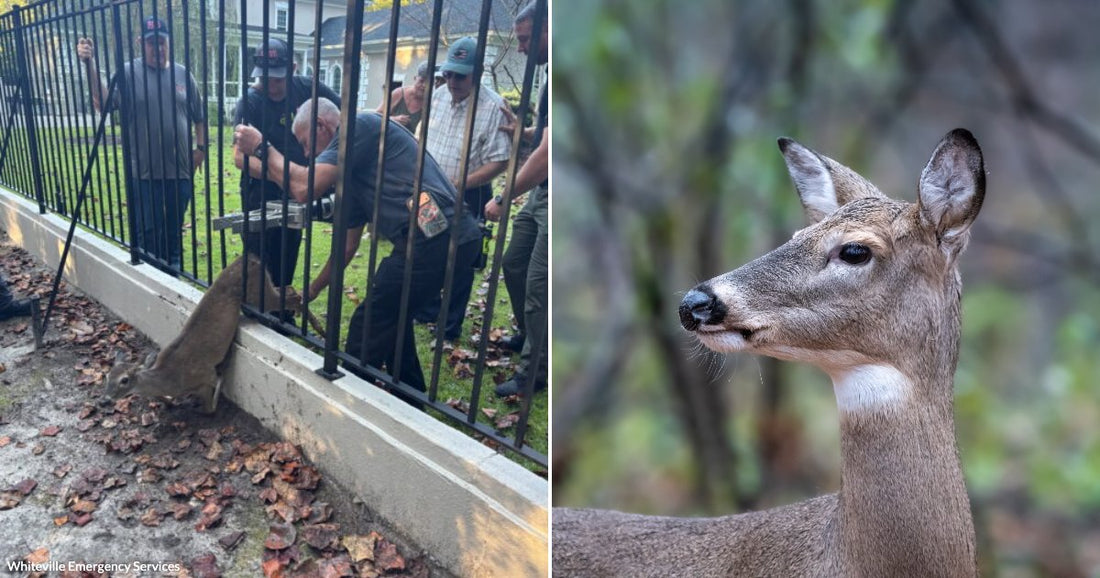
On an otherwise ordinary morning in Whiteville, a small drama unfolded that showed just how resourceful and compassionate local first responders can be. A young whitetail deer, a yearling buck, wound up stuck in a metal fence at a Fuller Street home and needed more than luck to get free. Firefighters stepped in with the same specialized extrication gear they typically reserve for car crashes and used it to rescue a four-hooved victim instead. This light-hearted yet touching incident has quickly become one of those “only in a small town” stories that neighbors and online readers are eager to share whenever someone mentions deer in residential neighborhoods or the dedication of local firefighters.
According to Whiteville Emergency Services Director Hal Lowder, emergency crews received a call on Wednesday morning after residents discovered the distressed deer trapped between the bars of a metal fence. The animal had apparently tried to squeeze through the gap, only to find itself wedged tight. By the time neighbors spotted the situation and dialed 911, the yearling buck was exhausted and clearly frightened, unable to free itself despite frantic efforts.

Whiteville Emergency Services
Animal encounters like this are not unusual in areas where wildlife and neighborhoods meet, but this one stood out for the challenges it posed. The deer was stuck firmly enough that simple tugging or coaxing would not have worked and might have risked further injury. Firefighters needed to act in a way that protected everyone involved, including the frightened animal, the residents who had called for help, and the crew themselves. It was a moment that called for both technical skill and calm patience.
Emergency crews decided to bring in an extrication tool known to many from its role in vehicle accidents. Often used to pry open twisted car doors or spread apart crumpled metal after collisions, this “spreader” is designed to create space where none seems available. In this case, firefighters applied it carefully to the fence, using controlled pressure to widen the bars just enough for the deer to slip through. The same power that usually helps human crash victims escape mangled vehicles became the key to liberating a trapped animal that had simply chosen the wrong shortcut.
The image of a rescue tool usually associated with serious car crashes being used to aid a yearling buck is striking. It underlines how adaptable first responders must be when faced with the unexpected. Every call is different, and not all emergencies fit the usual mold of fires, wrecks, or medical crises. Sometimes the priority is a person in immediate danger. Other times it is about relieving suffering and restoring calm, even when the one in distress has four legs instead of two.
Those who found the deer described it as exhausted and frightened, a reminder that getting trapped is terrifying for wildlife as well as humans. Emergency crews had to work efficiently while minimizing stress on the animal, aware that a panicked deer can injure itself or others. While the article does not provide a blow-by-blow account of every step, the outcome speaks for itself. Once the fence bars were spread and a clear path opened, the deer needed no encouragement to bolt to freedom.

In a bit of understated humor, Lowder noted that the buck did not stop to thank the firefighters, but was clearly pleased to get out of there. That small joke captures the light-hearted mood that lingers around the story. No serious injuries were reported, no property damage beyond a slightly altered fence, and no confrontation between people and wildlife. Instead, residents called for help, first responders arrived with the right tools and training, and an animal’s frightening ordeal ended as quickly as it began.
Whiteville residents are accustomed to seeing deer wander through yards, along tree lines, and even near busy streets. As the article explains, deer are a common sight in many residential neighborhoods in the city. This familiarity brings both charm and occasional challenge. People enjoy glimpses of wildlife close to home, yet fences, roads, and other aspects of human infrastructure can create hazards that animals are not equipped to understand. A simple attempt to find a shortcut through a yard can lead to a predicament that only skilled intervention can resolve.
Stories like this highlight how important it is for communities to have responsive, well-equipped emergency services ready to address a wide range of situations. Firefighters often perform duties that extend far beyond fighting fires, including technical rescues, vehicle extrications, and responses to unusual calls like this one. In this Whiteville deer rescue, the same tools and training designed to protect human life proved just as useful in aiding local wildlife. It becomes a quiet example of how public safety infrastructure benefits the broader environment as well as the people who live in it.
I found this detail striking: the extrication tool was used in such a nontraditional way, yet perfectly in line with its core purpose of freeing something trapped in metal. That small fact invites a broader appreciation for the creativity that first responders bring to their work. They do not simply follow a checklist. They make real-time decisions about how to adapt equipment and procedures to serve the situation in front of them, whether the call involves a highway crash or a deer stuck in a neighborhood fence.
The residents who called 911 also play a quiet but meaningful role in the story. They recognized that the deer’s struggle was not something they could safely handle on their own and involved professionals who could respond appropriately. That choice helped prevent possible injury to both the animal and any well-intentioned neighbors. It also reinforces a simple lesson for communities where wildlife is common. When an animal is clearly in distress and traditional do-it-yourself solutions seem risky or inadequate, reaching out to local authorities is a wise and responsible step.
This incident from Fuller Street will likely be one of those tales that circulate for a long time, a small but memorable chapter in the ongoing relationship between people, their neighborhoods, and the wildlife that shares their space. It carries a quietly uplifting message. Modern emergency tools and techniques, when placed in capable hands, can reduce suffering and restore safety even in situations that look more like a scene from a family storybook than from a standard emergency report. A trapped deer gets a second chance to bound away, firefighters gain another example of how adaptable their craft must be, and residents see firsthand how community systems step up in moments that are stressful, surprising, and, in this case, happily resolved.
Read more at https://columbuscountynews.com/2026/10/firefighters-help-stuck-deer/