
Injured Fox Spends Nine Hours Trapped Inside a Pipe Until Rescuers Finally Reach Him
Guest Contributor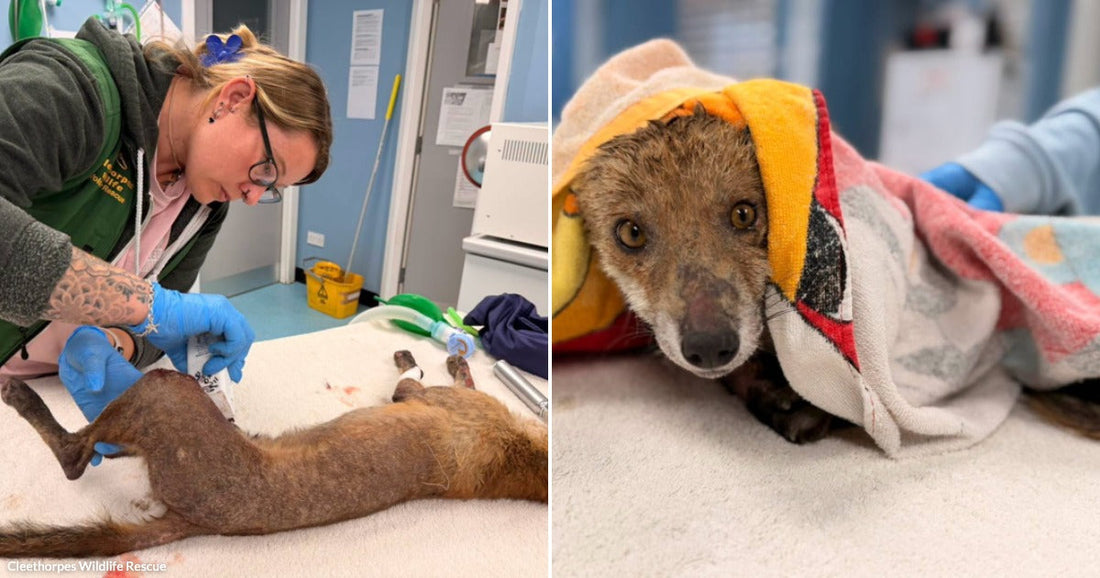
Animal rescue stories often highlight how far people are willing to go to help a creature in distress, and the recent fox rescue from a drain pipe in Humberston, Lincolnshire is one of those quiet, remarkable moments. Involving firefighters, water engineers, wildlife volunteers, and vets, this nine-hour fox rescue shows the determination behind successful wildlife rescues and how teamwork can change the fate of a single trapped animal.
The story began when residents in Humberston heard faint barks coming from beneath a street grate. Curious and concerned, they peered through the grates of a street drain and spotted a small fox cub trapped below ground. The cub, later named Valor, had somehow ended up inside a narrow wastewater pipe approximately 10 centimeters wide. He was stuck about 2 feet underground, his cries echoing through the drainage system.

Local residents initially tried to help. They removed drain covers and looked for ways the fox might be able to escape, but it quickly became clear that he could not get out on his own. Recognizing the limits of what they could safely do without specialist support, they called for help. Humberside Fire and Rescue Service arrived and assessed the situation. The firefighters confirmed that the cub was trapped inside the wastewater pipe, but despite their efforts they were ultimately forced to abandon the mission because the fox was simply too far in and beyond their safe reach.
At that point, the rescue shifted to a more complex, coordinated effort. Anglian Water engineers and Cleethorpes Wildlife Rescue were called in, along with veterinary professionals ready to treat the animal if and when he was brought to the surface. According to the report, the cub had crawled through around 300 meters of underground pipework before reaching the spot where he became wedged. That distance, combined with the narrow width of the pipe, made the situation especially challenging.

Cleethorpes Wildlife Rescue
The water engineers used specialist equipment to find the fox’s exact location. Thermal imaging cameras and probes allowed them to follow his body heat and movement signals through the dark, winding wastewater network. While the engineers traced Valor’s position below ground, volunteers began digging nearby to reach the section of pipe where he was trapped. The work was slow, careful, and physically demanding, since the team had to avoid damaging the infrastructure while trying to open enough space to extract the cub.
For more than nine hours, rescuers kept at the task, alternating between new ideas and painstaking excavation. Cleethorpes Wildlife Rescue later described the moment when they paused to regroup. They wrote that they stopped briefly and asked everyone on site whether they had any additional ideas, then worked methodically through each suggestion. This collective approach eventually paid off. Bit by bit, they managed to create a gap large enough for the fox to push more of his head and neck out of the pipe.

Cleethorpes Wildlife Rescue
Even with part of his body freed, he was still unable to escape under his own power. The lead rescuer managed to get his hands inside the pipework and made a critical discovery. Behind the exposed hole there was a drop in the pipe, and Valor’s front legs were caught in something within that vertical section. Cleethorpes Wildlife Rescue compared his position to an old pillory post, with his front end almost upright and immobilized. This uncomfortable posture had likely contributed to his exhaustion and the damage to his limbs and soft tissues.
Rescuers also worked to lower the water level in the drain so they could see and handle the fox more safely. Once the water was reduced and the team better understood how he was trapped, they were finally able to maneuver him free. After hours of crawling through pipes and standing in muddy excavation pits, they gently pulled Valor through the narrow opening that had been created. It was a delicate moment, since too much force could have injured him further in the already constricting pipe.

Cleethorpes Wildlife Rescue
The cub’s condition reflected the scale of his ordeal. Vets believe Valor had been trapped for several days before his cries were heard by residents. His body showed signs of severe fatigue and tissue damage. He was checked over immediately, then taken straight into surgery where dead tissue was cut away from his exhausted body. This kind of treatment is common in wildlife rescue scenarios that involve prolonged entrapment, as circulation issues and constant pressure can cause parts of the body to deteriorate.
Despite everything he had gone through, reports indicate that Valor is expected to make a full recovery. That outcome is not guaranteed in cases where animals are trapped underground for extended periods, so the successful fox rescue from a drain pipe speaks to both the timely reaction of the community and the coordinated work of professionals and volunteers. I found it striking that multiple agencies, from fire services to water engineers, combined their expertise to save a single wild animal.
Cleethorpes Wildlife Rescue has since shared the story on social media, detailing the many steps involved and the emotional strain of a rescue that ran to nine hours. Their account highlights the value of persistence, creative problem solving, and calm communication between teams. It also underscores how everyday infrastructure, like narrow wastewater pipes, can pose hidden dangers for curious wildlife that wander into places they cannot easily leave.
The organization is now appealing for donations to support Valor’s ongoing treatment and recovery. Wildlife rescues like this often rely on public generosity to cover veterinary bills, rehabilitation, and eventual release back into the wild when the animal is ready. For anyone who cares about animal welfare, the Humberston fox story is a reminder that listening carefully to unusual sounds and taking the time to investigate can make a life-or-death difference.
Stories of animals trapped in drains or underground spaces are not uncommon, yet each successful rescue represents a unique collaboration between communities and specialists. In this case, one small fox traveling 300 meters through dark pipework to an almost fatal dead end was given another chance. Valor’s rescue shows how compassion, supported by technical skill and persistence, can transform a desperate situation into a hopeful outcome.