
Rescuers Find Missing Teen Alive After Six Days in Dense Australian Bushland and Reunite Him With His Mother
Guest Contributor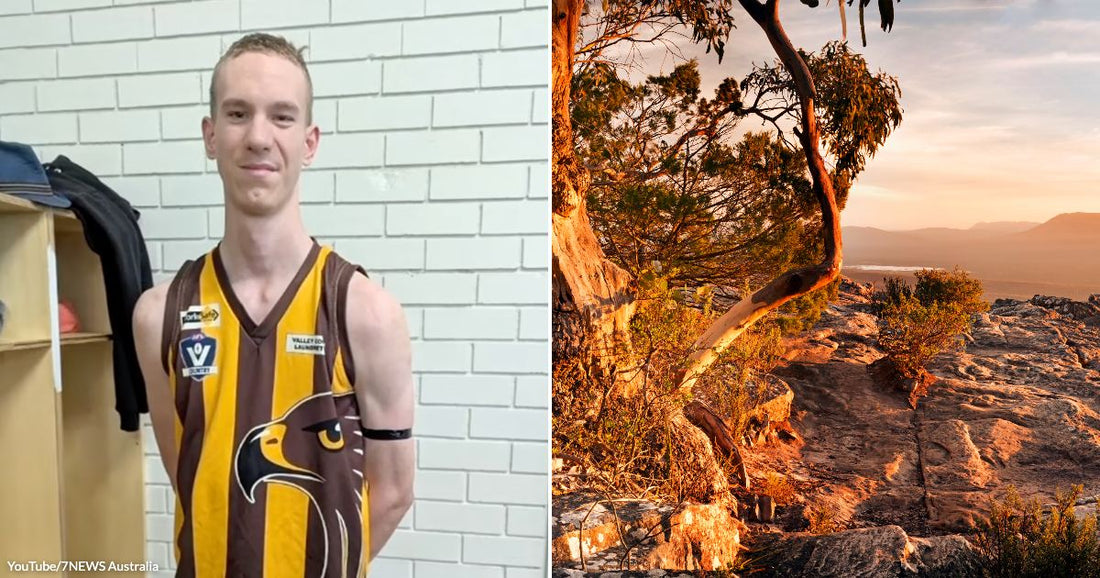
For six tense days in Victoria’s Gippsland bush, a family and an entire community held its breath. The search for missing 17-year-old William turned into a powerful story of survival, persistence and reunion that has resonated far beyond the region. It is a reminder of both how unforgiving the Australian bush can be and how determined people are when there is a chance to bring someone home alive. For anyone interested in survival stories, helicopter rescues or the realities of search and rescue in remote landscapes, this is the kind of story that lingers.
William disappeared on a Friday during what was meant to be his first independent camping trip with a friend at Walhalla East, about 180 kilometres east of Melbourne. He had little bush experience, yet within hours he found himself alone in dense terrain, separated from his campsite, and with almost nothing except his fishing gear, a few basic items and a bag of chicken chips. What followed was nearly a week of walking, waiting and sheer endurance as temperatures dropped overnight and the terrain became more dangerous with every misstep.

According to police, William missed a turn-off back to his camp, curled up under some bushes and fell asleep. The next day he set off again, trying to find his way back, only to lose his footing and fall down a steep riverbed embankment. The terrain was so rugged and rocky that search teams on foot could not safely enter some sections. Acting Inspector Jason Benbow later explained that the search area that proved crucial on the final day was beyond what anyone could reasonably cover without air support.
As the ground crews pushed through the bush below, the police helicopter crews scanned from above. For six days, more than 80 volunteers joined police, SES, divers, the dog squad and air crews in a coordinated search. The scale alone says a lot about how seriously authorities treat a missing person in the bush. Every hour can make a difference when the nights are freezing and water and food are running out.

YouTube/7NEWS Australia
William’s survival came down to a mixture of fitness, resourcefulness and luck. He used two towels as makeshift blankets to fight off the cold overnight and rationed a family sized bag of chicken chips to keep his energy up. When the police helicopter finally spotted him, he was sleeping on a rock in a dry riverbed, shirtless and sunburned, surrounded by a pillow, a lunch box and a small table. The crew noticed his fishing tackle box about two kilometres east of Stoney Creek, then saw him and circled.
The moment he woke to the sound of the helicopter is one of the story’s most vivid images. William opened his eyes, smiled, waved and then pumped his fist toward the air. According to police, he had no idea anyone was even looking for him, which makes that gesture feel even more powerful. From his perspective, he had been walking alone in harsh bushland, then waiting, injured and exhausted, not knowing whether help was coming. From the air, the crew saw a teenager still strong enough to stand and signal, then prepared to be winched out of terrain too steep to reach any other way.

Physically, the toll was clear. William had severe sunburn to his upper body and face, and cuts and scratches up and down his legs. Authorities said he was so exhausted he could not walk from the site of his rescue. Yet the descriptions that stand out are not about injury but about his energy and attitude. Acting Inspector Benbow said William was talking, smiling, giving a clear account of what had happened and hugging his mother while eating a doughnut and drinking water. In his view, William could probably have survived a few more days, which speaks both to his fitness and to the effectiveness of his rationing.
For William’s mother, Elizabeth Barkley, those details came later. Her story is rooted in six days of not knowing, then a reunion that almost defies description. She said she never gave up hope and felt strongly that he was alive despite his lack of bush experience. When news broke that William had been found, she was at the police staging ground at Cowwarr. A short time later she was running toward the helicopter, arms outstretched, to embrace her son. Cameras captured her telling him, with a mix of relief and frustration that only a parent can deliver, "You scared the shit out of me."
Her emotions throughout have been a blend of protective humour and deep gratitude. She joked that William is now "grounded for life" and "never leaving the house again." She added that he would never go camping again unless it was in a cabin and with her, with a rope tied to him so he could not wander off. Beside the jokes sits a fierce honesty: she had spent days praying, she said, and when the call came that he had been found, it felt almost too perfect, as if the story had been scripted for the best possible ending.
At Latrobe Regional Hospital, staff were struck by how well he seemed after such an ordeal. CEO Don McRae described it as extraordinary to see him in such good condition and highlighted his fitness as a key factor. That detail connects quietly to another part of William’s story. His mother shared that he dreams of becoming a famous AFL footballer, noting with a wry smile that he had hoped to be known for sport, not for surviving in the bush. Still, for her, the type of fame no longer matters. As she put it, "He’s mine now," and any future adventures will be much more closely supervised.
From the perspective of the search teams, the result provided one of the high points of their work. Benbow called it the best thing about the job to have this kind of outcome, pointing out that it does not happen all the time. SES incident controller Tohi Kuru recalled a moment at the staging ground when a kind of hush settled over the team before confirmation arrived that William had been found. The atmosphere shifted from strain to something like awe as they witnessed the reunion between mother and son.
I found it striking how often people involved in this rescue used words like "amazing," "extraordinary" and "awe-inspiring," yet stayed very grounded in describing the practical realities of the search. They acknowledged the steep, unforgiving terrain, the reliance on aerial support, and the sheer number of volunteers who committed their time day after day. At the same time, they focused on the simple, human details: a teenager waving at a helicopter, a mother running across a paddock, police officers quietly emotional as they watched it all unfold.
This Gippsland bush survival story is also a lesson in how thin the line can be between disaster and rescue. A missed turn, a fall down a riverbed and limited supplies could easily have led in a very different direction. Instead, a fit young camper used towels as blankets, rationed a bag of chicken chips, and held on long enough for highly coordinated ground and air crews to reach him. The outcome is a mix of personal resilience, family faith, and community effort that will not soon be forgotten by those who followed every update, or by the people who walked and flew countless kilometres to bring a teenager safely home.