
Conservation Dogs Sniff Out Invasive Mussels Before They Can Destroy Fragile Lakes
Guest Contributor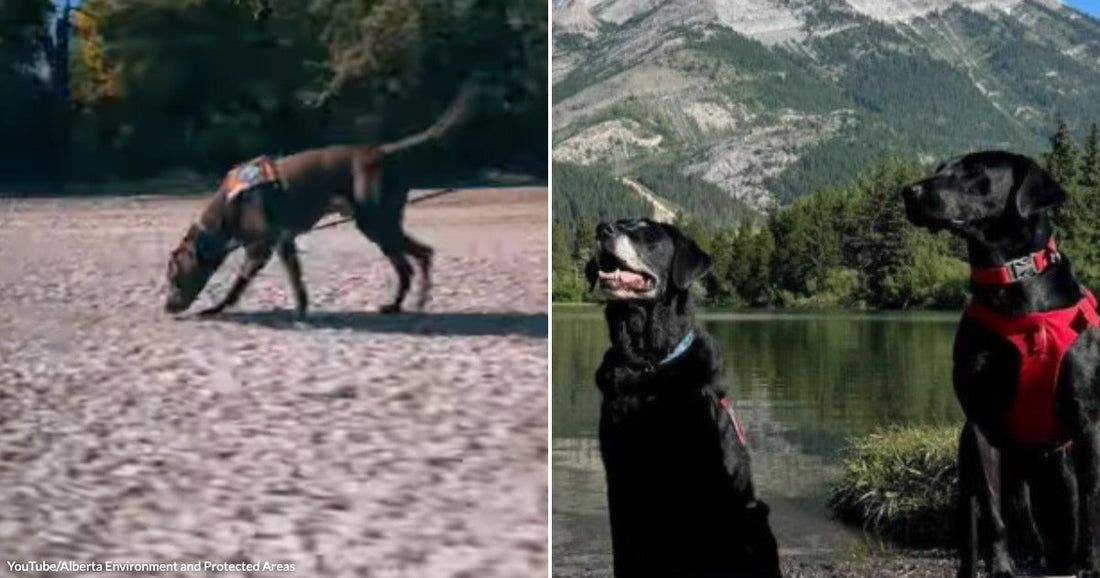
In Alberta’s lakes and rivers, a surprising group of guardians is on duty: a team of highly trained riverine sniffer dogs helping to keep invasive mussels out of the province’s waters. These working dogs are part of Alberta’s “Conservation Canines” program, a creative and science-driven response to a serious ecological threat. As aquatic invasive species like zebra mussels and golden mussels spread across North America, Alberta’s four-legged inspectors are becoming an increasingly important line of defense.
The mood around this story is both hopeful and practical. The stakes are high, but the solution is full of heart. Hilo, Jane, and Winnie, two black Labradors and a black lab cross, have spent years working at boat inspection stations across Alberta. Their job is to sniff out even the faintest trace of developing mussel larvae on watercraft traveling in and out of the province. These early-stage mussels can be incredibly hard to detect. Sometimes the only physical sign a human might feel is a slight sandpaper roughness along a boat hull or dock. For trained conservation dogs, however, that hidden threat carries a scent signature strong enough to trigger a focused search.

Under Alberta law, every watercraft must stop at an inspection station whether exiting or entering the province. It is a simple rule with far-reaching consequences. Inspectors visually check and clean boats, trailers, and equipment, but the dogs provide an extra layer of precision. Cindy Sawchuk, who leads Alberta’s Aquatic Invasive Species Operations and Conservation Canine Program, explains that the dogs complement human inspection efforts, giving the team a better sense of what might truly be hiding on a boat. Where a person may overlook a shadowed compartment or a damp corner, a trained nose can pinpoint trouble in seconds.
That level of vigilance is especially important as invasive mussels continue to establish themselves in new regions. Sawchuk noted that golden mussels have recently taken hold in California, which represents another potential entry route for these species into Canada, particularly through neighboring British Columbia. Mussels often travel quietly across borders on boats, trailers, and gear that appear clean to the naked eye. Once they arrive, they are notoriously difficult, often impossible, to remove.
These mussels are filter feeders originally native to Southeast Asia. In their home range, they play a role in the local ecosystem. In new environments like Canadian lakes and rivers, however, they become aggressive competitors. They consume the same tiny food particles that native bottom-dwelling or filter-feeding species depend on, effectively stealing the base of the food web. Over time, this can reshape entire aquatic communities as local fish and invertebrates struggle to compete with dense colonies of invaders.

Province of Alberta
The mussels also prefer to hide in the very places that are hardest for humans to check. As Sawchuk explained, they like damp, dark areas. These are the spots under seats, inside compartments, around fittings, or within folds of gear. They can settle in numbers that would be nearly invisible without careful inspection, especially when they are in their earliest stages. Here, the Conservation Canines excel. Their training focuses on the specific odor produced by mussels and their larvae. Even at low concentrations and in tight spaces, that scent becomes a clear signal for the dogs to alert their human partners.
The partnership between dog and handler is not only effective, it is clearly enriching for the animals. Each successful detection earns the dogs a special toy reward, turning their work into an ongoing game of seek and find. This taps into the animals’ natural drives to track scents and solve problems, and it provides a dopamine boost each time they succeed. The dogs approach their tasks with energy and enthusiasm, transforming what could be tedious human work into a dynamic, nose-driven challenge.
Behind that upbeat image, however, lies a very serious mission. In other provinces, the cost of managing a full-blown mussel infestation can reach up to $75 million annually, according to estimates cited in the report. Once an invasive mussel population becomes established in a water system, eradication is so difficult that it is considered virtually impossible in many situations. Prevention, inspection, and early detection become the only realistic tools. In this context, every successful detection by Hilo, Jane, and Winnie represents more than a clever trick. It is a potentially costly and ecologically damaging invasion stopped before it can begin.
The conservation dogs are not limited to boat inspection stations. Alberta’s program is also training them to search shorelines for signs of mussels. This expansion of their duties could help identify new colonies even earlier, especially in areas that are not regularly monitored by large inspection teams. Shoreline detection work requires the same keen noses, but often in more varied and challenging conditions. Dogs must distinguish target scents from a wide range of natural smells, from wet vegetation to algae and other wildlife. Their success in this role demonstrates how flexible and powerful scent detection can be when carefully channeled.
What stands out in this story is how a well-designed working dog program can bridge the gap between scientific strategy and on-the-ground action. Aquatic invasive species monitoring often relies on lab tests, sampling, and complex models. Those tools are essential, but they can be slow or limited in coverage. Conservation canines, by contrast, offer immediate feedback at the precise moment when boats are moving between water bodies. They help translate provincial policy, such as mandatory inspection stops, into real prevention outcomes. The dogs turn abstract rules about invasive mussel control into something tangible at every roadside station.
The presence of these K9 conservationists also offers a powerful public education opportunity. Boaters interacting with inspection teams see firsthand how much effort the province invests in preventing invasive species. A friendly black Labrador inspecting a boat can start conversations about why drying, cleaning, and draining watercraft is so important. Those interactions build awareness that goes beyond a single checkpoint. Over time, that kind of understanding can foster a culture of shared responsibility, where boat owners see themselves as partners in protecting lakes and rivers alongside the professionals and their canine colleagues.
Across Alberta, the collaboration between people and dogs highlights both the seriousness of the invasive mussel threat and the creativity of the solutions being used to combat it. By leaning into the strengths of these highly trainable animals, the province has created a model that is at once practical, cost-conscious, and humane. The dogs receive meaningful work and consistent positive reinforcement. Communities gain added protection for treasured waterways. And ecosystems receive a better chance to remain balanced, with native species able to compete on more equal terms. As zebra mussels and golden mussels continue to pressure freshwater systems across the continent, stories like this suggest that the future of conservation will likely include more paws on the ground, noses to the wind, and partnerships that blend science with the unique abilities of working animals.