
🚨Urgent: Missile Strikes Shelter in Ukraine! Rush Emergency Aid!
Blind Senior Shelter Dog Finally Gets Someone To Notice Him
Guest Contributor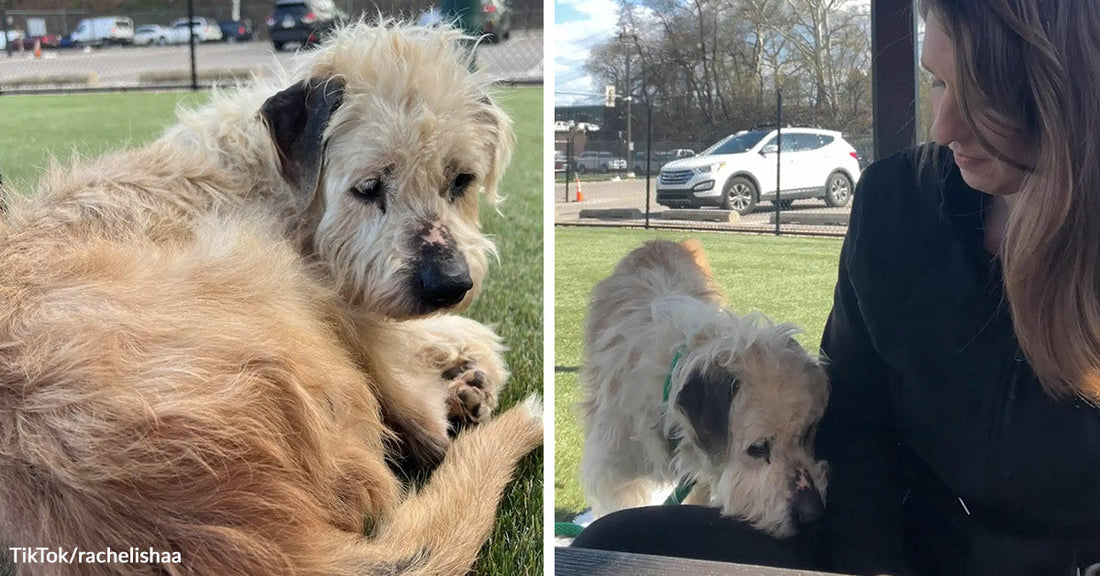
At a crowded city shelter, surrounded by noise and movement, one senior shelter dog was too depressed to move. Staff and volunteers had walked by his kennel, but he hardly stirred. His story might have ended there, quietly and unseen, if someone had not finally noticed him and decided he deserved a different ending.
The dog’s name was Hunnit, a roughly 10-year-old pup living at ACCT Philly, an animal shelter in Pennsylvania. According to animal advocate and influencer Rachel, known on social media as @rachelishaa, Hunnit had once had a constant companion. He and his sibling were found together as strays on the street, huddling close as if they were all each other had. When they were brought to the shelter, a heartbreaking truth emerged. Hunnit was blind, and his brother was suffering from a medical condition that he would not survive. Before long, Hunnit was alone in his kennel, grieving and confused.

Rachel regularly visits her local shelter with a specific mission. She runs something she calls “Dog of the Week,” where she highlights a dog who is clearly struggling with shelter life and gives them a special day outside their kennel. The goal is simple yet powerful. By sharing these dogs’ stories, she hopes to help them be seen by potential adopters. In Hunnit’s case, that mission felt especially urgent. When Rachel first spotted him, she saw an older dog lying motionless, the weight of loss and disorientation visible in his posture. She later explained that he was just lying there, “super depressed,” and she felt a strong conviction that she needed to cheer him up.
Taking a shelter dog out for the day might sound straightforward, but as Rachel reports, it takes patience and sensitivity. Many of the dogs she features do not trust humans right away, and with Hunnit’s blindness and recent trauma, that hesitancy was to be expected. When it came time for their special outing, Hunnit was reluctant even to step out of the kennel he had barely moved in. The world outside was unfamiliar and, for a dog who could not see and had just lost his brother, possibly frightening.
Rachel responded with calm, gentle encouragement. She allowed Hunnit to set the pace, giving him time to process each new sensation. She shared that she always keeps treats or a toy on hand to signal her friendly intentions. With that combination of patience, kindness, and positive reinforcement, Hunnit slowly began to open up. Where there had been only stillness, there were now tentative steps. Where there had been silence, there was at least a quiet willingness to follow a trusted guide.
As their time together unfolded, a different side of Hunnit appeared. The senior dog who had seemed too depressed to move began to show that he still had the capacity for trust. He was hesitant, but as Rachel described, this was understandable for a dog in his situation. What mattered was that he was willing to try. The simple act of leaving his kennel, feeling the ground under his paws in a new space, and receiving focused attention signaled a subtle but important shift from despair to possibility.
Blind dogs in shelters often face an additional layer of challenge. Navigating unfamiliar surroundings without sight can be disorienting, and potential adopters sometimes overlook them, worrying about medical or training needs. Stories like Hunnit’s show that while these dogs may need extra support, they are just as capable of forming deep bonds and living meaningful lives. His reaction to Rachel’s patience illustrates how responsive many shelter dogs, including seniors and those with disabilities, can be when someone invests time and compassion in them.
Once their special outing ended, Hunnit was guided back to the kennel he had once been reluctant to leave. On the surface, not much had changed. He was still in the same shelter, in the same run, facing an uncertain future. Yet the experience had planted something crucial. The interaction gave him a reminder that human contact could be gentle and that new experiences did not always lead to loss. For observers, it also created visibility for a dog who might otherwise have faded into the background.
Rachel shared a video of their time together, highlighting the contrast between Hunnit’s initial despair and his growing willingness to engage. That exposure proved life-altering. Within hours of the video going online, a rescue group reached out and came to save Hunnit from the shelter. Instead of spending the rest of his days in a kennel, this senior dog who had lost almost everything would now have the chance to live out his golden years in a home.
I found this detail striking because it shows how a single day of focused attention, combined with the power of social sharing, can completely change the direction of a shelter dog’s life. For Hunnit, visibility equaled opportunity. Without someone taking the time to notice his depression and share his story, he might have remained an anonymous, elderly dog in a crowded facility.
Hunnit’s journey from being too depressed to move to being rescued also highlights a broader reality. Shelters across the country are full of dogs in need of loving homes, many of them seniors, bonded pairs, or animals with medical or behavioral challenges. Not all of them will have a viral video or a dedicated influencer advocating for their adoption. Yet Rachel’s ongoing “Dog of the Week” effort illustrates a model that volunteers and communities can adapt. Even if a person cannot adopt, they might be able to foster, share profiles of adoptable pets, or spend time helping fearful or withdrawn dogs gain confidence.
The story underscores the emotional lives of animals who enter shelters. Losing a companion, being moved from familiar surroundings to a loud, unfamiliar building, and facing an uncertain future can all take a toll. When Hunnit lay motionless in his kennel, he was expressing something that many dogs feel but cannot explain. The transformation that occurred when someone saw him, acknowledged his grief, and offered gentle companionship is a powerful reminder that emotional care is as important as food and shelter.
There is a quiet heroism in this kind of everyday advocacy. It does not change animal welfare systems overnight, but it changes outcomes for individual animals like Hunnit. Each dog given a chance to leave the kennel, even for a few hours, receives a measure of dignity and hope. Each shared story invites a wider audience to consider fostering, adopting, or at least looking twice at the dog in the back of the shelter who seems too sad to move.
In the end, Hunnit’s tale is both heartbreaking and deeply hopeful. He suffered loss and confusion, yet he also experienced care that honored his needs and respected his pace. His rescue shows that older dogs, blind dogs, and deeply withdrawn dogs are not beyond help. They are waiting, often quietly, for someone to see them and offer a way out. For Hunnit, that someone was a visitor determined to make sure he did not disappear into the background. The result is a new chapter for a dog who now has the chance to know peace, comfort, and safety in a home during his remaining years. Read more at The Dodo