
Depressed Shelter Dog Gives Up On Everything Until One Visitor Sees His Pain
Guest Contributor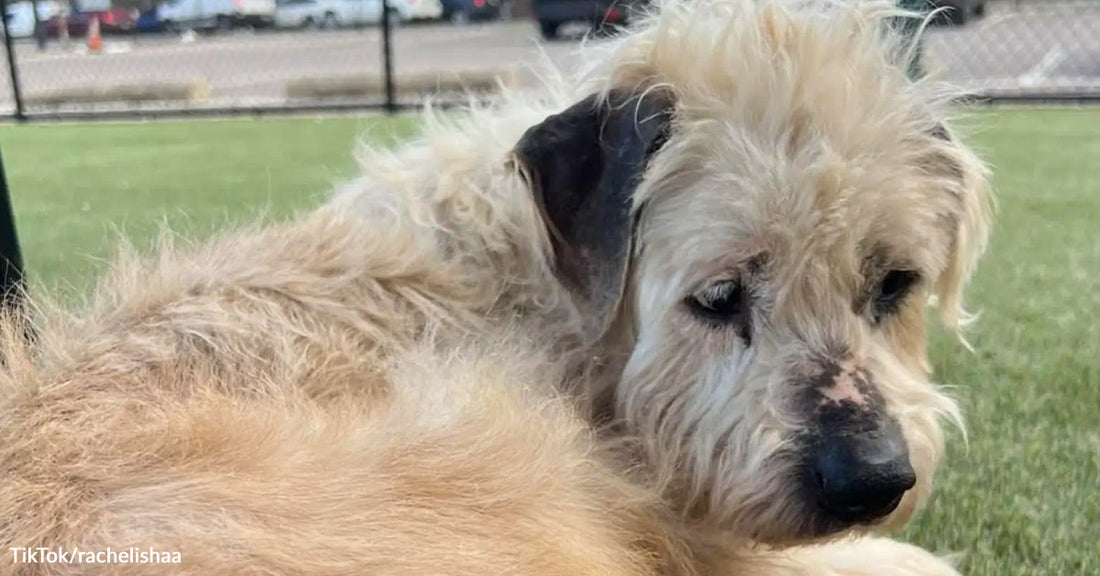
At a busy city shelter, it can be easy for a single dog to fade into the background. Kennels line the hallways, each holding an animal with its own history, fears, and fragile hopes. In the middle of this constant noise and motion, a senior shelter dog who was too depressed to move lay quietly on his bed, trying to disappear. His name was Hunnit, and for a while, it seemed as if no one truly saw him. Then, someone finally did.
Animal advocate and content creator Rachel, known online as @rachelishaa, regularly visits her local shelter with a clear purpose: to shine a light on dogs who are struggling the most. She calls her effort “Dog of the Week,” choosing one dog at a time who is having an especially hard time coping with shelter life. Her goal is simple yet powerful. By taking a dog out for the day, sharing their story, and letting people see who they really are beyond the kennel bars, she gives them a chance at finding a loving home.

On one of her weekly visits to ACCT Philly, a large animal shelter in Pennsylvania, Rachel’s attention was pulled to a quiet corner. Inside a kennel, Hunnit lay completely still. He was not barking, pacing, or seeking attention. He was simply lying there, shut down, and clearly heartbroken. The shelter environment can be overwhelming for any animal, but for Hunnit, it was especially devastating.
Staff and volunteers shared more of his story. Hunnit, believed to be around 10 years old, had recently been picked up as a stray alongside his sibling. The two had been found huddled together on the street, relying on each other for comfort and survival. In the shelter’s care, it became clear that Hunnit was blind. His world was already dark and unfamiliar, and the only constant he had was his brother.
Tragically, Hunnit’s sibling was suffering from a serious medical condition and did not survive. In a short span of time, Hunnit lost his familiar environment, his independence, and finally his closest companion. Faced with grief, disorientation, and the noise of a shelter kennel, he shut down emotionally. As Rachel later explained, he was simply lying there, super depressed, and the depth of his sadness was immediately apparent.
Many people might have walked past his kennel and seen only a quiet, older dog who did not move. Rachel saw something different. She saw a senior blind dog in the shelter who had endured overwhelming loss and who needed someone to believe in him. She decided that Hunnit would be her next “Dog of the Week,” the one she would take out for a special day meant to lift his spirits and bring attention to his story.
Getting Hunnit to leave his kennel was not easy. At first, he was too sad and uncertain to move, reluctant to step away from the small space he had come to know. For a blind dog, every new sound, smell, and surface can feel like a risk. Combined with grief and fear, it was understandable that he hesitated. Rachel recognized this and gave him the one thing he needed most: time.
Instead of rushing him, she let him move at his own pace. She stayed close, spoke gently, and offered treats and toys as signals of safety and kindness. She has learned through her work that many shelter dogs do not trust humans right away, especially those who have recently experienced trauma or upheaval. With patience and consistency, they often begin to lean into that trust, even if only a little at first.
Slowly, Hunnit began to respond. He took tentative steps, guided by Rachel’s voice and her calm presence. The simple act of leaving the kennel for a short outing became a turning point. Outside the stressful shelter environment, dogs often reveal sides of themselves that are nearly invisible behind kennel doors. For Hunnit, this meant showing that he could still connect with a person and that his capacity for trust had survived everything he had been through.
Their time together that day was not dramatic or flashy. It was gentle and deliberate, built around reassurance, small comforts, and quiet companionship. As he settled into the outing, Hunnit began to open up, bit by bit. The senior dog who had seemed too depressed to move was now participating in a new experience, guided by someone who genuinely wanted to help him.
When their date ended, Hunnit returned to the kennel he had been so hesitant to leave earlier in the day. This time, though, something was different. The physical surroundings were the same, but the emotional landscape had shifted. He had proof that kindness still existed, that people were willing to see him and care about his future. Rachel made sure that his story did not end at the shelter door.
After their time together, Rachel shared Hunnit’s story online, including video from their outing. Her goal was the same as always: help people look past the label of “shelter dog” and see an individual with a rich inner life and an urgent need for a second chance. The response came faster than she could have anticipated. Within just a few hours of posting about Hunnit, she received news that changed everything.
A rescue group had stepped forward after seeing the video and learning about Hunnit’s situation. They arranged to pull him from the shelter, freeing him from the uncertainty that often hangs over older dogs in crowded facilities. For Hunnit, it meant that he would get to leave the kennel system entirely and live out his golden years in a home environment, supported by people dedicated to his care.
The transformation in his prospects was remarkable. One day, Hunnit was a grieving, blind senior dog lying motionless in a kennel, nearly invisible to the world. Shortly after, he became the focus of a rescue effort that would give him safety, stability, and love. The catalyst was simple but profound. Someone noticed him, took the time to understand his sorrow, and shared his story in a way that others could not ignore.
Stories like Hunnit’s highlight both the vulnerability of shelter animals and the power of individual action. Many dogs struggle with shelter life, especially seniors and those with medical or sensory challenges. They might not rush to the front of the kennel or catch the eye of visitors right away. Some, like Hunnit, withdraw into themselves. Yet with patience, compassion, and visibility, their futures can change in a matter of hours.
Rachel’s ongoing “Dog of the Week” project shows how small efforts can create large ripples. By dedicating one day at a time to one dog in need, she helps break the cycle of invisibility that so many animals face. Her work also serves as a reminder that behind every kennel door is a story. Some are joyful, some are heartbreaking, and many are still waiting for their hopeful chapter to begin.
Hunnit’s journey from despair to rescue does not erase the grief he endured, nor does it change the fact that shelters across the country are filled with dogs just like him. What it does offer is a clear example of what can happen when people choose to look closely, to care, and to act. One senior blind dog who had been too depressed to move now has the chance to experience comfort and companionship again, and his story may inspire others to give that same chance to the next dog quietly waiting in a kennel.