
🚨Urgent: Missile Strikes Shelter in Ukraine! Rush Emergency Aid!
Cat Hisses At Her Dogs After Grooming Leaves Them Unrecognizable
Guest Contributor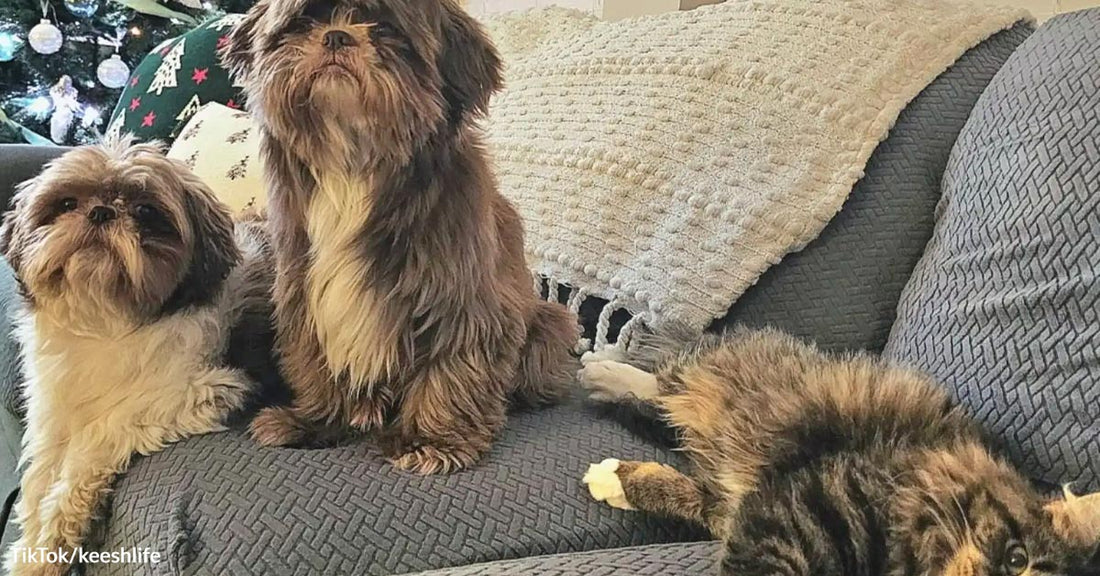
Some of the funniest animal stories arrive in the quietest everyday moments, and this one begins with a routine grooming day that did not feel routine to every member of the household. When pet parent Franzlei Yuson decided it was time to shave her two Shih Tzus, Koa and Kumi, she had no idea their new look would completely confuse the family cat. What followed was a hilarious clash of expectations and identity, a perfect example of how pets rely on more than just scent to recognize the animals they love.
About a year before the incident, Yuson had welcomed a cat named Kimchi into her family. From the start, Kimchi surprised everyone by immediately clicking with Koa and Kumi. The dogs were already part of the home, and new cats do not always integrate so seamlessly with resident pups, but in this case the transition was remarkably smooth. The three animals became a tight-knit little group, steadily building what appeared to be a comfortable, trusting friendship.

As their bond grew, Kimchi’s fondness for her dog siblings was clear. The author reports that Kimchi would often curl up with Koa and Kumi, choosing to share the couch rather than claim her own isolated corner like so many cats do. They spent calm, uneventful moments simply existing together, the kind of relaxed companionship that signals real comfort. Over time, it started to look as though nothing could unsettle their easy friendship.
Everything changed on one seemingly ordinary day when Koa and Kumi returned from their grooming session. Roughly once or twice a year, Yuson’s husband fully shaves the dogs to help clean their skin thoroughly and give their coats a chance to reset. Since this is not a frequent routine, it is not a look the pets see often. For the humans, the transformation might be amusing or even cute. For Kimchi, it was something else entirely.
When the newly shaved Shih Tzus reentered the space they shared, Kimchi’s reaction was instant and intense. Instead of her usual tolerant calm, she began to hiss at the dogs, her body language shifting into the classic defensive posture that so many cat parents will recognize. The author describes Kimchi taking on the full “angry cat position,” a complete departure from the peaceful, gentle behavior she had shown from the first day she entered the home.
For a brief moment, Yuson was simply confused. Why would a cat who had never hissed at these dogs, not even during the first days of adjustment, suddenly treat them like enemies? Then the realization arrived. The dogs were not just freshly bathed or lightly trimmed. They had been shaved all the way down, their fluffy fur gone, their familiar outline replaced by much smaller, sleeker shapes. From Kimchi’s perspective, the two trusted companions she knew were gone, and in their place stood a pair of complete strangers.
This misunderstanding highlights how strongly animals can depend on visual cues, not just scent, to identify one another. While humans might assume that smell is the main way pets recognize their friends, Kimchi’s confusion suggested that appearance also plays a crucial role. The sudden absence of Koa and Kumi’s usual fur coats stripped away key signals Kimchi used to classify them as family. In their place she saw what looked like intruders, and she responded exactly as a cautious, self-protective cat would.
While Kimchi was on high alert, Koa and Kumi appeared to feel nothing but their usual joy. The author notes that the dogs clearly did not understand why their feline friend was upset. They rolled around on the floor in front of her in a playful way, acting completely unaware that anything about them had changed. For the dogs, grooming day was over and life was back to normal. For Kimchi, two unknown animals had just appeared inside her safe territory.
Feeling threatened, Kimchi decided she needed distance. She retreated upstairs and chose the guest room as her hiding place. According to Yuson, she stayed there for about four hours, keeping herself far from the shaved dogs while she processed this unnerving change. The humans resisted the temptation to intervene. They did not carry Kimchi back downstairs or force any interaction, despite finding the situation funny. The decision to give her time and space showed respect for her feelings, even within an undeniably comical scenario.
I found this detail striking, because it reflects the delicate balance of empathy necessary in multi-pet homes. It can be easy to laugh off fearful reactions when they appear irrational from a human point of view. Yet from Kimchi’s perspective, the risk felt real. The humans in the story acknowledged that her distress deserved patience, and allowed her to come to terms with the new reality at her own pace.
Eventually, curiosity and trust began to outweigh Kimchi’s fear. After several hours upstairs, she slowly emerged from the guest room and made her way back toward the dogs. What followed was a careful, tentative investigation. Kimchi inched closer to Koa and Kumi and began to sniff them, collecting information the way animals do best. Scent, sound, and subtle body language began to fill in the gaps that their altered appearance had created.
Within a matter of minutes, recognition seemed to dawn. The author notes that it took only about ten minutes of cautious sniffing and observing before Kimchi realized that these unfamiliar-looking dogs were actually the same trusted friends she had been cuddling with for months. Once she made that connection, the fear evaporated, and her behavior returned to normal as if the earlier drama had never happened.
This moment of resolution captures the heart of the story. A cat who believed her home had been invaded by strangers learned, through her own process, that nothing important had changed. The shaved dogs might have looked different on the outside, but they were still the same companions she knew and loved. It is a simple yet vivid reminder that identity for animals, like for people, is more than outward appearance.
Stories like this offer gentle insight into the emotional lives of pets. The episode is undeniably funny, yet it also shows that animals are sensitive to change, especially unexpected changes in those they consider part of their social group. A seemingly harmless grooming decision created a brief identity crisis for Kimchi, who needed time, space, and her own senses to rebuild her confidence.
For anyone living with multiple pets, Kimchi, Koa, and Kumi’s experience might feel familiar. A new haircut, a cone after surgery, or even a different collar can sometimes trigger surprising reactions between animal companions. This story encourages patience during those moments, as well as respect for each pet’s unique way of understanding the world. Given time to adjust, and the reassurance of familiar scent and behavior, many animals, like Kimchi, find their way back to comfort, proving that the bonds they share run deeper than any grooming transformation.