
An Owl Hangs by One Wing From a Power Pole Until a Jogger Spots Her
Guest Contributor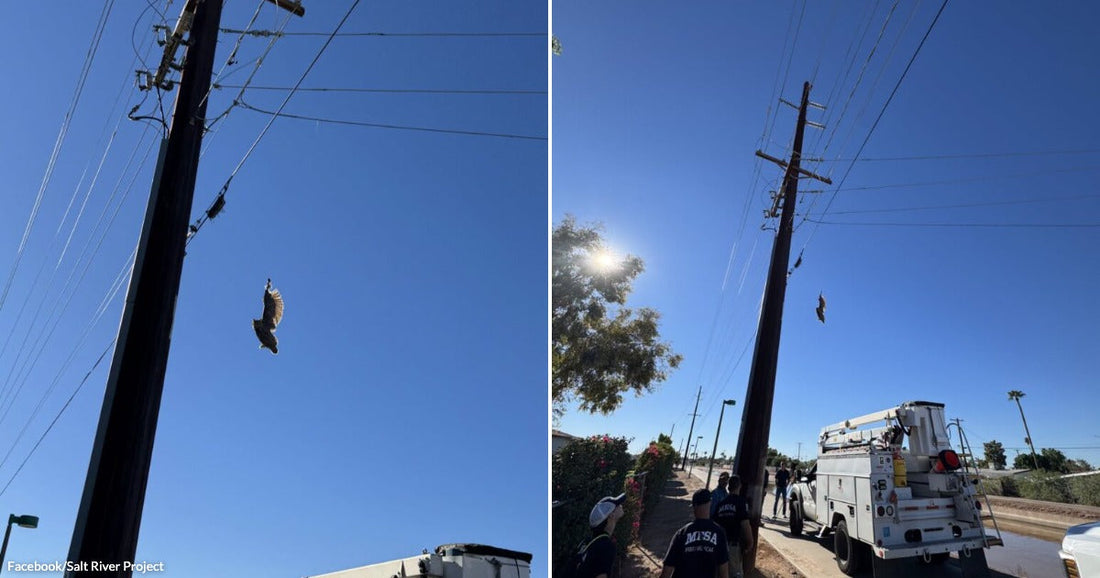
In the quiet early hours of an October morning in Mesa, Arizona, a simple jog became the start of a life-saving rescue. A passerby spotted what looked like an odd shape hanging from a power pole and quickly realized it was an owl dangling by one wing, suspended in mid-air by a length of fishing line. That single moment of paying attention, paired with a quick call for help, set off a chain of compassionate decisions that would bring the owl safely back to earth. Stories like this highlight the real impact of wildlife rescue efforts and remind us how discarded fishing line can turn into a serious hazard for birds.
The account describes how the jogger immediately called 911 after noticing the owl in distress. It was still early in the day, the kind of time when most people might pass something strange in the half-light and keep going. Instead, the caller took action. When firefighters from Engine 201 of the Mesa Fire and Medical Department arrived, they found a precarious scene. The owl hung from the power pole, suspended solely by her wing, which had become tangled in the fishing line. She was alive and alert, but every moment in that position increased the risk of serious injury.

Facebook/Salt River Project
Rescuers needed to move quickly, not only because of the owl’s vulnerability but also due to the obvious danger of working near power lines. Salt River Project (SRP) crews joined the effort and, together with the Engine 201 team, carefully coordinated the rescue. The report notes that the bird’s responsiveness gave everyone hope that she could survive the ordeal. That cautious optimism fueled the teamwork that followed, as they worked out how to free her without causing more harm.
SRP crews eventually managed to cut the fishing line that held the owl in place. This was a delicate step. With an animal caught high above the ground, one wrong movement could have resulted in a fall or further damage to her already stressed wing. Once the line was severed, rescuers were able to gently lower the owl from the pole. It was the critical turning point of the story. The author describes how SRP and the Engine 201 crew then worked side by side to secure the owl, wrapping her in a blanket both to keep her calm and to prevent additional injury.

Facebook/Salt River Project
The blanket served more than one purpose. It helped restrain the owl’s powerful talons and wings so she could not harm herself or the people trying to help. It also created a dark, contained space that could reduce her stress during transport. Raptor rescues often rely on this kind of simple but effective method for stabilizing birds that are frightened, disoriented, or in pain. The fact that the teams on scene were prepared and coordinated likely made the difference between a traumatic outcome and a successful wildlife rescue.
Once the owl was safely on the ground and wrapped, SRP’s dedicated avian protection specialist took over. According to the report, the specialist transported the owl to Liberty Wildlife, a rehabilitation center in Phoenix known for caring for injured birds and other native species. Transferring the owl to experienced wildlife professionals ensured that any hidden injuries could be identified and treated. This seamless handoff from first responders to rehabilitation experts shows how different groups, from a morning jogger to utility workers to biologists, can form a life-saving chain.
At Liberty Wildlife, biologists examined the owl closely. The outcome was surprisingly positive given how dire the situation had looked at first glance. The staff found no tissue damage, no broken bones, and no serious injuries. Aside from some ruffled feathers and understandable stress, the owl had escaped a potentially fatal entanglement with only minor physical effects. I found this detail striking because it underlines both the resilience of wildlife and the importance of acting quickly when an animal is in distress.
With a clean bill of health aside from those disheveled feathers, the owl was expected to stay at the rescue center only a few days to recuperate. This short-term stay would allow caregivers to monitor her behavior, ensure her wing function remained normal, and confirm that she could fly and hunt effectively. Once fully cleared, she would return to the skies, her brief stay in human care finished. The article notes the hope that she will steer clear of fishing line in the future, a gentle reminder that her ordeal was the direct result of human litter left in the environment.
The appreciation expressed in the account extends to everyone involved. The jogger who noticed something wrong and chose to help, the Mesa Fire and Medical Department team who responded quickly, the SRP crews who navigated the hazards around the power pole, and the wildlife professionals at Liberty Wildlife all played essential roles. Their combined efforts turned a potentially tragic scene into an uplifting example of effective community response and interagency cooperation.
The story also serves as a clear reminder about the dangers of discarded fishing line and similar debris. Thin, nearly invisible, and strong, fishing line can easily wrap around wings, legs, or beaks, cutting into tissue and immobilizing birds and other animals. Waterways, shorelines, and even urban areas can become traps when line is left behind. The piece encourages people to dispose of fishing line properly and to be alert to the presence of wildlife around power facilities. It specifically advises the public not to approach animals in distress near power lines and instead to contact emergency services so that trained personnel can respond safely.
There is a gentle, hopeful mood running throughout the account of this owl rescue. It is a story about a vulnerable creature, yet it is equally about human responsibility and kindness. By slowing down long enough to notice something wrong and by working together with care and expertise, a small group of people gave one owl another chance at life. Along the way, they offered a quiet lesson in how everyday choices, such as picking up trash or reporting an injured animal, can contribute to a safer world for wildlife. Have a great life, owl, and may more people follow the example of those who stopped, looked up, and decided to help.