
Judy the Dog: World War II Hero, And The Only Animal Held As A POW
Guest Contributor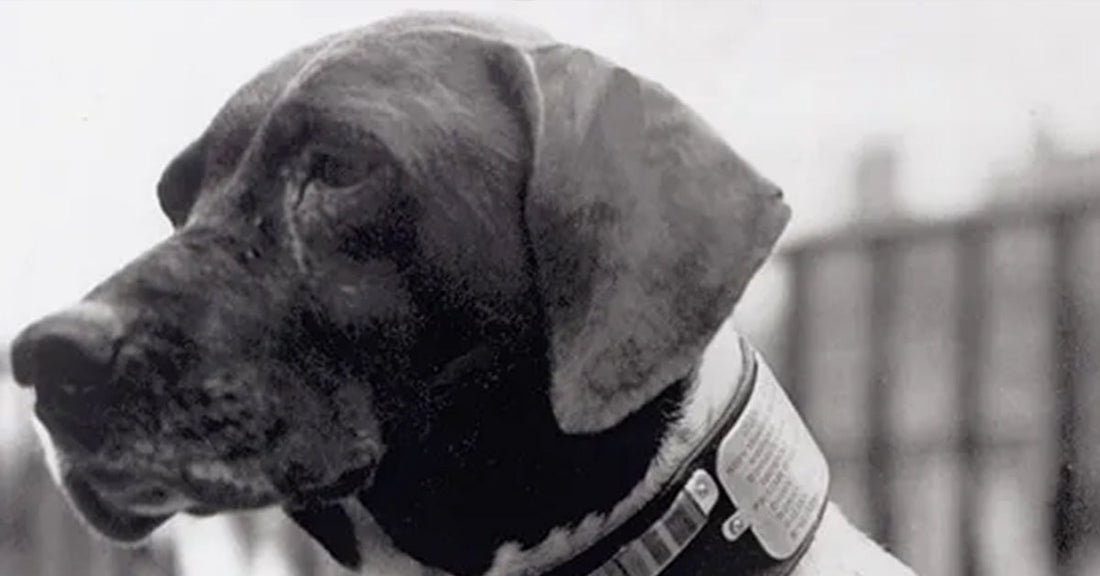
In the long history of animals serving alongside humans in times of war, few stories are as remarkable as that of Judy, an English Pointer who became the only animal officially registered as a prisoner of war during World War II. Her journey from a Shanghai kennel to a decorated war hero is a testament to loyalty, resilience, and the unbreakable bond between humans and animals. For those interested in stories of military animals and wartime bravery, Judy’s tale is both heartwarming and extraordinary.

Judy was born in February 1936 in Shanghai, China, at a time when global tensions were escalating. Adopted by British sailors stationed in the region, she quickly became a cherished member of the crew aboard the HMS Gnat. Her initial name, Shudi, was soon anglicized to Judy, and she was officially registered as “Judy of Sussex” in Royal Navy records.

From the beginning, Judy displayed an uncanny ability to detect danger. The article reports that she warned her crewmates of incoming enemy aircraft and even alerted them to pirate attempts to board their ship. Her loyalty and instincts earned her a place not just on the ship, but in the hearts of the sailors who served with her. I found this detail striking: when Judy once fell into the Yangtze River, the crew halted the vessel to rescue her, underscoring how deeply they valued her presence.

As the war intensified, Judy’s adventures became more perilous. She was transferred to the HMS Grasshopper in 1939 and stationed in Singapore. When Japan invaded in early 1942, the Grasshopper attempted to flee but was bombed in the South China Sea. Judy and some of the crew survived the attack and found themselves marooned on an island. According to the source, Judy saved lives by sniffing out a fresh-water spring, a vital discovery that sustained the stranded sailors until they could escape to Sumatra.
Their escape, however, led them into further danger. After a grueling 200-mile jungle trek, the group was captured by Japanese forces and taken to the Gloegoer POW camp in Medan, Indonesia. Fearing Judy would be killed, the sailors hid her beneath rice sacks. It was at this camp that Judy met Frank Williams, a leading aircraftman in the Royal Air Force. Their bond began when Williams gave Judy his bowl of rice. In return, she began to protect him, even snarling at guards who mistreated him. Recognizing the risk this posed, Williams waited for a moment when the camp commander was drunk and persuaded him to register Judy officially as prisoner 81A, granting her protection as a POW.
Throughout her time in captivity, Judy provided more than companionship. She became a source of hope for the prisoners. Williams later recalled that seeing her wagging tail each morning gave him the strength to endure the harsh conditions. Her presence was a psychological balm in a place where despair was common. The article highlights how Judy’s loyalty and spirit lifted morale among the men, offering them a reason to keep going.
In June 1944, the prisoners were transferred aboard the Harukiki Maru, a ship that was later torpedoed. Williams managed to push Judy through a porthole before escaping himself. Over 500 men died in the attack, but Judy survived by clinging to wreckage, helping other survivors find floating debris and guiding them to safety. Though they were captured again and interned in another camp, both Judy and Williams survived until liberation in 1945.
After the war, Judy’s heroism was formally recognized. In May 1946, she received the Dickin Medal, often referred to as the animal equivalent of the Victoria Cross, for her bravery and service. The photo of her receiving the medal, standing beside Frank Williams, captures the essence of her story — a tale of courage, loyalty, and the deep connection between a dog and the men she protected.
Judy passed away in 1950 at the age of 13, but her legacy endures. Her story reminds us that heroism isn’t limited to humans. In the darkest times, acts of compassion and courage can come from the most unexpected places — even from a dog who simply refused to give up. For those interested in World War II animal heroes or the role of animals in military history, Judy’s life is an inspiring example of how one dog made a difference in the lives of many.