
Loose Horse Shot and Killed Outside Police Department
Guest Contributor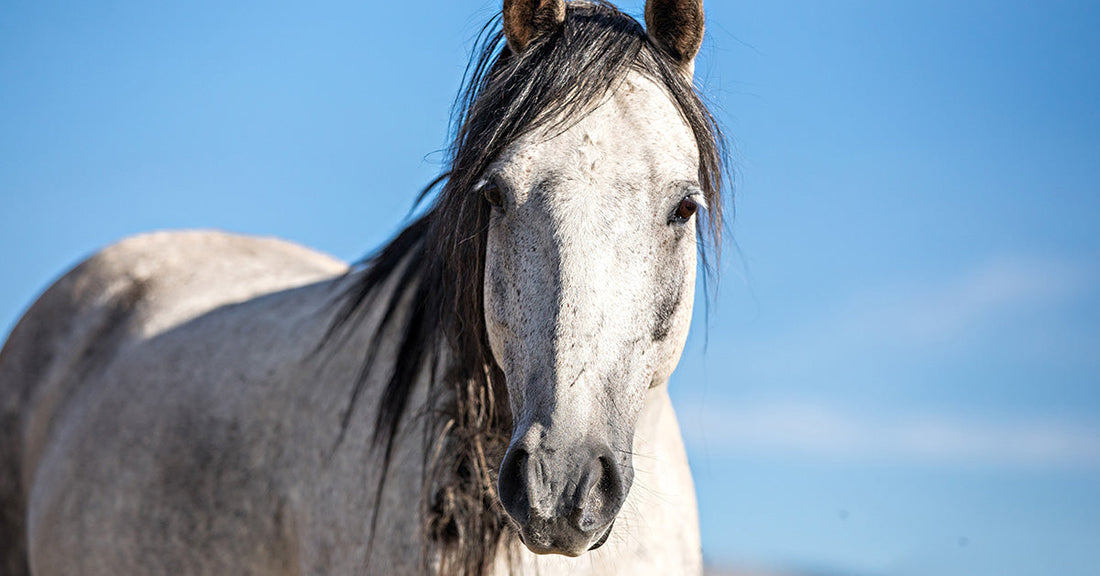
In early October, a gray mare named Lacy escaped from a long-time family farm in Shawnee, Kansas. Hours later, after what officials describe as a prolonged and increasingly risky situation near major roads, a Shawnee police officer shot and killed the horse behind a city police and fire station. The controversy that followed has raised difficult questions about public safety, animal welfare, and what it means to call a creature both “pet” and “potential threat” in the same breath. For anyone who cares about farm animals, policing, or community trust, the story of this Kansas horse shot by police is a painful one to absorb.
Lacy belonged to Jenny Haynes, whose family has kept horses at a small farm near Johnson Drive and Maurer Road for more than 60 years. Haynes bought Lacy about eight months earlier at an auction because the horse reminded her of one she had loved in childhood. Lacy lived with two other horses, including a miniature horse, and Haynes described her as a “good-natured little horse” who was shy and easily frightened by strangers.
The incident began when a gate on the property was left open and all three horses wandered out. Haynes and responding officers quickly recovered the miniature horse and the other companion horse. Lacy, however, was startled, which Haynes attributed in part to police emergency lights, and the mare continued moving away from the farm. Officials say Lacy made her way nearly a mile down Johnson Drive toward Renner Road, putting her in the vicinity of several heavily traveled routes.
According to the City of Shawnee, officers observed the horse repeatedly crossing lanes of traffic on busy thoroughfares, including Johnson Drive, Renner Road, Maurer Road and nearby I-435. Drivers reportedly had to swerve to avoid hitting the animal. In their public statement, city officials emphasized that given the size of the horse and the speed and density of traffic, a collision could have caused serious injury or death for motorists as well as the animal.
From the city’s perspective, what followed was a seven-hour effort to capture a frightened, partially wild horse that resisted every attempt to safely corral her. A public safety information officer later described Lacy as a partially wild mustang that had not been halter trained, a detail that framed the mare as more unpredictable than a fully domestic, well-handled horse might be in similar circumstances. Officers consulted large-animal experts and brought in a ranch hand experienced with big-animal captures in populated areas. A horse trailer was staged nearby to take Lacy once she could be secured.
Haynes, standing on the other side of the incident as Lacy’s owner, saw the situation differently. She told reporters that Lacy eventually stopped in a large field behind the Shawnee police and fire station. From her viewpoint, the horse was no longer in the street and no longer posed the danger officials described. “She was in a big field,” Haynes said. “She wasn’t in the street. She wasn’t a threat.” Haynes said she believed officers could have penned the horse, or perhaps tranquilized her, rather than resorting to lethal force.
Police say they did explore tranquilizing the horse. The city’s statement notes that veterinary resources were consulted and the option of using a tranquilizer was seriously considered. Officials ultimately rejected that route, citing “practical and safety concerns” that, in their assessment, made tranquilizing the horse unfeasible. The statement did not elaborate in detail on those concerns, but tranquilizing large animals in open, uncontrolled environments can carry risks of the animal bolting further or collapsing unpredictably.
After hours of unsuccessful efforts to capture Lacy, and after what the department describes as extensive discussion with large-animal experts, Shawnee police decided to euthanize the horse. A police report states that an officer used a Remington 700 .308 caliber rifle to fire a single shot to the horse’s head. The city later said the decision was made in accordance with department policy and local dangerous animal ordinances and was motivated by the need to end an ongoing risk to public safety near major roadways.
Haynes, for her part, has struggled to accept that explanation. She recounted being told directly at the scene that officers had decided they would have to shoot Lacy because she was considered a danger to the public. Haynes recalled telling them that they did not have the right to shoot her horse and insisting that Lacy was her pet and not dangerous. Afterward, the city provided her with a copy of its dangerous animal ordinances, a gesture that did little to ease her distress.
The pain of losing Lacy was deepened further when Haynes later reviewed the police incident report. She said the document contained several errors, including an inaccurate description of Lacy’s size. The report apparently listed the mare as 6 feet tall, which would suggest a very large horse. Haynes said Lacy was closer to 5 feet tall, and she was in tears as she read the report aloud. For her, this discrepancy symbolized a broader feeling that the horse had been portrayed as far more menacing than she truly was.
To the City of Shawnee, the record reflects a difficult decision taken reluctantly. Officials stressed in their statement that they were “sympathetic to the difficult circumstances” and that lethal force was used only after seven hours of attempts to capture Lacy alive. They portrayed the shooting as a last resort taken in the interest of driver safety, in line with municipal code and established procedures for dangerous animals.
Between those two perspectives lies a gap that may feel impossible to bridge. On one side is a family that had kept horses on the same Kansas farm for decades without incident, a woman who saw her mare as a gentle, if shy, companion and who believed that in a quiet field Lacy no longer endangered anyone. On the other side is a police department tasked with weighing what might happen if a large, unrestrained animal bolted back toward traffic and collided with a vehicle at high speed.
I found it striking how this story shows the emotional weight of official language. Terms like “dangerous animal ordinances” and “public safety risk” carry a very different resonance when the animal involved has a name, a history, and an owner who calls her “just a little scared horse.” Even in the absence of malice, the gap between legal definitions and lived relationships can feel vast.
As the dust settles, the facts of this Kansas police horse shooting are unlikely to satisfy everyone. Haynes continues to mourn Lacy and dispute aspects of the official account, particularly the description of the horse’s size and level of threat. City officials continue to stand by the decision as a necessary response to a prolonged hazard on busy roads. What remains is a shared sense of tragedy. A horse that reminded someone of a cherished childhood companion is gone, and a community is left to reckon with whether, faced with the same set of circumstances again, anything could or should be done differently.