
Las Vegas Flamingo Peachy Injured, Man Convicted of Animal Cruelty
Guest Contributor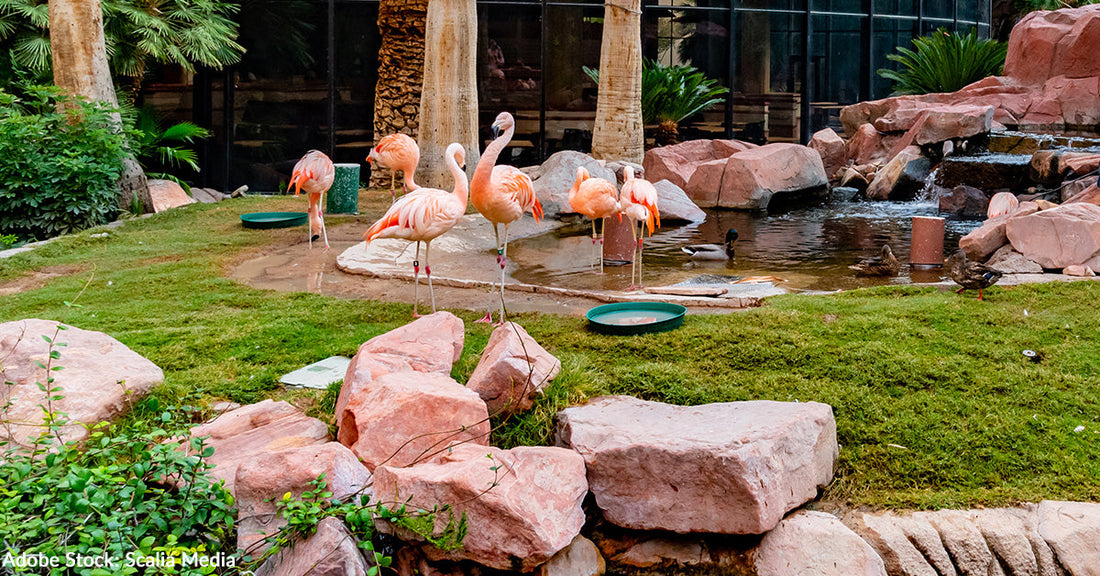
What happens in Vegas, as the old slogan goes, usually stays in Vegas. Yet some stories are too startling to remain in the desert. One such case involves an Ontario man, an iconic Las Vegas hotel, and a flamingo named Peachy. The incident, which led to a felony conviction for animal cruelty, has sparked conversations about alcohol, responsibility, and how seriously the justice system treats harm to animals.
According to reporting from multiple outlets, including CBC News, Mitchell Fairbarn of rural Ontario was visiting Las Vegas in early March for a construction expo. Over the course of 24 hours, he told the court he had consumed “30 to 40 beers.” In the early hours of March 3, he entered the wildlife habitat at the Flamingo Las Vegas Hotel and Casino. The habitat covers roughly four acres and is home to Chilean flamingos, as well as other birds, turtles, and fish. Fairbarn removed one of the flamingos, a 27-year-old bird named Peachy, in what he later described as a drunken attempt at a joke.

Video evidence shown during the trial captured him holding the flamingo by the neck in an elevator and then walking down a hotel hallway with the bird. Reports state that he spent about 15 minutes with Peachy in total and two to three of those minutes in his hotel room. Two of his friends testified that they woke up in the room to find the flamingo there. They then moved the bird into the hallway, where hotel staff later found it.
A hotel facilities engineer eventually discovered Peachy and used a towel to corral the frightened bird into a corner. In court, that worker described the flamingo as shaking and bleeding. A veterinarian who treated Peachy testified that the bird suffered seven to eight missing feathers, broken feather shafts, and blood loss consistent with trauma. Peachy required antibiotics, anti-inflammatory medication, and weeks of pain management. For a 27-year-old animal, such stress and injury were far from trivial.
The legal response was swift and serious. A Las Vegas court charged Fairbarn with both felony and misdemeanor animal cruelty. The indictment accused him of willfully and maliciously injuring the flamingo. Fairbarn pleaded not guilty and the case went to trial, where prosecutors argued that he deliberately caused the bird pain. Jurors were shown video clips and heard testimony describing the flamingo’s distress, including squawking as it was handled.
Fairbarn’s defense did not dispute that he took the flamingo from its habitat or that the bird was injured. Instead, his lawyer, Joshua Tomsheck, focused on intent. He argued that his client was extremely intoxicated and never meant to hurt Peachy. Fairbarn himself told the court that he thought taking the flamingo would be a “silly joke” he and his friends could laugh about for years. On the stand, when his lawyer asked whether he had any malicious intent in his mind or heart when he picked up the bird, he responded no.
Despite these explanations, jurors convicted him of both felony and misdemeanor animal cruelty. The felony count alone carries a potential sentence of up to four years in prison. The misdemeanor conviction could add another six months in jail. Following the verdict, Fairbarn remained in custody while awaiting a December 1 sentencing hearing. Court records reviewed by CBC News indicate that he had been under house arrest in Nevada since the incident and had surrendered his passport as part of his bail conditions.
In court, Tomsheck characterized his client’s behavior as the product of extreme intoxication rather than cruelty. He said that Fairbarn should not have entered the habitat, touched the bird, or taken Peachy inside the hotel. He also described his client as drunk, foolish, and full of regret for his decisions that night. The key legal question, however, revolved around whether the actions still met the threshold for willful and malicious cruelty under Nevada law, regardless of his level of intoxication.
Animal advocates in Nevada saw the case as an important test of recently strengthened cruelty laws. John Waudby, an animal rights advocate who has worked to bolster those protections, told The Associated Press that he believed justice had been served for Peachy. He expressed hope that the conviction would send a clear message that harming animals in the state, whether in a desert habitat or a high-traffic casino property, will have serious consequences.
The setting of the incident amplified public attention. The Flamingo Las Vegas Hotel and Casino is one of the Strip’s most recognizable resorts, and its wildlife habitat has become a signature attraction. The fact that a guest could move so easily from a night of heavy drinking to physically handling a live flamingo raised broader concerns about how tourists interact with animals that share public spaces. I found this detail striking: the habitat is not an obscure facility tucked away from the public, but a central feature of a major hotel, which makes respectful behavior from visitors especially important.
Peachy’s story also sits within a troubling pattern. Local media have reported several recent cases of animal cruelty at Las Vegas casinos and entertainment venues. In one incident from June, a woman was charged after allegedly jumping into the fountain at The Venetian and grabbing a duckling named Daffy. In another case from May, a teenage girl was arrested and accused of stabbing three horses at the South Point Arena & Equestrian Center so they could not compete in a barrel race. While the details differ, these cases share a common theme of people treating animals as props or obstacles, rather than sentient beings deserving of care.
Happily, Peachy has recovered, according to local reporting. The flamingo’s injuries, while serious, did not prove fatal. Peachy’s survival does not diminish the severity of what happened, but it does mean that this case can serve as a warning signal rather than a memorial. It highlights how quickly a moment of poor judgment, especially when fueled by heavy drinking, can cross the line into criminal harm.
Stories like this reverberate far beyond Nevada. Tourism industries often rely on attractions that feature live animals, from resort habitats to equestrian arenas. This case underscores the responsibility shared by venues, regulators, and visitors alike. Facilities must provide safe environments and clear boundaries. Laws need to recognize and penalize cruelty in a way that reflects evolving social values about animal welfare. Visitors, whether from Canada, the United States, or anywhere else, carry their own obligation to treat those animals with respect and restraint.
Ultimately, the conviction in Peachy’s case reflects more than a single bad night in Las Vegas. It signals that even in a city famous for excess, there are lines that cannot be crossed without consequence. What happens in Vegas might not always stay there, especially when it involves vulnerable creatures who cannot speak for themselves yet depend on humans to act with basic decency and care.
Read more at https://www.cbc.ca/news/canada/canadian-flamingo-las-vegas-9.7386697
