
Rescuers Discover Lioness Trapped At Bottom Of 15 Foot Pit
Guest Contributor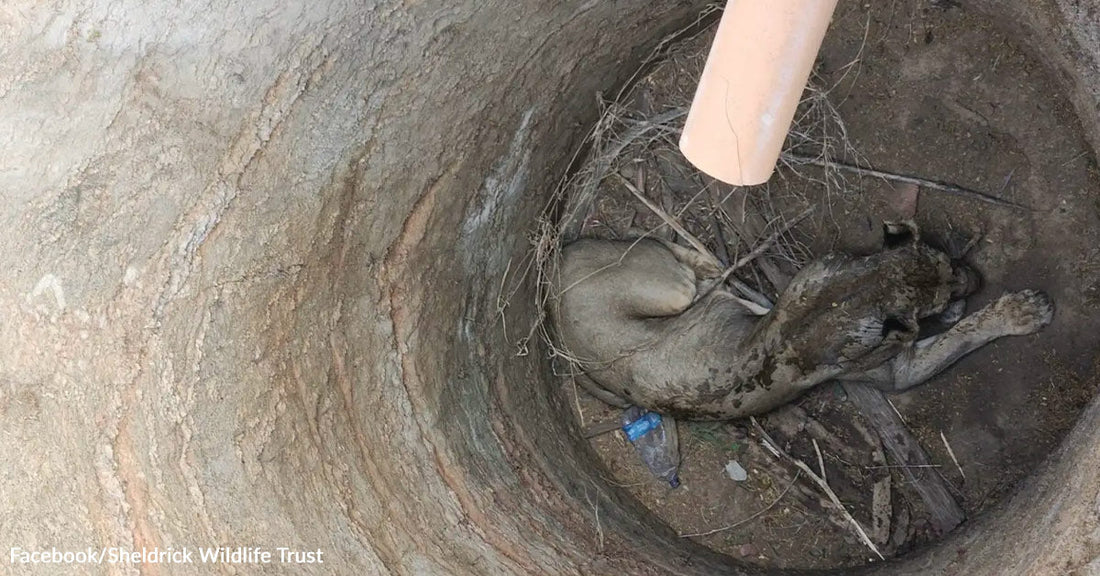
The quiet edge of a Kenyan village became the backdrop for a powerful rescue story when a group of passersby peered into an empty septic pit and saw something they never expected. Fifteen feet below ground, at the bottom of the concrete hole, a fully grown lioness lay trapped, exhausted and alone. In that instant, a simple walk became a life-or-death moment for one of Africa’s most majestic animals, and an unforgettable example of human and wildlife rescue collaboration.
According to reporting shared by Sheldrick Wildlife Trust, the group initially saw only a large shape in the shadows. When they realized it was a lioness, the shock was immediate. The pit was far too deep and sheer-sided for any animal to climb, especially a big cat already weakened by stress and dehydration. The observers understood that without help the lioness would not be able to escape. They quickly contacted Kenya Wildlife Service and Sheldrick Wildlife Trust, two organizations that often work together on wildlife emergencies in the region.

Facebook/Sheldrick Wildlife Trust
Sean Michael, director of communications at Sheldrick Wildlife Trust, explained that the lioness had likely fallen into the pit the previous night. That meant she had been trapped for nearly 24 hours before anyone even noticed she was there. During that time she would have been without food or water, exposed to the relentless heat and stress of confinement, with no way to protect herself or move freely. I found this detail striking because it highlights how easily animals can be overlooked when they are caught in man-made structures that were never designed with wildlife in mind.
When the responders from Kenya Wildlife Service and Sheldrick Wildlife Trust arrived on scene, their first task was to assess the lioness from a safe distance. Michael shared that she appeared visibly frightened, stressed and dehydrated. Even from above, her body language reportedly showed how drained she was by the ordeal. In situations like this, both the safety of the animal and the safety of the people involved depend on calm planning as much as on speed.

Facebook/Sheldrick Wildlife Trust
The rescue itself required a coordinated effort by a trained team of six people. At the heart of that effort was Dr. Limo, a veterinarian with Kenya Wildlife Service. He first sedated the lioness so that she would not panic or injure herself further as the team worked around her. Sedation also ensured the rescuers could approach closely enough to secure her without putting anyone at immediate risk. Once they were confident she was fully sedated and stable, they began the complex process of lifting her out.
The team lowered ladders into the 15-foot pit to reach the lioness. Working together in the confined space, they carefully maneuvered a tarp underneath her body. This improvised sling became her lifeline back to the surface. Ropes attached to the tarp allowed the rescuers at the top to haul her up while those below guided and stabilized her weight. The scene, as described by Sheldrick Wildlife Trust, reflected both physical effort and precise coordination. Every movement had to be controlled to avoid banging her against the walls or causing additional stress.
When the lioness finally emerged from the pit and was laid safely on the ground above, the team could fully inspect her for injuries. Given the height of the fall and the length of time she had been trapped, the risk of broken bones or internal trauma was a serious concern. According to Michael, Dr. Limo performed a thorough examination and was able to confirm that the lioness had not sustained injuries from the fall. That outcome was remarkable, considering the depth of the pit and the hardness of the surface she had landed on.
Although she escaped serious physical harm, the lioness still needed immediate care. The team provided intravenous fluids to treat her dehydration and gave her time to rest as the effects of the sedation wore off. With proper hydration and a chance to recover, her strength and alertness began to return. The rescue team monitored her closely to ensure she was stable enough to survive on her own once she reentered her natural habitat.
Because she had come through the ordeal in such surprisingly good condition, the professionals on site determined that she could be released back into the wild the same evening. Rather than leaving her near the septic pit where she had been found, Kenya Wildlife Service and Sheldrick Wildlife Trust chose a safer and more suitable location. They transported her to Tsavo East National Park, an expansive wildlife area where she would be free from nearby human-made hazards like open pits.
The release site was carefully selected so that the lioness would have the opportunity to reunite with her pride. Michael explained that she was set free in an area where her family group was likely to be found. That consideration matters, because lions depend on their social structure for hunting, protection and raising cubs. A successful release is not just about physical survival but also about returning the animal to the social and environmental conditions where it can truly thrive.
Once at Tsavo East National Park, the lioness could be monitored from a distance. This kind of follow-up helps wildlife experts track her recovery and ensure that she resumes a healthy, natural life. It also contributes to a larger understanding of how human-made infrastructure affects wildlife, and what can be done to prevent similar incidents. Open septic pits and other unattended structures can become silent traps for animals that roam across wide territories in search of food or water.
This story of a lioness rescued from a septic pit in Kenya highlights several important themes. It shows how attentiveness from local people can make a critical difference, since it was the quick action of those first passersby that set the rescue in motion. It also underscores the importance of well trained wildlife responders who can safely handle large and potentially dangerous animals, from sedation and examination to transport and release.
On a broader level, the incident speaks to the ongoing challenge of balancing human development with the movement and safety of wild animals. While the article does not dwell on policy or solutions, the successful outcome illustrates how cooperation between communities and conservation organizations can save lives. The lioness’s ordeal in the 15-foot pit could easily have ended in tragedy, yet through timely intervention it became a story of resilience and recovery instead.
Rescue operations like this invite reflection about the responsibility humans share for the landscapes they shape. As more regions face the intersection of growing infrastructure and wildlife habitat, stories of trapped animals are likely to continue. However, the work of groups such as Kenya Wildlife Service and Sheldrick Wildlife Trust shows that with preparation, expertise and compassion, there is real hope for animals that find themselves in crisis through no fault of their own. For this lioness, at least, the outcome was a return to open savanna, the company of her pride and a second chance at the wild life she was born to lead.