
Flight 93 Passenger Mark Bingham Fought Back Knowing It Would Likely Cost Him His Life
Guest Contributor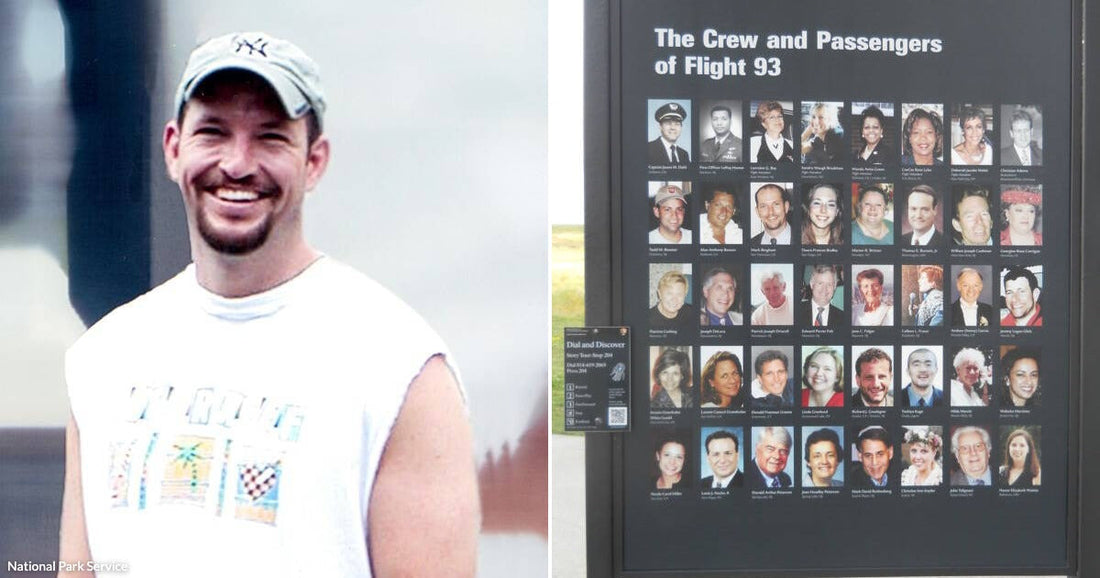
On the morning of September 11, 2001, United Airlines Flight 93 became the setting for one of the most courageous chapters in modern American history. Among the passengers who chose to fight back against the hijackers was Mark Bingham, a 31-year-old public relations executive and rugby player whose actions helped prevent an even greater catastrophe. His story has since been remembered as both a powerful act of heroism and a moment that challenged long-held stereotypes about gay men.
Mark Bingham almost was not on Flight 93 at all. He woke up that morning in Manhattan, needing to reach Newark Airport for an 8:01 a.m. flight to San Francisco. With help from a friend willing to drive aggressively through traffic, he reached the airport at 7:40 a.m. and sprinted to the gate. He boarded as the final passenger and called his friend to share a quick, lighthearted update: he had made it onto the flight, was sitting in first class, and enjoying a glass of orange juice.

National Park Service
The plane waited on the runway for over 40 minutes because of air traffic. When it finally took off at 8:42 a.m., the journey initially felt routine. Flight attendants served coffee and a light breakfast. Then at 9:30 a.m., the calm broke when three hijackers rushed the cockpit. They killed the pilots and used the plane’s public address system to claim there was a bomb on board and that they were returning to the airport. Shortly after, the plane veered off course and turned toward Washington, D.C., believed by many to be the intended site of another devastating strike.
Passengers soon realized something was terribly wrong. Using onboard airphones and cell phones, they reached out to loved ones on the ground. By then, news of the attacks on the Twin Towers was already spreading. Those on Flight 93 learned that two planes had hit the World Trade Center and another had struck the Pentagon. The supposed “bomb” on their aircraft appeared to be a bluff. Instead, they understood that their flight was likely part of a coordinated plot to cause mass casualties.

National Park Service
One of the clearest windows into those final minutes comes from a call between passenger Todd Beamer and airphone operator Lisa Jefferson. Over the course of 13 minutes, Beamer calmly described the situation while the FBI listened in. The two prayed together. Beamer then spoke to others on the plane and mentioned a plan to confront the hijackers. Jefferson later recalled hearing him say to someone nearby, “You ready. Okay, let’s roll.” Those words have since become closely tied to the resistance on Flight 93 and symbolize the moment when passengers committed to taking action.
At the same time, Mark Bingham made his final call to his mother, Alice Hoagland, who was in Saratoga, California, staying with her brother’s family. Hoagland had recently served as surrogate for his triplets, and she was holding one of the babies when the phone rang before dawn. On the line, her son identified himself and explained that three men had taken over the flight and were claiming to have a bomb. He told her he loved her. Then the call ended abruptly.
Hoagland was left in a haze of shock. Her sister-in-law later described that moment as a dividing line in their lives, with everything that followed feeling altered and surreal. Frantic, Hoagland tried repeatedly to call her son back, leaving messages on his cell phone that he would never hear. By that time, the passengers and crew were already organizing themselves to fight back.
Before 2001, standard guidance for airline crews often involved cooperating with hijackers in the hope of a safe resolution. On Flight 93, the passengers and crew concluded that compliance would almost certainly mean death not only for themselves but for many others on the ground. They began to pool their strengths and skills. Among the 33 passengers and seven crew members were individuals with athletic backgrounds and training, including Bingham the rugby player, a college quarterback, a judo champion, and a paratrooper.
In the rear of the plane, flight attendant Sandy Bradshaw reportedly prepared for the confrontation by heating up coffee pots of boiling water to use as a weapon against the hijackers. In her final phone call to her husband, she described the emerging plan and said that everyone was moving toward first class, then ended with, “I’ve got to go. Bye.” Nearby, passenger Tom Burnett was sitting with Mark Bingham. Burnett reportedly declared that if the hijackers intended to crash the plane, then the passengers were going to do something about it. In a call to his wife, he acknowledged he believed they would die, but he was determined to act.
At 9:57 a.m., the counterattack began. Cockpit voice recordings later captured the chaos: dishes breaking, service trolleys crashing, and the sounds of a struggle outside the cockpit door. The hijackers shouted as they tried to hold the door closed, but the passengers pressed forward. Someone can be heard yelling, “Let’s get them.” The recordings suggest that the group managed to breach the cockpit, leading to a final desperate struggle for control of the aircraft.
Moments later, Flight 93 crashed in a field near Shanksville, Pennsylvania, killing everyone on board. The passengers and crew had prevented the plane from striking its presumed target in Washington and almost certainly saved many lives. In the aftermath of 9/11, they were honored as national heroes who took extraordinary action in unimaginable circumstances.
Among those heroes, Mark Bingham came to be recognized as a gay icon. Commentators noted how his story pushed back on narrow or stereotypical portrayals of gay men. Openly gay writer Andrew Sullivan observed that popular media often depicted gay men as effeminate or fragile, whereas Bingham’s courage under pressure showed a very different reality. In Sullivan’s words, Bingham was “a hero, plain and simple.” For many people, his story became a powerful example of how courage, strength, and selflessness are not limited by sexual orientation.
Those close to Bingham remembered him not only as a symbol but as a vibrant, adventurous person. Friends recounted that he had run with the bulls in Spain, confronted an armed mugger rather than give up his wallet, and once tackled Stanford University’s tree mascot at a football game. After graduating from the University of California, Berkeley, he built a career in public relations while continuing to travel and play rugby. According to his roommate and friend Per Casey, Bingham did not see his sexuality as something to politicize. Casey reflected that the irony of his posthumous role as a gay icon might have made Bingham laugh, yet he likely would have accepted it if it meant helping the broader community.
For his mother, Alice Hoagland, the loss was deeply personal. Bingham was her only son, and in the years that followed she appeared in media interviews to share both her grief and her perspective as a former flight attendant on aviation security. Another friend, Hani Durzy, suggested that Bingham would have found meaning in the fact that his story could do some good for others, even if he had never sought that role in life.
The attacks of September 11 took nearly 3,000 lives and left lasting scars across the United States and the world. Within that vast tragedy, the story of Flight 93 and of people like Mark Bingham stands out as a reminder of what ordinary individuals can choose to do in the face of terror. Their decision to resist likely saved countless others, and their legacy continues to challenge assumptions, honor courage, and inspire reflection on what it means to act selflessly in a moment of extreme crisis. Read more at https://allthatsinteresting.com/mark-bingham