
Little Boy Thought His Beloved Dog Was Dead Before a Microchip Brought Her Home 13 Months Later
Guest Contributor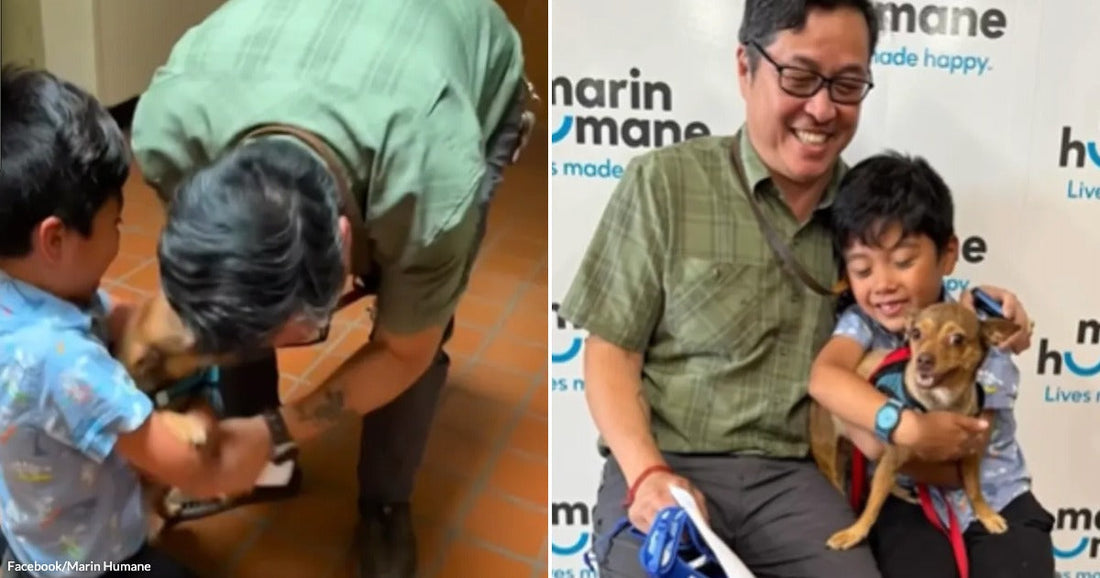
There are some stories that feel like they are written just to remind people to keep hoping, even when the odds seem impossibly small. The recent reunion between a San Francisco family and their lost dog, Peach, is very much one of those stories. It is a tale of loss, love, and a small piece of technology that quietly did exactly what it was designed to do. For anyone who has lived with a pet, this microchipped dog reunion is both deeply relatable and incredibly moving.
Peach, a family dog in San Francisco, slipped out of her home 13 months ago. Her family searched and hoped, as so many do in those first frantic days. Time, however, has a way of stretching out when a pet is missing. Weeks turn to months, and eventually the family feared the worst. They reached a point so painful that they held a memorial for Peach, saying goodbye to a dog they believed was gone for good.

What they did not know was that Peach’s story was not over. According to Marin Humane, a shelter in Marin County just outside San Francisco, Peach resurfaced more than a year later. The turning point came when she was brought into the shelter and staff followed their standard intake procedure. They scanned her for a microchip, a step so routine it could almost be overlooked. That simple scan provided the link back to her original family, who had long given up any real expectation of seeing her again.
The circumstances that brought Peach to Marin Humane reveal how important that scan truly was. A few days before the reunion, a San Rafael police officer noticed a dog who appeared to be in distress. The people who had the dog with them claimed she belonged to them. Still, the officer was concerned about her wellbeing. Acting on that concern, the officer removed the dog from their care and brought her to Marin Humane’s Animal Services officers, who then transported her to the shelter for evaluation.

Facebook/Marin Humane
At the shelter, staff did what animal professionals across the country are trained to do. They checked for identification, then scanned for a microchip. Embedded under Peach’s skin was a tiny device programmed with her information, connected to a national registry. That registry made the critical connection between the dog in front of them and the family in San Francisco who had been missing her for more than a year.
Lisa Bloch of Marin Humane, who helped facilitate the reunion, explained that Peach had been kept by someone who originally found her but never checked shelters or veterinary clinics for a microchip. That oversight extended what could have been a relatively short separation into a 13 month absence. Bloch described the microchip as “literally Peach’s ticket home,” a description that perfectly captures how a small, inexpensive piece of technology can carry enormous emotional weight.
Hearing that detail, it is difficult not to reflect on how many other lost dogs and cats might be out there, living with people who never think to scan for a chip. The story underlines how important it is for anyone who finds a stray animal to bring them to a shelter or veterinarian, even just briefly, so a scan can be done. The process is quick, noninvasive, and can mean the difference between a brief scare and a year-long heartbreak.

Facebook/Marin Humane
The reunion itself was as emotional as one might imagine. Staff at Marin Humane caught the moment on camera, and the scene resonated deeply with everyone present. Bloch described it as one of those days shelter workers live for. In the video, Peach is seen running excitedly toward her family, her entire body wagging with joy as she recognizes the people she once lived with. The pure happiness on the faces of the little boy and the father, and Peach’s unmistakable excitement, reportedly brought tears to many eyes at the shelter.
Reunion videos like this one, shared on Marin Humane’s Facebook page, often gain attention because they capture the bond between humans and animals in a raw and authentic way. This emotional dog reunion is not just a feel good moment, it is a visible reminder that for many people, pets are true family members. When they go missing, the grief is real, and when they return, the relief and joy are just as real.
Marin Humane hopes Peach’s story will do more than warm hearts. The organization is using the attention to highlight the importance of microchipping pets. Many shelters already include microchipping as part of their standard adoption package, so animals leaving those facilities are more likely to have this safeguard. Pets purchased from breeders, however, are often not microchipped by default, which means owners must take the initiative themselves.
Microchips are relatively inexpensive and quick to implant, typically placed under the skin with a syringe in a process similar to a vaccination. Once in place, they do not function like a GPS and cannot track a pet’s movements. Instead, they store an identification number that is linked to the owner’s contact information in a registry. When a lost pet is brought to a shelter or veterinarian, staff can scan the chip, retrieve the number, and look up the contact details. In Peach’s case, that lookup bridged 13 months of worry and uncertainty, turning what seemed like a closed chapter into an unexpected second chance.
Equally important is the reminder that microchip information must be kept current. Bloch pointed out that owners need to update a chip’s registration whenever they move or change phone numbers. Without accurate contact details, a microchip cannot fulfill its potential to bring a pet home. It is a small, easily forgotten task that can have significant consequences if left undone.
Peach’s journey fits into a broader pattern of lost-and-found pet stories that emerge regularly, often with similarly emotional reunions after months apart. Earlier in the week, another story highlighted a puppy reunited with her owners after being missing for months. Each of these accounts reveals the same central truth. When identification is in place, and when finders and shelters follow through with scanning and checking registries, families and pets have a far better chance of finding each other again.
For anyone living with a dog or cat, Peach’s experience in Marin County offers both comfort and a practical takeaway. Comfort, because it shows that even after long periods apart, reunions are still possible. Practical, because it underlines how critical it is to microchip pets and to make sure that registration information is accurate and up to date. A collar tag can fall off, but a microchip quietly stays in place, waiting for the moment it is needed.
This story of a San Francisco family reunited with their dog after a year apart demonstrates the power of one small, simple decision made early in a pet’s life. Microchipping did not prevent Peach from going missing, but it did provide a lasting lifeline home. For many readers, the most meaningful response may be to check whether their own animals are chipped, confirm that the registration is current, and perhaps share Peach’s story as a reminder to others. Read more at https://www.newsweek.com