
Family Thought Their Cat Was Gone Forever Until a Call Five Years Later Changed Everything
Guest Contributor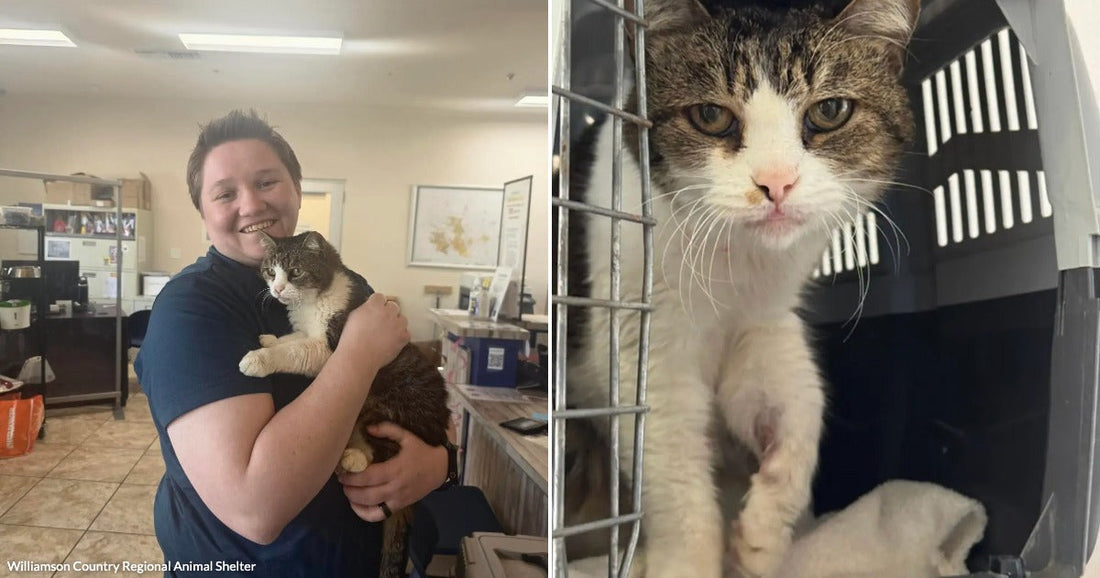
A missing pet story that ends in a joyful reunion always captures hearts, and the recent case of KitKat of Texas is no exception. After disappearing in 2021, this missing cat was finally reunited with her family thanks to a simple but powerful tool: a microchip. In a world where countless lost pets never make it back home, this uplifting story from a Texas animal shelter highlights both the emotional bond between people and their pets and the very real impact of pet microchipping.
KitKat had been gone for five long years. For her family, the silence and uncertainty must have felt endless. According to reports, the beloved cat was separated from her owners in 2021. Details of how she disappeared are not included in the coverage, but what is clear is that for half a decade there was no sign of her, no reassuring trace that might lead her family to her. Many pet parents in similar situations are left wondering whether to keep hoping or to accept that their animal might never come home, and this story reflects that painful reality.

Everything changed when KitKat was finally brought to the Williamson County Regional Animal Shelter in Georgetown, Texas. Staff members at the shelter did what reputable shelters routinely do with found animals: they scanned for a microchip. That quick scan transformed an anonymous stray into a cherished family member with a name, a history, and people who had never forgotten her. The discovery of the microchip and the contact information linked to it set the stage for an emotional reunion that no one at the shelter expected to see after so much time had passed.
The shelter reached out using the information stored in the microchip database. KitKat’s owners received both an email and a text message with the news they probably never anticipated after such a long absence. Owner Angelique Wethereit described how the notifications arrived and how they responded. She explained that her wife received the email first, followed by a text to her own phone. Those messages prompted them to visit the Williamson County Regional Animal Shelter’s lost and found page, where they saw a photo of the cat they knew so well.

Williamson Country Regional Animal Shelter
That online photo identification is a modern detail that feels particularly striking. Many shelters now post found animals on their websites or social media accounts, creating a digital bridge between missing pets and the people searching for them. In KitKat’s case, that simple photo confirmed what the microchip had already suggested. The cat pictured on the screen matched their long-lost family member. From there, the emotional momentum shifted rapidly from uncertainty to anticipation.
At the shelter, staff members had already been caring for KitKat, and her condition was a surprise. According to the reports, after five years on her own, she was miraculously healthy, with only a minor abrasion on her leg. The story does not describe where she spent those years or how she survived, and it would be speculation to guess. What is known is that she arrived at the shelter appearing well and in good spirits, which in itself seems remarkable after so much time away from home.

Williamson Country Regional Animal Shelter
Leo Delgado of Williamson County Regional Animal Shelter shared how unusual this reunion was by the standards of his long experience. He explained that he has been involved in this work since 2013 and had never witnessed a reunion after such a lengthy separation. A five-year gap between a pet’s disappearance and return stood out as truly exceptional in his view. His reaction underscores how rare it is for a missing cat to make it back to its family after so many years have passed.
The shelter staff also described KitKat’s behavior, and that detail adds another layer of warmth to the story. They reported that she was friendly with the team from the start, cuddling up to staff members and demonstrating an affectionate temperament. When her owner arrived, though, the emotional energy in the room shifted again. The feline recognized her person right away and reacted with immediate happiness. That instant recognition supports what many pet parents feel instinctively about the enduring bond they share with their animals.
Williamson County Regional Animal Shelter itself appears to be a strong advocate for reunification efforts. Reports note that in one month alone in March, the Georgetown shelter returned 93 pets to their owners. That number illustrates how consistent scanning for microchips, diligent record keeping, and proactive communication can produce real, measurable results. KitKat’s story may be extraordinary because of the five-year gap, but it unfolds within a context where many other lost animals are also finding their way home.
This story from Texas also serves as a powerful reminder of the value of microchipping. The process is widely recommended by veterinarians and animal welfare organizations, and this missing cat reunited after years away demonstrates why. A microchip is not a tracking device, and it cannot show where a pet is in real time. Instead, it stores identification data that any equipped shelter or veterinary clinic can read. When that information is kept up to date, as it was in KitKat’s case, it can bridge long distances and long stretches of time. Even years after an animal goes missing, a microchip can reconnect a pet with the people who love them.
KitKat’s experience may encourage more people to consider both microchipping and maintaining accurate contact details with their microchip registries. It might also give a measure of hope to families currently searching for a missing cat or dog. While not every story will end this way, the fact that one pet could disappear in 2021 and still be identified in a shelter years later shows that reunions are possible even when they seem unlikely. Shelters that commit to scanning every incoming animal and to sharing found pet photos online can play a central role in these outcomes.
There is also an emotional dimension to this narrative that resonates beyond statistics and procedures. After years of not knowing, KitKat’s family was given something many missing pet owners are never granted: closure with a happy ending. For the shelter staff, who reportedly were moved by the reunion, the moment demonstrated the human side of animal welfare work. They do not just process intake forms and adoption applications. They help rebuild families, one microchip scan at a time.
Ultimately, this is a story of resilience and connection. A healthy cat, an attentive shelter team, thorough lost and found practices, and a properly registered microchip all came together to create a homecoming that seemed nearly impossible. For people who care about animal welfare, KitKat of Texas offers a living example of how small actions such as microchipping and keeping contact information current can have life changing consequences for animals and their humans years down the line. Read more at https://nypost.com