
💜 Thanksgiving Food Drive for Shelter Pets Help Us Feed 1 Million Shelter Pets!
Ten-Year-Old Dog Disappears Into Yellowstone for More Than a Month While Her Family Fears the Worst
Guest Contributor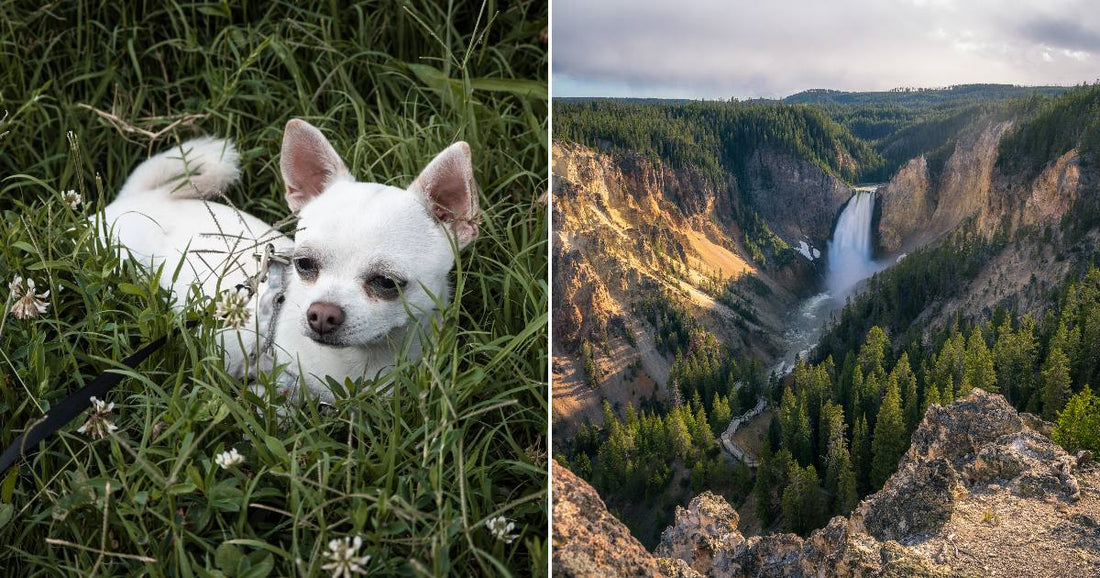
For one small dog and a determined community of animal lovers, Yellowstone National Park became the setting for a month-long survival story. The disappearance and eventual rescue of Luna, a white Jack Russell and Chihuahua mix, offers a rare happy ending in a place better known for its wild, unpredictable landscapes. As far as stories about a missing dog in Yellowstone go, this one is both heart-stopping and hopeful, and it quietly underscores how fragile and precious animal safety can be in a national park.
According to reporting shared with ABC News, Luna went missing on September 10 in the Canyon Village campground complex in Yellowstone. Her family, who chose to remain anonymous, was staying in a cabin and planned a visit to Norris Geyser Basin, an area where dogs are not allowed. Wanting to follow the rules, they left Luna safely inside the cabin, with the door locked and a “do not disturb” sign posted. At some point while they were away, housekeeping staff entered the room and the small dog slipped out, vanishing into one of the largest and most challenging environments in the country.

What might sound like the beginning of a simple lost-pet case quickly shifted into something far more serious. Yellowstone is not just a scenic backdrop; it is a landscape filled with wildlife, geothermal features, steep terrain, and rapidly changing weather. Katie Boucher, president of Norris Ark Training and Recovery Center in nearby Montana, was among the people who understood how urgent the situation was. Her organization specializes in animal rescue, and she became a central figure as volunteers mobilized to search for Luna.
Boucher shared with ABC News that flyers went up across Yellowstone, and volunteers coordinated efforts throughout September. The search for the missing dog Luna involved people on the ground watching, waiting, and communicating any sightings. Yellowstone National Park staff also became part of the unfolding effort, and the park later confirmed to ABC News that the “dog that was loose in the Canyon Village area has been captured and is alive and well.” That simple statement carried weeks of worry, hope, and hard work behind it.

The circumstances of Luna’s escape were described as a “truly unfortunate accident” by Todd Walton, director of marketing and sales at Yellowstone National Park Lodges. Walton confirmed that Luna had slipped out from a cabin room in one of the park’s lodges. Although the original decision to leave Luna in the cabin followed park rules about not bringing dogs to certain areas, the unexpected visit from housekeeping created an opportunity for her to get out. Walton emphasized that more than anything, staff were grateful that the situation ended safely.
Once Luna was on her own, the question became whether such a small dog could navigate the sprawling terrain of Yellowstone for more than a few days, let alone a month. The answer arrived little by little, as sightings started to come in. A park construction crew working on a new road project reported to Boucher that they had been seeing Luna in a particular area of the park. Those reports offered the first solid lead since the initial disappearance and gave rescuers a focus point.
Boucher and others moved quickly and carefully. Based on her account, a humane trap was set up in the construction zone, baited not just with food, but with some of Luna’s family’s belongings. The goal was to draw Luna in using familiar scents that might cut through the fear and confusion of weeks spent on her own. That detail highlights one of the quieter truths of missing-pet recovery: scent can be as powerful as any visual clue, especially for a dog already bonded to a family.
The turning point arrived when Boucher received a call around 3:30 in the afternoon with encouraging news. The construction crew reported that Luna had been seen “all day long” in the vicinity of the trap, even lying down next to it and returning to it regularly. Rather than running away in panic, she seemed comfortable in the area. That behavior, in Boucher’s eyes, signaled that the rescue was no longer a distant hope but an imminent reality. She later shared her confidence that they would catch Luna either that day or the next.
Shortly after, the story reached its long-awaited resolution. Luna was safely captured and quickly reunited with her family. Her owner flew in from California to meet her and ensured she was checked by a veterinarian. Yellowstone officials confirmed that she was alive and well, and in good enough condition to return to the people who had been anxiously waiting for news. In a place known for both beauty and risk, this outcome was a welcome exception to how such stories often end.
The emotional pull of a tale like this is easy to understand. A lost dog, alone in an enormous national park for a month, surviving against the odds, and then finding her way back thanks to a network of volunteers, park staff, and professional rescuers carries a kind of quiet heroism. I found this detail striking: throughout the search, the focus stayed on calm, professional strategies rather than frantic chasing. It reflects a broader principle in lost-pet recovery that experts frequently emphasize.
Boucher used Luna’s story to share two important lessons for anyone who loves animals. First, she stressed that Yellowstone is a “very dangerous place” for companion animals. Between wildlife, thermal features, deep canyons, and other natural hazards, the park is not designed for pets in the same way a neighborhood park might be. Her advice was simple and direct: it is often safest to leave dogs at home rather than bring them into such an unpredictable environment.
Her second point reached beyond Yellowstone and into everyday life. If a dog escapes, whether in a national park or just outside a house, the instinctive reaction to chase can actually make things worse. Boucher encouraged people not to run after the dog, since pursuit can trigger flight responses and push an already frightened animal farther away. Instead, she recommended contacting a professional who understands lost-dog behavior, humane trapping, and patient, strategic recovery methods.
Luna’s rescue in Yellowstone National Park is more than a feel-good headline about a pet reunion. It is a case study in how community effort, professional expertise, and respect for the challenges of wild spaces can come together. Volunteers put up flyers and stayed alert. Park staff shared information and monitored the situation. A construction crew paid attention to an unfamiliar little dog on a work site. An animal recovery expert relied on scent, patience, and behavior insight rather than panic. All of those pieces connected to bring one small dog safely home.
For pet guardians considering travel to wild places, this story may serve as a gentle reminder to plan with caution and care. Parks like Yellowstone welcome visitors from around the world, but they are first and foremost habitats for wildlife and landscapes shaped by natural forces. Luna’s month alone in that setting is extraordinary, and her safe return is a testament to both her resilience and the commitment of the people who refused to give up on her.