
🚨Urgent: Missile Strikes Shelter in Ukraine! Rush Emergency Aid!
Rescuers Rush To Save Kittens Found In An Owl Nesting Box
Guest Contributor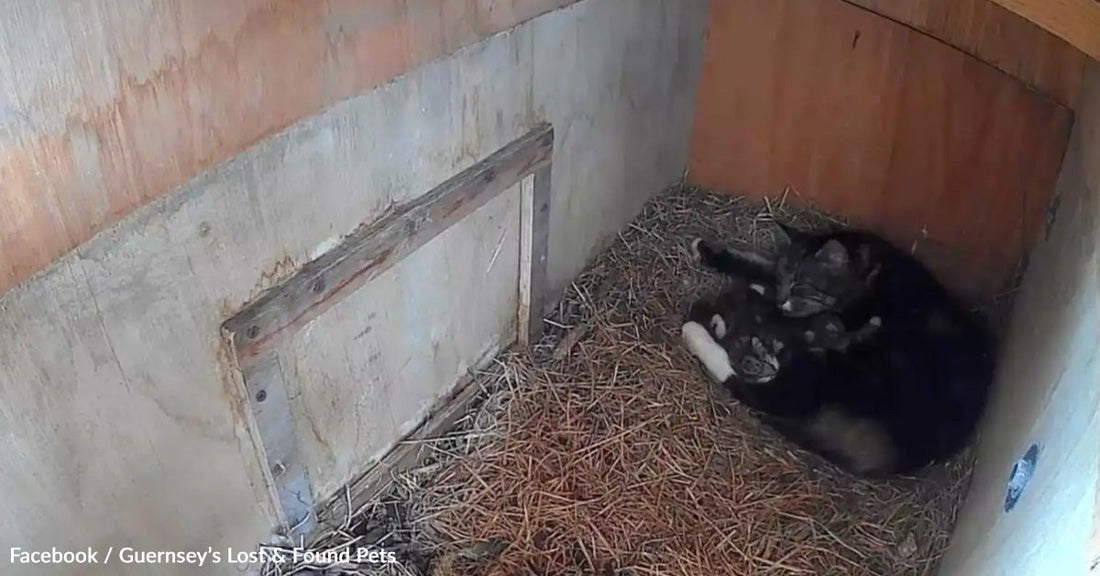
When a camera was installed inside an owl nesting box on the island of Guernsey, its owners were hoping to witness the quiet, natural rhythms of bird life. What they discovered instead was a surprise that no one saw coming: a mother cat and her newborn kittens had moved into the box, nestled high in the tree branches. The unexpected footage offered not only a twist on what was expected to be a birdwatching experience, but also a heartwarming glimpse into the adaptability of animals seeking shelter.

Located in the English Channel, Guernsey is known for its scenic landscapes and wildlife, making it an ideal place for nature enthusiasts to set up nesting boxes for local birds like owls. The box in question had been carefully placed and monitored with a camera, a common technique used by bird lovers to observe nesting habits without disturbing the animals. But when the property owners reviewed the latest footage, they were met not with the flutter of wings, but with the soft purring and tiny mews of a feline family.
According to Guernsey’s Lost & Found Pets, the local rescue organization that was called in for help, this situation was far from ordinary. “While we [came] across a cat that had been living in a tree a few years ago, we have never come across a situation like this,” a representative told The Dodo. The nesting box, intended for owls, had become a safe haven for a mother cat who had apparently chosen the elevated shelter to give birth and care for her young.
Rescuer Sue Vidamour was brought in to monitor the situation. Over the course of several days, she kept a close eye on the feline family, ensuring that the kittens were nursing properly and that their mother was able to provide the nutrients they needed during those crucial early days. The kittens were just two weeks old, a fragile age where maternal care is essential for development.
Once it was clear that the kittens had received the benefits of their mother’s milk, Vidamour took the next step. She climbed up to the nesting box and carefully relocated the kittens to a safer, more accessible location on the ground. From there, they were taken to a local veterinary clinic, where staff began bottle-feeding them with kitten milk every two to three hours. This round-the-clock care is vital for orphaned or separated kittens, especially those who are still so young.
As for the mother cat, she made a quick escape into the surrounding trees when the rescue was underway. Rescuers have since set up humane traps in the hope of capturing her safely and reuniting her with her kittens. While she remains elusive for now, the team is optimistic that she will return and be brought in for care and eventual rehoming.
I found this detail striking: that a wild or stray cat would seek out such an unusual location to give birth. It’s a testament to the animal’s instincts for safety and seclusion. Nesting boxes are typically designed to mimic the secure, enclosed spaces birds prefer, which may have also appealed to a cat looking for a quiet place to raise her young.
Fortunately, the story has taken a hopeful turn. The kittens, now in the care of veterinary staff, are thriving. According to Guernsey’s Lost & Found Pets, all of them already have homes lined up. “They are progressing really well,” the representative said. “They are the lucky ones.” This outcome highlights the community’s readiness to step in and provide for animals in need, even when the situation is as unexpected as a cat family in an owl box.
Stories like this one serve as a reminder of the importance of wildlife observation and community support for animal welfare. The camera, originally meant to document the life of owls, ended up revealing something quite different but equally compelling. It allowed rescuers to act quickly and ensure a positive outcome for a vulnerable group of animals.
While the nesting box may still await its intended avian residents, it has already played a crucial role in offering shelter to another species in need. And with the kittens well on their way to new homes, the story stands as a touching example of how unexpected discoveries can lead to meaningful rescues.