
Tiny Kitten Stranded on Busy Highway Brings Traffic to a Halt as Drivers Rush to Save Her
Guest Contributor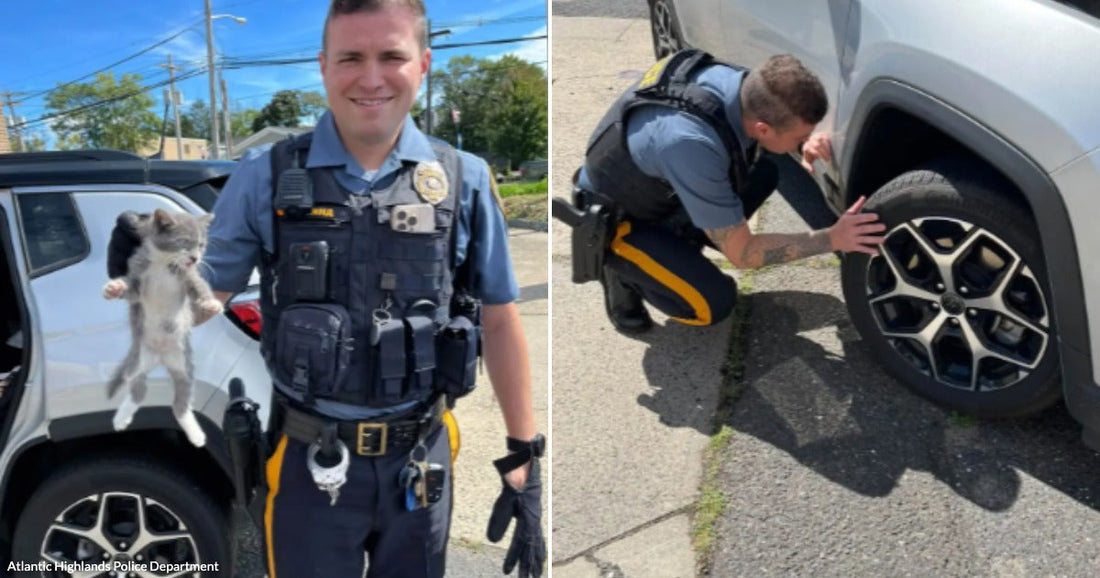
During an otherwise ordinary day on New Jersey’s Route 36, a moment of quick thinking and collective concern brought traffic to a halt, not for an accident or roadwork, but for a tiny kitten in danger. This brief, high stakes encounter with a stray animal on the highway became an unexpected reminder of how strangers can work together to protect a vulnerable life. Stories about traffic stops for animals on busy roads are not uncommon, yet each one reflects a specific mix of timing, risk, and human choice. In Atlantic Highlands, what unfolded along state Highway 36 began with a single 911 call and turned into a coordinated effort to keep everyone, including the kitten, safe.
According to the account from local reports, Atlantic Highlands Police officers responded to an emergency call on Monday about a kitten spotted directly on the highway. For anyone who has driven this route, state Highway 36 is known as an extremely busy roadway where vehicles regularly move at highway speeds. The presence of a small animal in that environment can create a hazardous situation in seconds, not only for the animal but also for drivers who may react suddenly to avoid it.

Bystanders at the scene told authorities that the kitten had already crossed the highway at least once and even managed to jump over the jersey barrier that runs along the road. That detail alone points to how precarious the situation was. A kitten has no understanding of traffic flow, blind spots, or braking distances. Its unpredictable movements can easily surprise drivers. The jersey barrier, designed to keep vehicles separated and reduce crossover crashes, briefly became an obstacle the animal cleared, moving back into an area of active traffic.
As word of the kitten in the road spread among drivers already on the scene, traffic on Route 36 began to slow and then come to a stop. The article describes how cars halted along this heavily traveled stretch because of the small animal in the roadway. In the middle of the daily rush, commuters found themselves pausing, not for a lane closure or congestion, but for a living creature barely large enough to see at a distance. It is easy to imagine the mix of surprise and concern that likely swept through the stopped vehicles. A sudden halt on a highway can itself create danger, yet in this case, those present appear to have decided that preservation of life was the urgent priority.

Atlantic Highlands Police Office
One detail that stands out from the account comes through the description offered by law enforcement. Sergeant Travis Sodon, who serves as the public information officer for the Atlantic Highlands Police Department, explained that at some point a truck driver stepped out of his vehicle and attempted to grab the kitten. That action highlights a particularly human response that appears again and again in similar stories. Even amid real risk from oncoming traffic and the unpredictability of a frightened animal, someone chose to leave the relative safety of a cab or car and move toward the source of danger.
I found this detail striking because it reflects the type of split second decision that has no guarantee of success. A kitten on a highway will likely be scared, disoriented, and moving abruptly in different directions. Approaching the animal requires not only physical caution but also awareness of surrounding vehicles, the flow of traffic, and the possibility that the animal may dart unexpectedly under a wheel or into another lane. That a truck driver was willing to attempt a rescue in such conditions speaks to a spontaneous sense of responsibility and empathy that many people would recognize, even if they might hesitate in the same circumstances.

Atlantic Highlands Police Office
This episode also illustrates the coordinated nature of emergency response when an unexpected hazard appears in the road. In this case, the 911 call brought Atlantic Highlands Police officers to the location. Their arrival meant the situation could be managed more systematically, with trained professionals able to assess both the animal’s safety and the risk to drivers. Law enforcement officers who respond to incidents involving animals on highways regularly balance multiple priorities: preventing secondary crashes, maintaining safe traffic flow, and avoiding injury to people who may be outside their vehicles. Traffic stops for animal rescues, particularly on multilane roads like Route 36, require clear communication and careful positioning of patrol vehicles so that motorists can see what is happening and slow safely.
Although the available report focuses on the kitten’s presence in the roadway and the initial response, even this brief snapshot carries broader implications. It underscores how a single small animal can disrupt a complex transportation system designed for high speed travel. Highways and state routes typically prioritize efficiency and movement, yet these spaces remain part of a larger environment that includes wildlife, domestic animals, and, occasionally, pets that have become lost. Incidents like this invite reflection on how communities and drivers relate to the animals that share or cross these spaces, whether intentionally or by circumstance.
There is also a human dimension in the shared experience of those who were present. Witnesses saw the kitten moving across the lanes and over the jersey barrier. Drivers suddenly braked and then waited as events unfolded. The truck driver chose to make a direct attempt at rescue. Police officers answered the 911 call and arrived to address a situation that, while not typical of serious highway incidents, still carried real risk. Even though the underlying event involved a single small cat, the chain of reactions involved many people, each playing a different role in ensuring that the situation did not escalate into something worse.
Stories of motorists and police joining forces to avoid hitting a kitten on a state highway may seem small compared to other headlines, yet they contribute to a larger narrative about how communities respond to unexpected vulnerability in busy, high pressure settings. A brief interruption of traffic on Route 36 created a moment where safety, caution, and compassion were in tension, and people present chose to prioritize the life in front of them. In that sense, the account from Atlantic Highlands hints at a kind of everyday courage that plays out not in long planned operations, but in quick decisions made on a crowded road. Read more at https://patch.com