
Fallow Buck Thrashes Helplessly in Wire Fencing Until Rescuers Finally Cut Him Free
Guest Contributor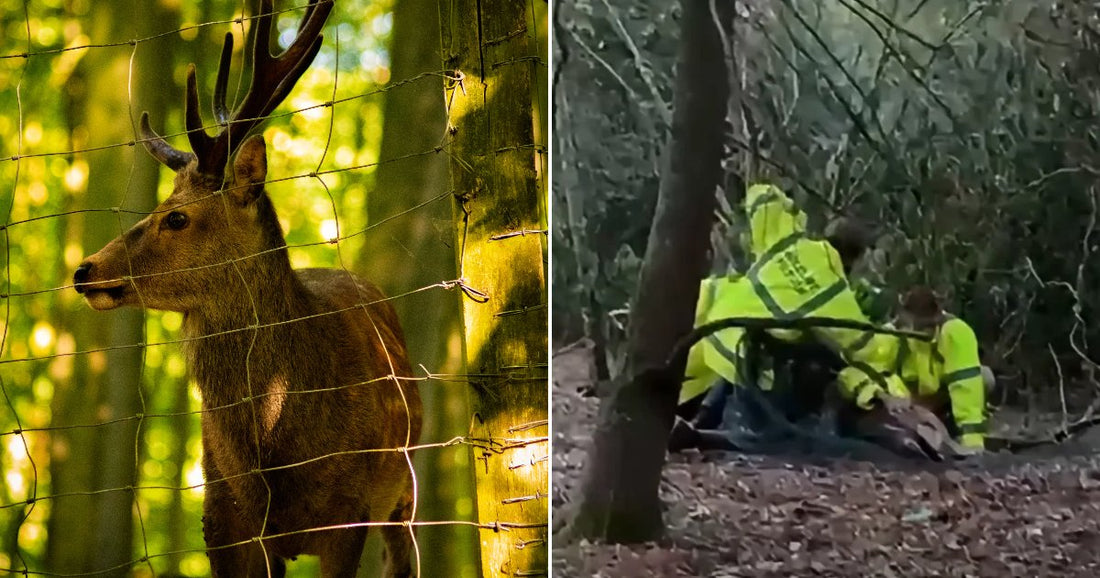
In a quiet corner of the New Forest, a dramatic but ultimately heartening scene unfolded when a rescue team freed a deer trapped in wire fencing. The incident, centered on a fallow buck whose antlers had become tangled, offers a small but powerful reminder of how human compassion and skilled wildlife rescue can make a direct difference. This story of a deer rescue in the New Forest highlights the importance of rapid response, local knowledge and cooperation between landowners and animal welfare charities.
The incident began with an emergency call to Hampshire-based charity Wildlife Rescue Moyles Court. The report described a fallow buck with antlers thrashing in wire fencing, clearly in distress and too dangerous for untrained people to approach safely. According to the charity, nobody nearby could get close enough to free the animal, which left the situation both urgent and precarious. As with many cases involving wild animals in trouble, the first crucial step was simply that someone noticed and cared enough to call for help.

Upon arrival, the rescue team was met by landowners who the charity described as “concerned and compassionate.” That detail captures the tone of the entire episode. Instead of walking past the problem or attempting risky intervention without the right tools, the landowners chose to guide experienced rescuers through their woodland to the struggling buck. Their involvement was not passive. They escorted the team to the exact location of the animal, making sure rescuers could reach the scene quickly and safely.
In the woods, the team found a disturbing sight. The deer was frantically jumping and dragging the wire fencing back and forth in a desperate effort to escape. Every movement risked further entanglement. For any wild animal, this level of confinement becomes dangerous very quickly. There is the immediate physical risk of cuts, bruises or broken limbs, as well as the possibility of severe stress and exhaustion. The rescue team had to act efficiently while also minimizing additional distress.

Wildlife Rescue Moyles Court
Using specialist cutters, the team began the careful and methodical work of removing what the charity called “extensive” wire around the buck. Here, training and specialized equipment made a critical difference. Cutting the fencing around a large, frightened animal with antlers requires more than goodwill. It calls for knowledge of deer behavior, awareness of escape routes and close coordination among the people on site. The rescuers needed to work close enough to free the deer but with enough control to keep everyone safe.
The operation unfolded as a combined effort that balanced calm precision with urgency. Wild animals in distress often thrash or bolt unpredictably once they sense a path to freedom. The team had to anticipate that possibility as they removed each piece of wire. At every cut, there was the potential for sudden movement. Yet they continued until the final lengths of fencing were clear of the antlers and body.
Once the wire was removed, the transformation was immediate. The deer, now free, ran off into the woods, reported as “unharmed.” That single word carries significant weight. It suggests that despite the prolonged struggle, the animal avoided serious injury. For the rescuers and landowners, watching the buck disappear back into its natural habitat must have been a powerful moment of relief. The story closed not with a tragic outcome but with a living animal returning to the forest on its own terms.
This deer rescue in the New Forest illustrates how vital prompt intervention can be in cases where wildlife becomes entangled in fencing or other human-made obstacles. Wire fences are common features of rural landscapes, and most of the time they perform a necessary role in land management. Yet they can pose real risks to animals whose movements do not recognize property boundaries. When those risks turn into real emergencies, local charities like Wildlife Rescue Moyles Court provide a bridge between concern and action.
There is also an important lesson here about the role of community in wildlife welfare. The landowners in this incident did not attempt to manage the situation alone, nor did they ignore it. Instead, they worked with a specialist charity and stayed involved until the deer was safe. Their decision to prioritize animal welfare, seek expert help and accompany rescuers through their own woodland underlines the value of community responsibility in protecting local wildlife.
For wildlife organizations, rescues like this reflect both the challenges and rewards of their work. Entanglement cases can be complex, unpredictable and physically demanding, yet they are also highly visible examples of success. When an animal runs off unharmed after such an ordeal, it demonstrates the impact that properly trained teams can have. It also reinforces the importance of public awareness. People who know who to call and what not to do in an animal emergency play a crucial part in positive outcomes.
Stories like this one may also encourage conversations about how land and fencing are managed in areas rich with wildlife. While not every risk can be removed, increased awareness can help landowners identify particularly hazardous spots or types of wire that are more likely to snag antlers or limbs. Simple adjustments, guided by local knowledge and conservation advice, can reduce the chances of similar incidents without undermining the practical needs of working landscapes.
In the end, the most enduring image from this event is a fallow buck, once trapped and panicked, sprinting back into the cover of the trees. It is a moment made possible by a concerned call, a responsive charity, specialist tools and the quiet determination of people who chose to help. That combination of care and capability is at the heart of effective wildlife rescue, and it is what turned a potentially tragic scene into a story of relief and release. Read more at https://nz.news.yahoo.com