
Olivia Munn Wanted to Face Cancer for Her Mother Until Michael Strahan Helped Her Find Another Way to Help
Guest Contributor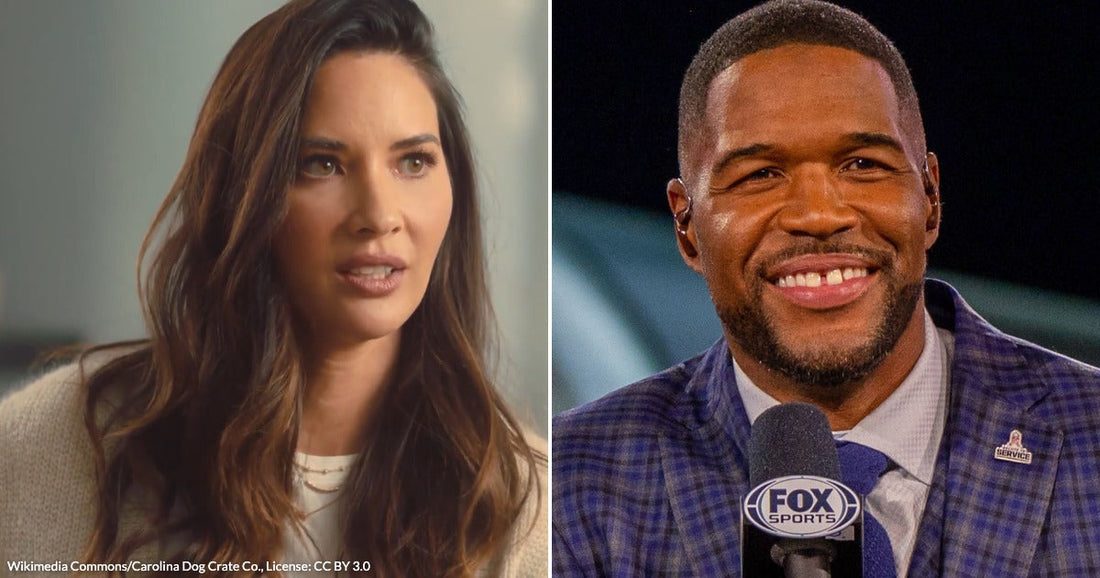
During Breast Cancer Awareness Month, some of the most powerful stories are not only about treatments and diagnoses, but about the quiet strength found in caregiving. Olivia Munn’s recent appearance on “Good Morning America” offers one such story, weaving together her own breast cancer journey, her mother’s diagnosis, and a simple piece of advice from Michael Strahan that became a lifeline. Her experience highlights how crucial caregiver support, early breast cancer detection, and tools like the Breast Cancer Risk Assessment Tool can be.
Munn has been open about her previous breast cancer diagnosis and the aggressive steps she took afterward, including a double mastectomy, an ovariectomy, and a partial hysterectomy. What she shared on “GMA” adds another layer. A year after her own diagnosis, her mother was told she had Stage 1 HER2-positive breast cancer. That moment shifted Munn from being a patient to also being a caregiver, a role that can come with its own emotional weight.

On the show, Munn reflected on how unprepared she felt for that shift. She described struggling with the idea that her mother now had to walk a path she already knew too well. In a conversation with co-host Michael Strahan, she recalled telling him that she wished she could put her mother’s diagnosis “on [her] cancer tab,” a raw way of saying she wanted to take on the burden herself. She felt she knew how to endure treatment, appointments, and fear, and she wanted to absorb that pain so her mother would not have to.
Strahan, however, offered a perspective that stayed with her. At the time, his own daughter, Isabella Strahan, was publicly sharing her fight with a medulloblastoma brain tumor. He understood what it meant to stand beside a loved one facing a life-altering diagnosis. According to Munn, Strahan gently told her that she simply could not do the illness for someone else. What she could do instead was be there.

That idea sounds simple, yet in moments of crisis it can feel profound. Caregivers often wrestle with helplessness, wishing they could trade places with the person they love. For Munn, hearing “you can’t do it for them, but you can be there for them” created what she described as a roadmap. Knowing that Strahan was trying to live those words for his own daughter gave her a model for how to show up for her mother without feeling like she was failing by not being able to shoulder the physical illness herself.
Her comments visibly moved Strahan on air. He responded by telling her that she is one of the strongest people he knows. The exchange captured something that can be easy to overlook in public discussions about cancer: the bonds between patients and caregivers, and the emotional labor involved in standing beside someone day after day.
Alongside that deeply personal story, Munn used her time on “GMA” to shine a light on a practical tool that she believes saved both her life and her mother’s. She credited the Breast Cancer Risk Assessment Tool, also known as the Gail Model, with flagging her elevated lifetime breast cancer risk. The tool, developed by the National Cancer Institute, helps health professionals estimate a woman’s risk of developing invasive breast cancer over the next five years and up to age 90.
The BCRAT uses information about a woman’s medical history, reproductive history, and breast cancer history among first-degree relatives to generate a risk score. According to the National Cancer Institute, when someone’s risk score crosses a certain threshold, typically 20 percent, it often triggers recommendations for additional screening, such as breast MRI or more frequent imaging. In Munn’s case, her lifetime risk score was reported as 37.3 percent, significantly above that high-risk line.
Munn explained that both she and her mother had clear mammograms and clear ultrasounds. It was only because their risk scores from the BCRAT were high that they pursued further testing with MRI. Those MRIs led to the discovery of cancer in both women at stages where the disease could be addressed more effectively. She has said that the risk assessment “saved [her] life” and “saved [her] mother’s life.” I found this detail striking because it underlines how invisible risk can be when standard tests alone do not tell the whole story.
After her own diagnosis in 2023, Munn urged her mother and sister to complete the same risk assessment. Her mother’s Stage 1 HER2-positive breast cancer diagnosis followed. While any cancer diagnosis is frightening, finding it at Stage 1 can significantly change treatment options and outcomes. That sequence of events strengthened Munn’s belief that every woman should have access to an accurate understanding of her individual breast cancer risk, not just a one-size-fits-all approach to screening.
Looking ahead, Munn is channeling her personal experience into advocacy. She shared that she and Senator Mark Kelly of Arizona plan to introduce a bill in November aimed at making the Breast Cancer Risk Assessment Tool part of standard care for doctors who see female patients. The vision she described is straightforward. She wants risk assessment scores to be considered as routinely as cholesterol, blood pressure, height, and weight during regular medical visits.
Her goal is not framed in technical or political terms, but in human ones. She talked about asking everyone to help support women “just a little bit more” through this change. The hope is that by incorporating lifetime breast cancer risk into routine care, more women like her and her mother could have cancers detected earlier, even when mammograms and ultrasounds seem normal.
Munn’s story on “Good Morning America” blends the emotional reality of caregiving with the practical power of early detection tools. It illustrates how one conversation between two people living through parallel experiences, each on a different side of the caregiving equation, can offer guidance that reverberates far beyond a single moment. It also shows how lived experience can shape efforts to improve healthcare, one screening guideline or risk assessment tool at a time. In sharing both her vulnerability and her advocacy, Munn adds another important voice to the ongoing conversation about how to better support people and families facing breast cancer.