
🚨Urgent: Missile Strikes Shelter in Ukraine! Rush Emergency Aid!
The History Of Operation Highjump, The U.S. Mission to Antarctica
Guest Contributor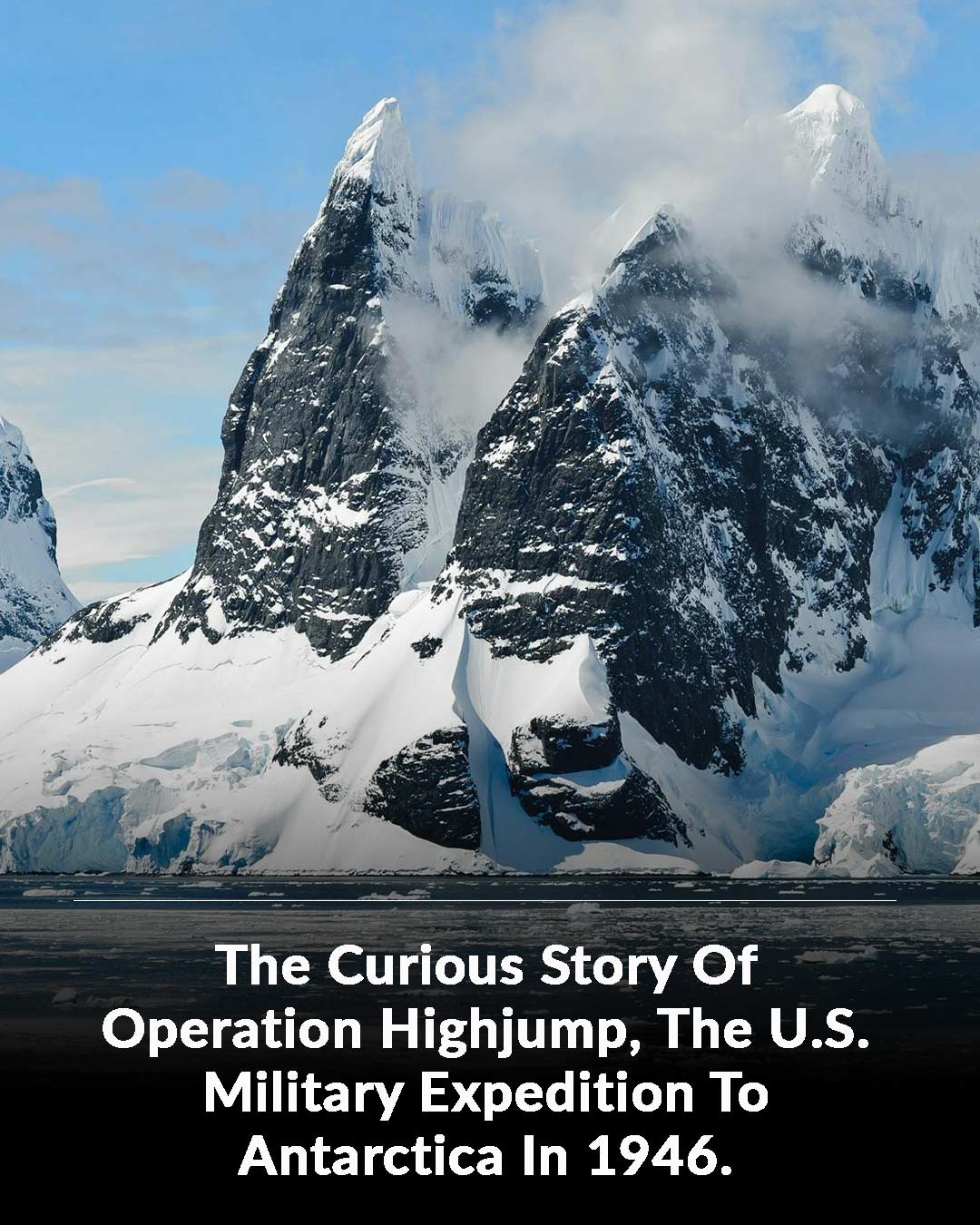
In the aftermath of World War II, the United States launched an ambitious and enigmatic military expedition to the icy expanse of Antarctica. Known as Operation Highjump, this 1946 mission remains one of the most extensive and mysterious polar operations in history. With over 4,700 personnel, 70 ships, and 13 aircraft, the operation’s scale was unprecedented. Though the official objectives included training in extreme cold, testing equipment, and collecting geological data, the true purpose of Operation Highjump has been the subject of speculation for decades.

Led by Rear Admirals Richard E. Byrd and Richard H. Cruzen, the operation was publicly described as a way to prepare U.S. military forces for frigid conditions and to explore the feasibility of establishing air bases in Antarctica. According to a press conference held by Admiral Byrd in November 1946, the mission aimed to test ships, aircraft, and helicopters in polar environments and to expand knowledge of the region’s geography and climate. However, as historian Dian Olson Belanger later noted, the Navy also had classified orders to establish territorial claims and demonstrate strategic capabilities during the early days of the Cold War. This blend of public and covert aims has fueled enduring curiosity about the operation’s intent.

Operation Highjump officially began in December 1946, when the first U.S. ships reached Antarctic waters. The expedition faced immediate challenges. On December 30, a Martin PBM-5 aircraft, George 1, crashed on Thurston Island, resulting in the deaths of three crew members. Six others survived and were rescued nearly two weeks later. The tragedy was a stark reminder of the dangers posed by the harsh Antarctic environment. Despite the loss, the mission pressed forward, relying heavily on helicopters to navigate the icy terrain and scout safe routes for ships.

Helicopters, particularly the Sikorsky HO3S-1, proved crucial to the expedition, though they were not immune to the elements. Ice accumulation on rotor blades caused multiple crashes, including one incident in which a helicopter plunged into the sea after returning from a reconnaissance mission. Fortunately, the crew was rescued, but the risks underscored the formidable conditions faced by the task force.
By January 1947, the team began constructing a temporary base dubbed Little America IV near the Bay of Whales. This site became the operation’s central hub, supporting air exploration and mapping efforts. Aircraft conducted 28 photographic flights, capturing more than 70,000 images across 1.5 million square miles. These efforts laid the groundwork for future scientific and logistical planning in the region. Rear Admiral Byrd expressed hope that the data would enable the creation of a detailed map of Antarctica, a goal that reflected both practical and strategic interests.
The operation also collected geological samples, including water, soil, and evidence of coal deposits, contributing to the broader understanding of the continent’s natural resources. Despite these accomplishments, many participants felt the mission lacked clear direction. Some described the operation as disorganized and expressed confusion about their specific roles. Pilot Conrad “Gus” Shinn, who flew R4D aircraft from the USS Philippine Sea, later admitted, “We didn’t really know what we were doing. We didn’t know about precision flying or what we were looking at.”
Operation Highjump concluded abruptly in February 1947, just three months after it began. While Navy officials deemed it a success, the early termination and mixed reviews from those involved left room for speculation. The U.S. military documented the expedition extensively, producing a film titled The Secret Land, which won the 1948 Academy Award for Best Documentary. Still, the transparency of the public narrative did little to quell alternative theories.
Over the years, Operation Highjump has become fertile ground for conspiracy theories. Some suggest the mission aimed to locate secret Nazi bases or even make contact with extraterrestrial beings. Others believe the expedition was intended to photograph the so-called “ice wall” that features prominently in flat Earth theories. Though none of these claims have been substantiated, they reflect the enduring intrigue surrounding the operation.
In reality, Operation Highjump marked the beginning of a series of polar missions, including Operation Windmill in 1947–1948. These efforts contributed to the growing international interest in Antarctica. However, concerns about militarization eventually led to the Antarctic Treaty, signed on December 1, 1959. This landmark agreement designated the continent as a zone for peaceful scientific research, prohibiting military activity.
Today, Antarctica stands as a symbol of international cooperation and scientific discovery. Yet, Operation Highjump remains a fascinating chapter in its history—a moment when thousands of U.S. military personnel ventured into the unknown, driven by a complex mix of exploration, strategy, and perhaps more than they were told. I found it striking how such a massive and well-documented mission could still leave so many questions unanswered, a testament to the enduring mystery of the world’s most remote frontier.