
Orphaned Opossum Babies Cling To Stuffed Animal After Losing Mom
Guest Contributor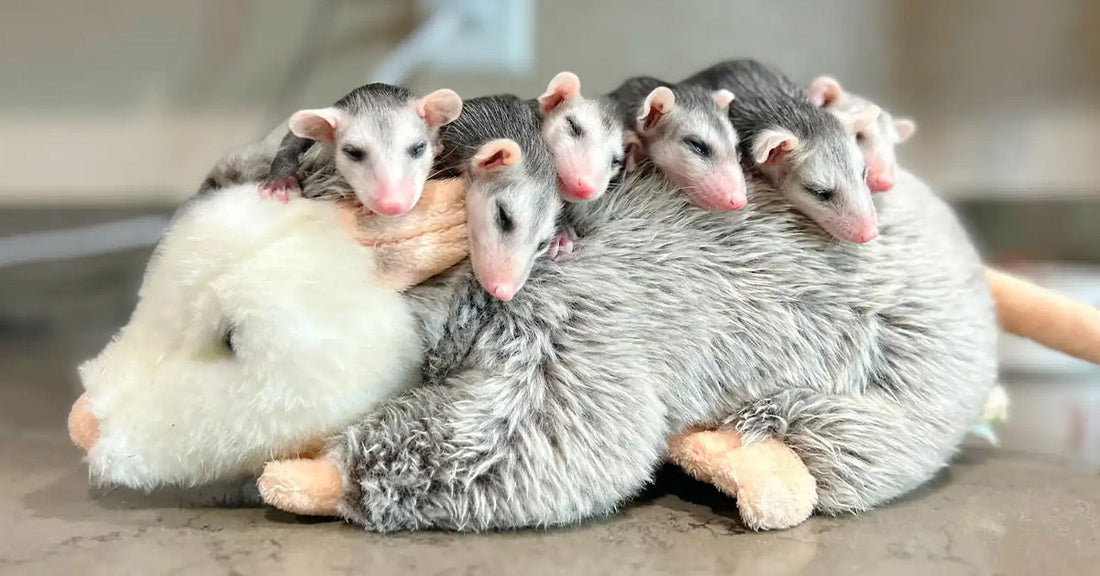
There is something profoundly moving about watching a litter of tiny animals cling to the closest thing they have to a parent. In the case of this recent rescue story from Newhouse Wildlife Rescue, a group of orphaned baby opossums has found comfort in an unlikely stand-in. Their “mom” is a life-size plush toy, and these miracle babies have no idea that the warm, fuzzy body they are piled on is not alive. The scene is both heartbreaking and uplifting, and it highlights just how far caring humans will go to give vulnerable wildlife a second chance.
The story began with what seemed like a routine call for the Newhouse Wildlife Rescue team. They were alerted to an injured opossum that had collided with a vehicle. For wildlife rehabilitators, calls about animals hit by cars are sadly common. When staff arrived on the scene, they discovered that the adult opossum had suffered fatal injuries and could not be saved. The loss of a wild animal is never easy for people who devote their lives to helping them, but what they discovered next changed the course of the day.

Surrounding the mother’s lifeless body was a litter of living babies, also known as joeys. The joeys were still clinging to their mother and refusing to let go. According to Newhouse Wildlife Rescue, they remained “helpless without her,” desperately attached to the only source of warmth and security they had ever known. The image of them holding on, unaware that their mother was gone, conveys how tightly infant opossums depend on that physical connection for survival.
The rescue staff knew they had to act delicately. They carefully removed each joey from the mother’s body, a process that was no doubt emotionally difficult. They placed the babies together in a blanket-lined pet carrier, creating a makeshift nest. Even while working quickly, the rescuers recognized the weight of what was happening. They were separating these babies from their late mother, an unavoidable step that came with a mix of grief and determination. At the same time, they knew these joeys had a real chance to survive if they received proper care.
The opossum babies were transported to Newhouse Wildlife Rescue headquarters, where staff could fully evaluate their condition. To everyone’s relief, the babies were found to be relatively healthy. That alone made their story feel a little miraculous. Many young animals orphaned this early in life do not make it, especially after such a traumatic event. These joeys, however, still had strength on their side, and the team was quick to build a plan that would give them the best possible start.
Care for orphaned opossums involves far more than simply feeding them. They need warmth, a safe enclosure, and a way to replicate the natural comfort they would experience in the wild by clinging to their mother’s body. The staff developed a nutrient-rich feeding plan suited to their age and stage of development, and they placed the joeys in an incubator to keep them at a stable, cozy temperature. The incubator helped mimic the warmth they would normally get from their mother’s pouch and fur.
To address their emotional and behavioral needs, the team at Newhouse Wildlife Rescue came up with an inspired solution. They introduced a life-size opossum stuffed animal into the incubator so the babies would have something soft and mother-shaped to cling to. As the rescue explained, “It’s not mom, but it will do.” This plush opossum became a stand-in for the mother they had lost, offering a consistent surface where they could pile up, burrow in, and rest together.
The response from the joeys was immediate and heartwarming. They draped themselves across the stuffed opossum’s back and nestled into its faux fur as if they had always known it. Newhouse Wildlife Rescue noted that these baby opossums loved being able to simulate what they would have been doing with their mother if they were not orphans. Watching them cling and cuddle showed that the plush toy was meeting an important need. It was not only about physical comfort, but also about supporting natural behaviors that would help them grow and prepare for life outdoors.
The rescue team shared a video of the joeys snuggling on their plush “mom,” and the footage captures just how peaceful they look. Tiny bodies napping in a tangle, tails and paws overlapping, all anchored by the familiar shape of their pretend mother. The visual makes it easy to understand why creative tools like stuffed animals have become so valuable in wildlife rehabilitation. They give orphaned animals a chance to practice instincts that might otherwise fade in captivity.
In the weeks since the babies were first brought in, Newhouse Wildlife Rescue reports that the little opossums are doing “very, very well.” They are not yet old enough or large enough to be released into the wild, but they are growing stronger every day. The combination of thoughtful nutrition, a stable environment, and that consistent plush companion appears to be working. For now, their world is an incubator, a soft toy, and the gentle hands of the people caring for them, yet every day there are small steps toward independence.
Rescuers are looking forward to the day when all six joeys are ready to return to their natural habitat. Releasing rehabilitated wildlife back into the environment is always the goal for organizations like Newhouse Wildlife Rescue. It is the moment that validates the long hours of feeding schedules, cleaning, and monitoring. Until that day comes, the team is taking comfort in the sight of these rescued opossums cuddling with their pretend mother, knowing that each nap and each meal is helping prepare them for life on their own.
There is also a quieter emotional layer to this story. While the mother opossum did not survive, the team at Newhouse Wildlife Rescue expressed a belief that she would be happy to know her babies are safe and being cared for. That sentiment reflects a deep respect for the animals they work with. It acknowledges the loss while honoring the life that continues through her offspring. I found this detail striking because it frames wildlife rehabilitation not just as a technical task, but as a compassionate response to the fragile connections in nature.
Stories like this one highlight the heart of wildlife rescue work. They show how creativity, empathy, and science come together in moments of crisis. A tragic car collision took a mother opossum’s life, yet quick thinking and careful planning turned her joeys into survivors. With the help of an incubator, a feeding plan, and a life-size plush “mommy,” these miracle babies have been given another chance to grow up wild. As they cling to their stuffed guardian, unaware that it is not alive, humans stand quietly in the background, doing everything they can to make sure one day those tiny paws will cling to tree branches instead. Read more at The Dodo