
Four Orphaned Bobkittens Arrive Within Days and Suddenly Become a Family
Guest Contributor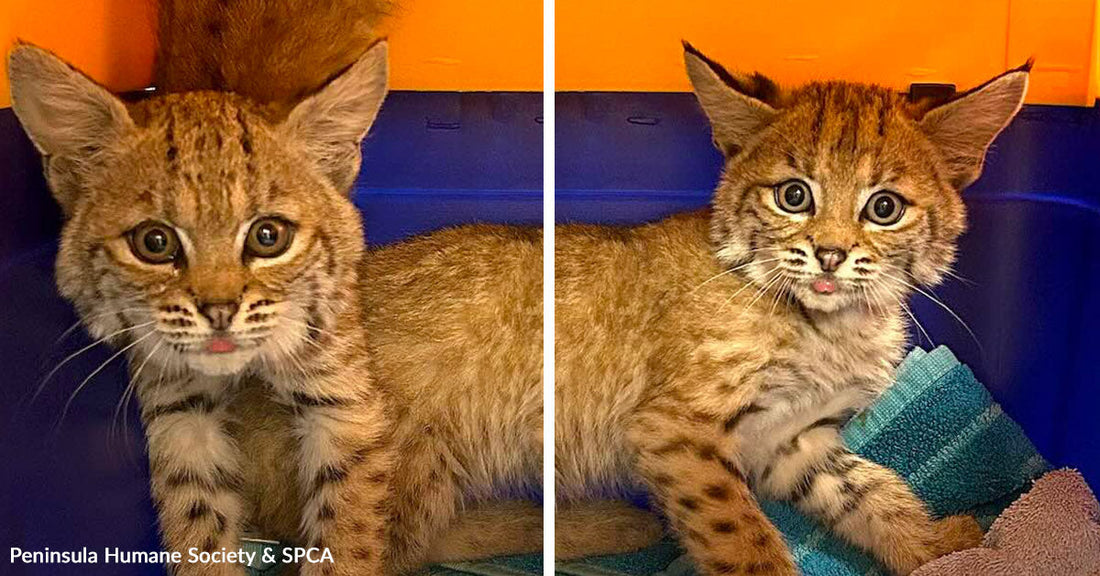
Four tiny bobkittens in California recently got a second chance at the wild, and their story is a heartwarming reminder of how skilled wildlife rehabilitation can bridge tragedy and hope. These baby bobcats, all orphaned or abandoned in separate incidents, are now recovering together at the Saratoga Wildlife Care Center, where caregivers are carefully preparing them for a return to their rightful place in nature. For anyone who cares about wildlife rescue or the future of bobcats, their journey is compelling.
The young bobcats were found miles apart, in different parts of the state, over the course of just a few days. Two were discovered in Kern County after their mother died from a fall. Another kitten turned up in Carmel, and the fourth in Concord. Although they were likely born to as many as three different mothers, they now share a common story and a shared enclosure where they will grow strong enough to survive on their own.

All four kittens arrived under the care of the Peninsula Humane Society & SPCA, which coordinated their rescue and brought them to the Saratoga Wildlife Care Center. There, each bobkitten was examined, cleared of parasites, and placed on a natural meat diet that mimics what they would eat in the wild. This attention to detail is essential in wildlife rehabilitation. It supports not just their immediate health, but also their long-term ability to hunt and fend for themselves once they are released.

Peninsula Humane Society & SPCA
At Saratoga, the kittens now live together in a large enclosure designed specifically for conditioning and natural development. The staff report that these bobkittens are busy building muscle, practicing their pouncing skills, and exploring their surroundings. Caregivers provide enrichment to keep their minds and bodies active. Toys, scents, and opportunities to stalk and leap help ensure that their instincts stay sharp and their behavior remains as close to wild as possible.
What makes this story especially encouraging is the balance the team maintains between care and necessary distance. The staff are doing everything they can to keep the kittens healthy and strong while also making sure they do not become too comfortable around people. According to their caregivers, the bobkittens remain appropriately wary of humans, which is exactly what wildlife rescuers want to see. A bobcat that loses its natural fear of people may struggle to survive after release or could come into conflict with human communities.

Peninsula Humane Society & SPCA
The aim is not to create tame or socialized animals. It is to give these young wildcats a genuine chance at a natural life. The current plan is to release them as semi-adults in October, once they are physically robust, adept at hunting behaviors, and behaviorally ready for independence. When that day comes, their early hardships may become only the first chapter in much longer wild lives.
This outcome was far from guaranteed when each kitten was first discovered. A lone, mewling bobkitten can appear helpless, and the instinct for many animal lovers is to scoop the baby up and try to help. Wildlife experts, however, emphasize that this is not always the right move. The Peninsula Humane Society & SPCA and professionals like Kinney, who oversees their care, urge members of the public to pause and call a wildlife rescue organization before intervening. Trained staff will ask critical questions. Has the mother been seen nearby? How long has the kitten been alone? Is it injured or obviously ill?
Often, a wild mother is foraging or staying hidden until people leave, and well-meaning intervention can accidentally separate families that would otherwise be just fine. In other situations, like those that led to the four bobkittens coming into care, the mother may truly be gone. In such cases, rapid coordination between citizens and wildlife professionals can make the difference between life and death for orphaned young animals.
I found this detail striking because it illustrates a delicate truth about wildlife rescue. Compassion is essential, yet so is restraint. The best help sometimes means stepping back, observing carefully, and seeking expert guidance so that wild animals can remain wild whenever possible. When human intervention is necessary, as it clearly was for these bobkittens, structured rehabilitation in specialized facilities allows them to grow up with the skills and instincts they need.
The story of these four kittens also highlights the importance of collaboration. Multiple communities across California reported sightings and concerns. The Peninsula Humane Society & SPCA responded, transported the animals, and coordinated with the Saratoga Wildlife Care Center. Veterinarians and wildlife technicians worked to stabilize and treat the kittens. All of these efforts combined to create safe conditions where the young bobcats can thrive.
For conservation-minded readers, there is another uplifting layer here. Each one of these bobkittens now has a genuine opportunity to reach adulthood, reproduce, and contribute to the genetic diversity of bobcat populations in the region. What once seemed impossible for four scattered, vulnerable kittens has become a realistic, carefully managed goal. Their survival and eventual release will be measured not only in their own lives, but in the lives of the offspring they may one day have.
Stories like this one can also guide how people respond the next time they encounter a wild animal in distress. If someone stumbles upon a crying kitten in the brush, or a small animal on its own, the first step should not be to assume abandonment. Instead, experts recommend quietly observing from a distance when it is safe to do so, noting how long the animal appears to be alone, and contacting a local wildlife rescue or humane society. Describing the situation clearly allows professionals to decide whether to send help, ask for more observation, or advise leaving the animal undisturbed.
Back in Saratoga, the four bobkittens continue to pounce, climb, and grow together, bright-eyed and bushy-tailed in their shared enclosure. Each day they move closer to the moment when the doors will open and they can step into the wild landscapes that should have been theirs from birth. With thoughtful human support that honors their wild nature, they have turned loss into possibility. Their journey from scattered orphans to a cohesive, nearly ready group of young predators is a quiet triumph for wildlife rehabilitation and for everyone who chooses to share stories of hope like this one.