
National Animal Shelter & Rescue Appreciation Week Support A Shelter Today!
Peggy King Leaves a Lifetime of Music After Living With Alzheimer’s
Guest Contributor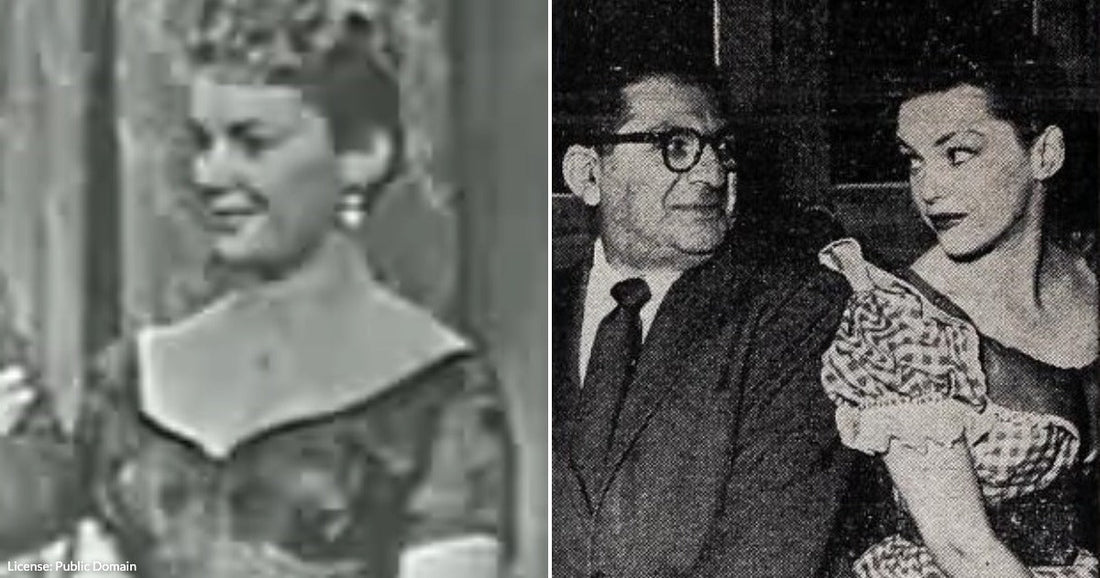
The jazz and big band world has lost one of its most enduring voices. Peggy King, a big band and cabaret vocalist once known nationwide as “Pretty Perky Peggy King,” has died at 96 in Wynnewood, Pennsylvania, after battling Alzheimer’s disease. Her story is not only about early fame in the 1950s but also about a remarkable second act as a cabaret singer in her eighties. For anyone who cares about classic American song, her life traces a path from the heyday of big band vocalists to a late flowering on intimate stages where she proved that artistry can deepen over time.
Born in February 1930 in Greensburg, Pennsylvania, Peggy King grew into a singer with a bright, easy tone often compared to Doris Day. That fresh, hopeful sound made her a natural fit for the late big band era, and she found herself working with some of its noted leaders. The article recounts her performing with orchestras led by Ray Anthony, Jimmy Carroll, Ralph Flanagan, Skip Martin and Charlie Spivak, a roster that situates her squarely within the last great wave of big band singers. In those years she delivered the kind of spry, swinging performances that audiences associated with the popular jazz vocals of the time.

License: Public Domain
Her recording career began taking shape at MGM Records in the early 1950s. In 1952 she cut singles such as “I Cried for You,” a release that helped introduce her to a national audience. That same period brought Peggy King into the orbit of Hollywood. She had a brief role as a singer in Vincente Minnelli’s film “The Bad and the Beautiful,” a biting portrait of the movie business. She also lent her voice to commercial jingles, including spots for Hunt’s tomato paste, a reminder that midcentury singers often moved fluidly between records, film sets and advertising studios in search of opportunities.
Television turned Peggy King from a promising vocalist into a household name. From 1954 to 1957 she appeared regularly on “The George Gobel Show.” Gobel, the show’s host, nicknamed her “Pretty Perky Peggy King,” a moniker that captured how audiences saw her on-screen: upbeat, poised and musically agile. At a time when television variety programs shaped public taste, her presence on a weekly show meant that millions heard her sing the standards of the day and associated her voice with the optimism of the era.

License: Public Domain
Recognizing her appeal, music executive Mitch Miller signed Peggy King to Columbia Records. At Columbia she recorded two best-selling albums, “Wish Upon a Star” and “Girl Meets Boy,” along with singles such as the 1954 release “Make Yourself Comfortable.” These projects helped solidify her reputation as a master of the American songbook. Yet the article notes a poignant missed opportunity. Songwriter Arthur Hamilton wrote “Cry Me a River” for her, but Miller refused to let King record it. His veto echoed similar decisions he made with other artists on his roster. The song would later become a standard associated with another singer, while King carried the knowledge that it had once been intended as a showcase for her.
Despite that setback, recognition followed. Peggy King was named Best New Singer of 1955–56 by both Billboard and DownBeat, a double honor that highlighted her status as one of the most promising jazz and big band vocalists of the period. She eventually left Columbia, continued to appear in film and television, and expanded her range. The article cites her work in “Abbott and Costello Meet the Mummy,” where she both sang and costarred, demonstrating how comfortably she moved between comedy, music and screen acting.
In 1959 King recorded “Lazy Afternoon” for the Imperial label, described as a chill suite that captured a more relaxed, atmospheric side of her artistry. Soon after this project she stepped back from the spotlight. She married formalwear businessman Sam Rudofker, focused on family life and largely concluded what many would have assumed was her entire performing career. For decades she remained out of the center of show business, a withdrawal that makes her eventual return all the more striking.
The first sign of that return came in the mid 1980s. Peggy King recorded “Oh, What a Memory We Made… Tonight” and “Peggy King Sings Jerome Kern” for the Stash label in 1984 and 1985. These albums revisited classic material and hinted that her connection to the American songbook had not dimmed. Still, according to the article, the full scope of her comeback did not become clear until nearly thirty years later, when she reached the age of 84.
Around 2013, living in the Philadelphia area, Peggy King began appearing again as a cabaret vocalist. She performed up and down the East Coast and in Los Angeles, working closely with the All-Star Jazz Trio. That ensemble, featuring pianist Andy Kahn, bassist Bruce Kaminsky and drummer Bruce Klauber, provided the supportive, flexible backing that a seasoned interpreter of standards requires. By this time her voice had changed; it was deeper and smokier, less about youthful perkiness and more about a stately, lived-in sound. Listeners experienced a singer who had grown into a new phase of expression, one shaped by time and perspective.
The article’s author recalls documenting many of these performances and describes King as gentle, frank and funny. Those qualities, along with her musical insight, flow through what would become her final recording, “Peggy King and the All-Star Jazz Trio: Songs à la King,” tracked in Andy Kahn’s home studio. The album revisits “Cry Me a River,” the very song she had once been prevented from recording, this time in an edgy, near-signature interpretation that reflects the wisdom and grit of an older artist. The set also includes a mature, seductive reading of “How About You?” and “Any Questions?,” a tune she had previously performed on the television series “Dragnet.” This later work helps explain why many listeners and collaborators felt she truly did get better with age.
Drummer and JazzTimes contributor Bruce Klauber, who worked extensively with Peggy King during this cabaret resurgence, offers a telling tribute in the article. He calls her “the ultimate professional in every way” and “the most musical singer I ever worked with.” He emphasizes that she understood every corner of a song, from lyrics to harmony to rhythm. With the right setting, he adds, she could “swing you into bad health,” a colorful phrase that captures her enduring ability to energize an audience.
Peggy King is survived by her daughter, Suzy Rudofker, and son-in-law, Dwain Goforth. Her career charts a path from big band singer to Columbia Records star, from television personality to largely retired mother and spouse, then finally to accomplished cabaret vocalist late in life. I found this arc especially moving because it underscores how an artist’s relationship to music can evolve, deepen and flourish even in advanced age. Her story invites listeners to explore both the bright early recordings and the nuanced later sessions with the All-Star Jazz Trio, hearing them not as separate careers but as chapters of a long, committed life in song. Read more at https://www.jazztimes.com/features/tributes-and-obituaries/big-band-cabaret-vocalist-peggy-king-queen-of-the-comeback-dies-at-96/