
The Gap Between Your Blood Pressure Numbers May Hold Clues About Your Brain’s Future
Guest Contributor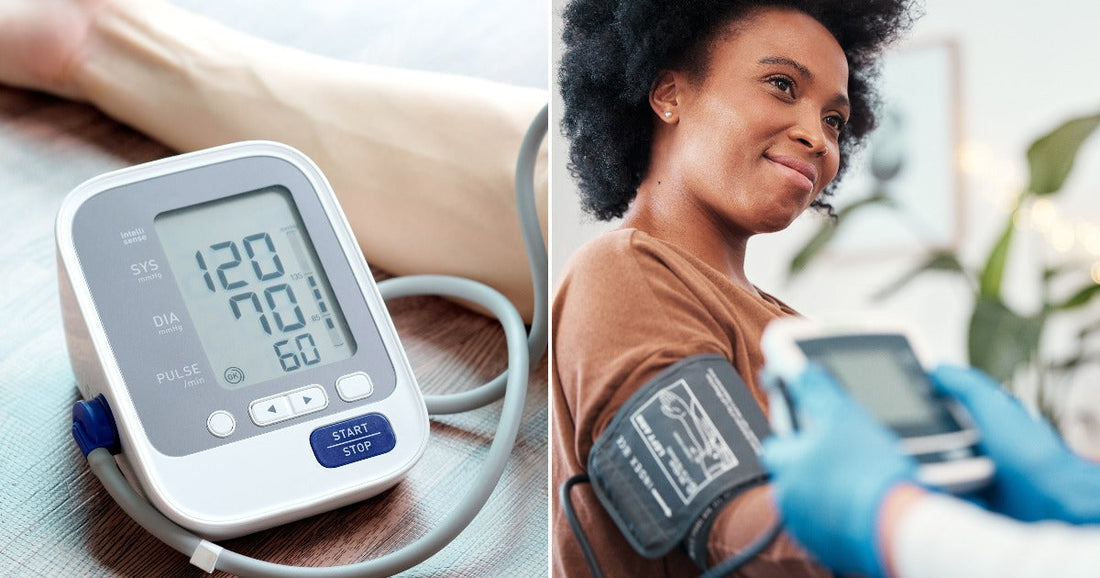
When most people think about blood pressure, they picture two numbers: the top one and the bottom one. Those figures, systolic and diastolic pressure, show up at every routine checkup and are widely recognized as important for heart health. Yet hiding inside that familiar reading is a third number that few patients ever hear about. That number is called pulse pressure, and growing research suggests it may be one of the clearest early indicators of vascular aging and future cognitive risk. Given how central high blood pressure is to heart disease and dementia, understanding pulse pressure is becoming essential for anyone who cares about long-term brain and cardiovascular health.
Pulse pressure is simple to calculate. It is the difference between the systolic and diastolic blood pressure values. If a reading is 120/80 mm Hg, pulse pressure is 40 mm Hg. For a healthy adult, that value of 40 is considered normal. In general, a pulse pressure higher than 40 is considered unhealthy, and a pulse pressure greater than 60 is a risk factor for heart disease, especially in older adults. What might look like a basic subtraction problem is actually a lens into how stiff or elastic the arteries have become over time.

The 2025 ACC/AHA Guideline for the Prevention, Detection, Evaluation and Management of High Blood Pressure emphasizes that hypertension is the most prevalent and modifiable risk factor for developing cardiovascular disease and dementia related to damage in the brain’s blood vessels. Pulse pressure sits right at the center of that connection. It is not just a derivative of the usual blood pressure numbers. Researchers have been tracking patterns of arterial stiffness, and those studies consistently show that uncontrolled high blood pressure contributes to dementia by accelerating the aging and stiffening of large arteries.
To see why this matters, it helps to look more closely at what each blood pressure number represents. Diastolic pressure, the bottom number, reflects the pressure in the arteries between heartbeats. Systolic pressure, the top number, reflects the pressure when the heart contracts. As arteries stiffen, they lose their ability to expand and absorb the force of each pulse of blood. Over time, this produces a recognizable pattern: systolic pressure tends to rise while diastolic pressure can drift downward, which means the gap between them widens. That widening gap is exactly what shows up as an elevated pulse pressure.

In older adults, stiffness of the largest arteries is considered the leading cause of increased pulse pressure. High blood pressure itself, along with the buildup of fats, cholesterol, and other substances on artery walls, contributes to this stiffening. As the vessel walls grow less elastic, each heartbeat sends pressure waves that travel farther and hit harder. These waves are not adequately cushioned, and the greater the pulse pressure, the more those waves are thought to signal stiff, damaged blood vessels.
The cardiovascular consequences are substantial. Research presented at ACC.26 introduced a pulse pressure-heart rate index and reported that each unit increase in this index before age 65 was associated with a 76 percent higher risk of probable dementia or mild cognitive impairment. Looking at pulse pressure itself, data from the National Institutes of Health indicate that every 10 mm Hg increase in pulse pressure, such as a change from 50 to 60, is linked with roughly a 20 percent increase in cardiovascular risk. These findings point to pulse pressure as an important, early warning sign that goes beyond the individual systolic and diastolic values.

The brain appears to be particularly vulnerable. When arteries stiffen, pressure waves from each heartbeat are no longer dampened as effectively and can penetrate deeper into the body’s smallest vessels, including those that nourish brain tissue. Studies using models of the carotid artery have outlined mechanisms through which stiffened vessel walls harm delicate brain structures. A 2025 study in the journal Hypertension found that high pulse pressure disrupts the microstructural integrity of white matter, the brain’s internal wiring that connects regions and allows them to communicate. The researchers reported that this disruption slowed processing speed and accounted for about 72 percent of the effect on processing speed, even after adjusting for age and other cardiovascular factors.
Additional evidence has come from large clinical trials and genetic analyses. A study that examined data from the SPRINT trial, published in the Journal of the American College of Cardiology, found that elevated cumulative pulse pressure was independently associated with faster cognitive decline and increased dementia risk, even after controlling for standard blood pressure readings. A separate 2026 study in Neurology reported that individuals with more genetic variants linked to elevated pulse pressure had a higher risk of dementia-related death. While genetics do not determine anyone’s fate, the association suggests that the biological pathways driving high pulse pressure are significant enough to show up clearly in genetic data.
Imaging studies have added yet another piece to the picture. A 2026 paper in Frontiers in Aging Neuroscience found that white matter hyperintensities, which appear as small bright spots on brain MRI scans, help explain how pulse pressure contributes to cognitive decline. These hyperintensities are widely interpreted as signs of accumulated damage in the brain’s small blood vessels. In this study, they were found to mediate the relationship between pulse pressure and cognitive decline across adulthood, independent of age.
Not everyone faces the same level of risk at the same time. The process of arterial stiffening can begin decades before symptoms appear, and pulse pressure tends to rise with age. People over 60 are at greatest risk for an elevated pulse pressure, but many younger adults may already be on that trajectory without realizing it. Almost half of adults in the United States have high blood pressure, often without obvious symptoms, which is why hypertension is sometimes called a silent killer. Because pulse pressure is derived from the same two numbers that are already measured in every clinic visit, it can be calculated immediately by anyone who knows their blood pressure reading.
There is also a cumulative aspect to this risk. A 2026 study reported that higher cumulative systolic blood pressure over time, rather than a single elevated reading, was associated with a 21 percent increased risk of developing dementia. In a similar way, pulse pressure that remains elevated for many years is more damaging than a short-lived spike that later returns to normal. Newton Nyirenda, MD, an epidemiologist at Georgetown University and lead author of two ACC.26 studies, emphasized that blood pressure management is not only about preventing heart attacks and strokes but may also be one of the most actionable strategies for preserving cognitive health. Nyirenda argued for addressing hypertension earlier in adulthood, before long-term damage begins to add up.
The encouraging news is that pulse pressure is not set in stone. Because arterial stiffness is its main driver, lifestyle choices that help maintain flexible, healthy arteries can keep pulse pressure in a safer range. Aerobic exercise is one of the most consistently supported approaches. Long-term studies have found that 150 minutes of moderate to vigorous physical activity per week is associated with less arterial stiffness, whereas a sedentary lifestyle appears to increase it. Researchers point to a process called nitric oxide upregulation, in which regular physical exertion prompts arterial walls to remodel and preserve elasticity. In one exercise intervention, participants increased aerobic capacity and lowered pulse wave velocity, a direct measure of arterial stiffness, even without losing weight.
Diet can reinforce these benefits. Analyses of dietary patterns across different ethnic and racial groups in U.S. adults have found that low intake of green leafy vegetables is an independent predictor of high arterial pulse pressure. A randomized controlled trial published in Hypertension followed nearly 1,300 adults aged 65 to 79 who had high blood pressure. After one year, those assigned to follow a Mediterranean diet significantly reduced both their blood pressure and their arterial stiffness. Sodium reduction is another practical and well-supported change. High sodium intake raises systolic blood pressure and forces arteries to handle greater pressure with each heartbeat, which over time promotes stiffening. The American Heart Association recommends limiting sodium to less than 2,300 milligrams per day, with an ideal target of 1,500 milligrams for most adults, especially those with hypertension.
All of this has a clear takeaway for day-to-day health decisions. Most conversations about blood pressure end with the two standard numbers, yet pulse pressure is a third number hiding in plain sight. If a person’s systolic reading has been climbing while the diastolic number has been drifting lower, their pulse pressure may be rising even if both numbers still fall within ranges that look acceptable on their own. The practical step is straightforward. At the next blood pressure check, subtract the bottom number from the top. If that difference is consistently above 40, it may be worth asking a clinician whether arterial stiffness should be part of the cardiovascular discussion. If pulse pressure is above 60, that conversation becomes more urgent.
Research presented at ACC.26 supports the idea that paying attention to pulse pressure and managing blood pressure proactively may be among the most actionable strategies for maintaining cognitive health into older age. Those steps begin with numbers that are already available at every clinic visit and with daily choices that support flexible arteries, healthier hearts, and better protected brains. This information is for general education only and does not replace personalized medical advice, diagnosis, or treatment. Anyone with questions about their blood pressure, pulse pressure, or medications should consult a qualified health professional and avoid delaying care because of something they read online. Read more at https://theheartysoul.com/pulse-pressure/