
Rescuers Spend Months Preparing One Turtle for the Goodbye That Makes Them Cry
Guest Contributor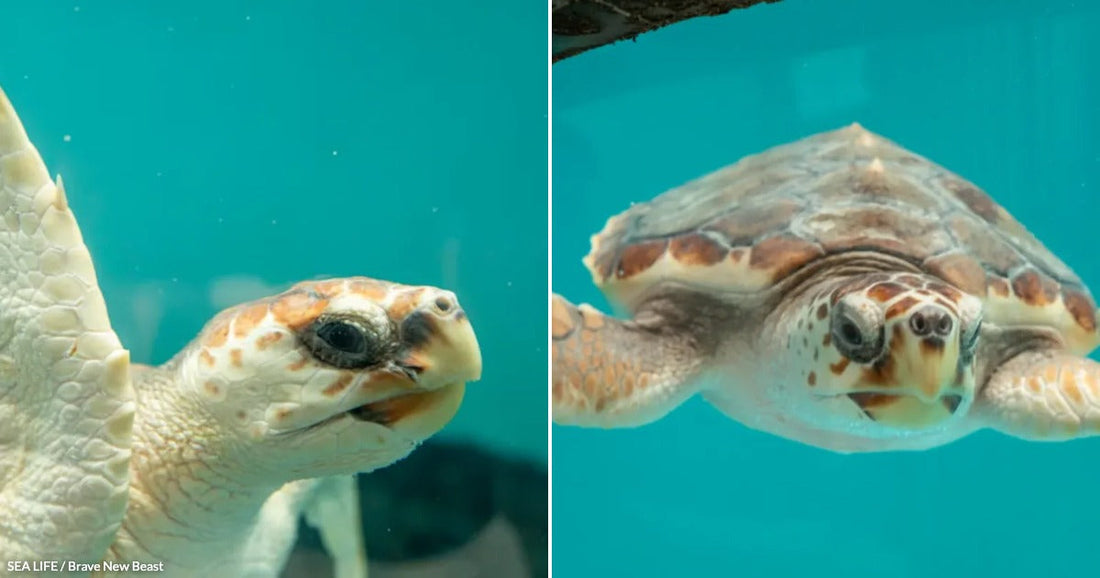
When a dog-walker spotted what looked like a lifeless loggerhead sea turtle on a chilly Jersey beach, it could easily have been the end of the story. Instead, it became the beginning of an extraordinary 200 day rescue and rehabilitation journey that carried this rare sea turtle across countries and finally back into the open ocean. For anyone who cares about marine life rescue and ocean conservation, the story of Crush is both heartwarming and deeply hopeful.
In January, powerful extratropical cyclones swept across Western Europe, churning the seas and pushing vulnerable creatures far from where they belonged. On a beach in Jersey, about 85 miles south of England, a passerby found a loggerhead sea turtle washed ashore and seemingly lifeless. The animal was cold-stunned, a hypothermia-like condition that strikes when sea turtles are exposed to prolonged cold water. Cold-stunning can slow their metabolism, weaken their movements, and eventually cause their body systems to shut down. On top of that, she was malnourished, in no state to survive alone in the wild.

The turtle was rushed to New Era Veterinary Hospital in Jersey, where the team began emergency care. She was given warmth, fluids, and careful monitoring. For a time, she even stayed at the home of clinic director Peter Hawarth, who opened his doors when it became clear she needed round-the-clock attention. That period of home care speaks to a level of personal commitment that often goes unseen in stories about wildlife rescue, where professionals quietly devote evenings, weekends, and living space to the animals who need them most.
As the days passed, it became clear that this patient required more specialized expertise. Hawarth arranged for her to be flown to Southampton so she could receive advanced care. There, the team gave the loggerhead a name that many ocean lovers will recognize. Inspired by the easygoing sea turtle in “Finding Nemo,” they called her Crush. The name carried both affection and a sense of optimism, as if to say this turtle had a story worth following and a future worth fighting for.

SEA LIFE / Brave New Beast
Researchers could not say with absolute certainty whether Crush was female, since sex determination in sea turtles is not always obvious, especially when they are young. However, they noted a longer tail, which they associated with female turtles and began referring to Crush as “she.” Whether or not this detail will ever be confirmed in a scientific sense, it clearly helped the team connect with her as an individual. I found this detail striking, because it shows how quickly humans form bonds with the animals in their care, even when much about them remains unknown.
In February, Crush’s journey continued as she was flown again, this time to Sea Life Weymouth, an aquarium and conservation hub in the United Kingdom. There she joined other rescued sea turtles in a setting designed not just for display but for healing, observation, and rehabilitation. For six months, Crush lived under the attentive eyes of dedicated caretakers who were determined to restore her strength. They helped her recover from the cold-stunning episode, ensured she was properly nourished, and monitored her swimming and behavior until she approached full health.

SEA LIFE / Brave New Beast
Over more than 200 days, staff at Sea Life Weymouth came to know Crush not just as a patient, but as a presence in their daily routines. As her condition improved, the goal guiding every decision became clear. It was never to keep her as a permanent resident. It was to send her home. Once experts were confident that Crush was fit, strong, and ready for the wild, they began preparing for the last and perhaps most emotional chapter: her release.
Crush’s return to the ocean required a carefully coordinated effort that linked aquariums, transport teams, and field researchers. Alongside two other loggerhead turtles, Eden and Tiree, rescued previously on the west coast of Scotland, Crush was placed in a special transport box for a 1,500 mile journey to the Azores. All three turtles traveled to Faial Island’s Aquario do Porto Pim, where they completed a short quarantine period to ensure they were healthy and posed no risk to local wildlife.
On September 1, the moment that everyone had been working toward finally arrived. In the warmer waters off the coast of the Azores, the team carefully brought Crush, Eden, and Tiree to the release site. Sea Life Brighton’s curator, Joe Williams, later described the experience as filled with both adrenaline and anxiety. Every person on the boat understood how much effort had gone into this day and how crucial it was that the conditions be right. In the end, as Williams explained, the release went as well as they could have hoped, with all three turtles making their way back into the blue.
Crush’s primary carer, aquarist Victoria Goodier, told BBC Radio that the release could not have gone better. She recalled how Crush and her companions swam strongly and gracefully away, disappearing into the ocean that had once nearly claimed their lives. To help researchers better understand her movements after release, Crush was fitted with a satellite tag. For the next few months, this device is expected to send signals that allow the team to track her journey and learn where she travels, rests, and feeds. Insights from such tracking data are invaluable in conservation planning for endangered loggerhead sea turtles and can help protect critical habitats along migration routes.
At the same time, the satellite tag underscores a bittersweet reality. Goodier noted that the team knows the signal will not last forever. Once the tag falls off or stops sending data, the people who tended Crush for so long will have no more updates. They will not know where she swims or how long she lives. In that sense, setting her free also means accepting a permanent goodbye. It is a part of wildlife rehabilitation that rarely makes headlines. Those who rescue wild animals must continually let go, trusting that the skills and strength they have helped restore will be enough.
Deva Edge of Sea Life Brighton spoke candidly about the emotional weight of that farewell. She shared on BBC 5 Live that the release was one of the best moments of her life, and yet the boat was full of people in tears afterward. Months of feeding, monitoring, and celebrating every sign of improvement had led to this single moment of letting go. The goodbye was deeply emotional, but in her view, it was also the best goodbye possible. That duality captures something essential about conservation work. It is both joyful and painful, full of hope and loss at the same time.
Stories like Crush’s highlight how collaborative and international marine animal rescue has become. A turtle can wash up weak and cold on a beach in Jersey, travel across the United Kingdom for specialized care, then finally swim free near the Azores. At each step, veterinarians, aquarists, pilots, conservationists, and everyday observers play a part. Together, they turn a single chance encounter into a second chance at life. For many readers, this rare sea turtle rescue is a reminder that individual actions, from a dog-walker’s call for help to a vet’s decision to open their home, can ripple across oceans in ways that matter.
Read more at https://www.goodgoodgood.co/articles/rare-sea-turtle-crush-release