
🚨Urgent: Rush Aid to People & Pets in Nepal's Devastating Floods! Help Now!
Rare World War I Carrier Pigeon Message Discovered in French Battlefield
Guest Contributor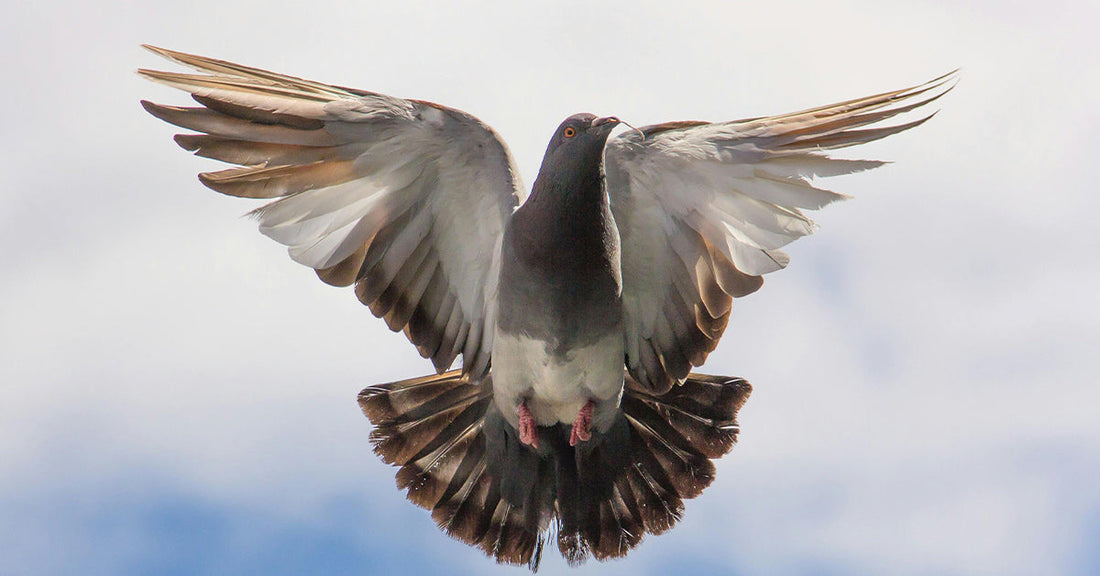
In a quiet French field, more than a century after World War I shook the world, a remarkable discovery resurfaced—a tiny capsule containing a handwritten message from a Prussian soldier. This extraordinary find, a rare relic of wartime communication, was uncovered by an elderly couple strolling near Ingersheim, a region that was once part of Germany but now lies in France’s Grand Est. The capsule, initially mistaken for an odd piece of debris, turned out to be a miniature time capsule from the Great War, offering a glimpse into a soldier’s experience amidst one of history’s most devastating conflicts.

The capsule held a fragile, barely legible note written in German, sent via carrier pigeon. The message was addressed to a superior officer and originated from a soldier stationed in the area during the war. The couple brought the artifact to the Linge Museum at Orbey, a site dedicated to preserving the memory of the Battle of Le Linge, which raged between July and October of 1915. This battle, fought between French and German forces, claimed an estimated 17,000 lives and left the frontlines largely unchanged until the war’s end in 1918.
Museum curator Dominique Jardy, recognizing the potential significance of the find, enlisted the help of a German-speaking colleague to decipher the faded message. Despite the note’s unclear date—possibly 1910 or 1916—the content clearly placed it in the midst of World War I. The translated message read: “Platoon Potthof receives fire as they reach the western border of the parade ground, platoon Potthof takes up fire and retreats after a while. In Fechtwald half a platoon was disabled. Platoon Potthof retreats with heavy losses.”
This stark and sobering account of a single military maneuver captures the peril and immediacy of frontline warfare. Jardy described the letter as a “super rare” discovery, and it is now slated to become a permanent fixture at the Linge Museum. I found this detail striking—not just for its historical value, but for the human voice it restores to a soldier long lost to time.
Carrier pigeons were once a vital part of military communication, particularly during periods when radio silence was necessary or when traditional lines of communication had been destroyed. The rediscovery of this message underscores the ingenuity and desperation of wartime correspondence, as well as the enduring power of the written word to bridge centuries.
The rediscovered World War I message brings to mind other chance encounters with the past. In 2019, an Alaskan man stumbled upon a message in a bottle while searching for firewood. The letter, penned by Soviet sea captain Anatoly Botsanenko during the 1960s, was a heartfelt greeting rather than a military dispatch. It read: “Sincere greetings! From the Russian Far East Fleet mother ship VRXF Sulak. I greet you who finds this bottle and request that you respond to the address Vladivostok -43 BRXF Sulak to the whole crew. We wish you good health and long years of life and happy sailing.”
Unlike the urgent tone of the Prussian soldier’s message, Botsanenko’s letter was warm and hopeful. Its rediscovery sparked a media frenzy and led to the successful identification of the author, who was 86 years old at the time. During a televised interview, the former captain became emotional upon learning that his old ship had been decommissioned and sold for scrap in the 1990s. The contrast between these two messages—one born of conflict, the other of camaraderie—highlights the diverse ways in which personal correspondence can capture the human spirit across time and circumstance.
Letters from the war, whether carried by pigeon or sealed in a bottle, serve as intimate artifacts of history. They offer a personal lens through which we can better understand the realities of military life, the emotional toll of conflict, and the enduring hope for connection. In the case of the Prussian soldier’s note, the brief lines recounting a retreat under fire speak volumes about the chaos and sacrifice of trench warfare. For historians and museum visitors alike, such discoveries are invaluable, both for their rarity and for the stories they help preserve.
As the capsule takes its place among the exhibits at the Linge Museum, it joins a growing collection of artifacts recovered from the battlefields of World War I—old weapons, ammunition, and personal items that together reconstruct a picture of life and death at the front. Each item, no matter how small, contributes to a broader understanding of the war’s human cost and the resilience of those who endured it.
These discoveries remind us that history is not confined to textbooks or archives. Sometimes, it lies waiting in a field, tucked inside a capsule, or floating across oceans in a bottle. And when it reemerges, it offers us a chance to listen—to the voices of soldiers, sailors, and ordinary people whose words still resonate, even after a hundred years.