
💜 Thanksgiving Food Drive for Shelter Pets Help Us Feed 1 Million Shelter Pets!
The Real History of Thanksgiving: From Indigenous Traditions to National Holiday
Guest Contributor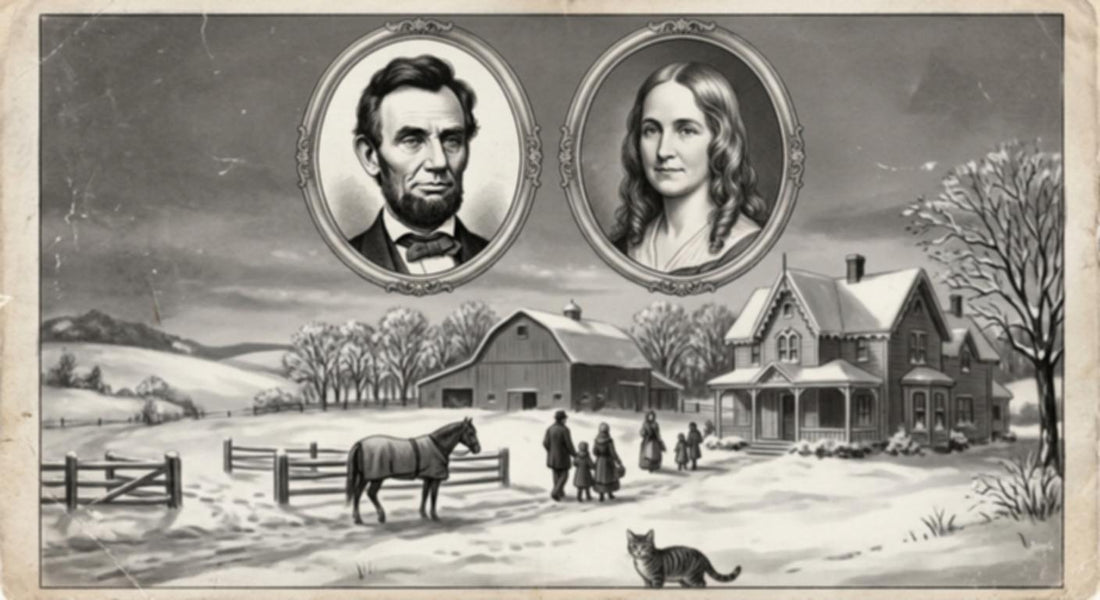
For many people in the United States, the story of Thanksgiving begins in 1621 with the Pilgrims and the Wampanoag sharing a harvest feast in Plymouth. The familiar classroom version centers on “the first Thanksgiving” and often stops there. Yet the real history of Thanksgiving is far older, richer, and more complicated. Looking more closely at early “days of thanksgiving” reveals a tapestry of European and Native American traditions, religious observances, political milestones, and changing national priorities surrounding this uniquely American holiday.
The author of the original article, Monica Smith, notes that long before any English colonists arrived in New England, both Europeans and Indigenous peoples already practiced their own forms of thanksgiving. Many Native nations held ceremonies tied to seasonal cycles such as harvests. The Green Corn Dance, for example, was one way communities expressed gratitude for the land’s bounty. These observances often involved prayer, feasting, music, and dance. On the other side of the Atlantic, Europeans were accustomed to setting aside specific days to give thanks to God for safe voyages, good harvests, or military victories. When they came to North America, they brought these customs with them.
As a result, the first Thanksgiving observed by Europeans on this continent did not involve the Pilgrims at all. One early documented example occurred in Spanish La Florida in 1565. According to the National Park Service, Spanish colonists under Pedro Menéndez de Avilés landed at what is now St. Augustine on September 8 and immediately held a Mass of Thanksgiving. After the religious service, Menéndez invited members of the local Seloy tribe to share a meal. That gathering included both spiritual observance and community feasting in a form recognizably connected to later Thanksgiving traditions.
Within a little more than a decade, another European Thanksgiving unfolded much farther north. On May 27, 1578, English explorer Martin Frobisher and about 400 men held a service of thanks after reaching what is now Newfoundland, Canada, as part of their search for the Northwest Passage. Here again, a dangerous journey ending in safe arrival inspired a collective expression of gratitude. These events show how varied early Thanksgiving observances were in terms of geography, participating cultures, and circumstances.

(1789, October 7) Gazette of the United-States. Retrieved from the Library of Congress, https://www.loc.gov/item/sn83030483/1789-10-07/ed-1/
English colonies that later formed part of the United States had their own thanksgiving practices well before Plymouth’s 1621 harvest feast. Historians believe that the short-lived Popham Colony in present-day Maine conducted a Thanksgiving service in 1607. The colony itself lasted only about a year, and its brief history often receives little attention compared with later settlements. Yet its likely observance of a day of thanksgiving forms part of the larger story of gratitude rituals in British North America.
Meanwhile, in Virginia, colonists in Jamestown held several thanksgiving observances. Newly arrived settlers gave thanks for safe passage in 1607, and they again set aside a day of religious gratitude three years later when a much-needed supply ship finally appeared after a harsh winter. Another group known as the Berkeley Hundred colonists went even further. Their colonial charter required that the day of their arrival in 1619 “shall be yearly and perputualy keept holy as a day of thanksgiving to Almighty god.” This instruction effectively created an annual Thanksgiving observance long before there was a United States or an official national holiday.
The story of the Berkeley Hundred also illustrates how quickly violence and mistrust shaped colonial life. In 1622, all of the settlers there were killed during a massacre amid rising conflict with Indigenous people. Smith notes that within just 40 years of sustained European colonization, only about a quarter of the Indigenous population in the American colonies remained, largely due to war and diseases brought by newcomers. The land that now holds the Library of Congress buildings in Washington, DC, once belonged to the Nacotchtank (Anacostan), Piscataway Conoy, Pamunkey, and Manahoac peoples, whose histories form an essential context for any honest discussion of Thanksgiving.

Simmons, A. & American Imprint Collection. (1796) American cookery, or, The art of dressing viands, fish, poultry, and vegetables: and the best modes of making pastes, puffs, pies, tarts, puddings, custards, and preserves: and all kinds of cakes, from the imperial plumb to plain cake, adapted to this country, and all grades of life. Hartford: Printed by Hudson & Goodwin for the Author. [Pdf] Retrieved from the Library of Congress, https://www.loc.gov/item/96126967/.
Returning to the 1621 Plymouth celebration, Smith points out that the popular image of the Pilgrims as somber, intensely religious diners does not match the historical record. These English Puritans actually rejected the idea of conspicuous public religious displays. While they certainly said grace, the three-day event they shared with Wampanoag guests appears to have been largely secular. Surviving accounts describe games, a variety of foods, and even beer alongside the shared feasting. For those used to thinking of a quiet prayerful gathering, this more boisterous scene might sound unexpectedly familiar.
For more than 150 years after Plymouth, days of thanksgiving continued across the colonies, typically as local or regional observances tied to harvests or particular events. The idea of a national Thanksgiving in the United States did not emerge until after independence. In 1789, New Jersey Congressman Elias Boudinot proposed that the new country set aside a “day of public thanks-giving and prayer” to acknowledge what many saw as divine favor in the peaceful establishment of a republican government. President George Washington agreed, issuing a proclamation that made Thursday November 26, 1789, a national day of Thanksgiving.

(1933, November 17) The Midland Journal. Retrieved from the Library of Congress, https://www.loc.gov/item/sn89060136/1933-11-17/ed-1/.
Presidents who followed Washington occasionally declared similar observances, sometimes at Congress’s request, but these were not yet annual or fixed to a particular date. Thomas Jefferson resisted the idea, arguing that a federally proclaimed day of prayer conflicted with the separation of church and state. James Madison issued a Thanksgiving proclamation for April 13, 1815, yet after that, no national Thanksgiving observance would be proclaimed again until the American Civil War.

Waud, A. R. (1861) Thanksgiving in camp sketched Thursday 28th. United States, 1861. [November 28] [Photograph] Retrieved from the Library of Congress, https://www.loc.gov/item/2004660226/.
The person often credited with transforming Thanksgiving into a recurring national holiday is Sarah Josepha Hale. As editor of Ladies Magazine and later Godey’s Lady’s Book, she held significant influence over public opinion in the 19th century. Beginning in 1827, she used that platform to publish stories, essays, and recipes that promoted Thanksgiving as a unifying domestic celebration. At the same time, she wrote letters to governors, senators, and presidents urging them to adopt Thanksgiving as an annual national observance. Her determination eventually paid off. In 1863, just months after the Battle of Gettysburg, President Abraham Lincoln issued a “Day of National Thanksgiving Proclamation” for November 26 and signaled that it should continue every year on the fourth Thursday of November.
That schedule held firm until the approach of World War II. Seeking to extend the holiday shopping season, President Franklin D. Roosevelt shifted Thanksgiving to the third Thursday of November in 1939 and 1940. The adjustment was meant to help merchants, but it clashed with long-standing community traditions such as Thanksgiving football games and parades. Public resistance followed. By 1941, Congress stepped in with a joint resolution that officially set the holiday on the fourth Thursday in November once again, a practice that has continued ever since.

Henry, E. (1930) The first intercollegiate championship football game held in America. , 1930. [Place not identified: Publisher not identified] [Photograph] Retrieved from the Library of Congress, https://www.loc.gov/item/2017648283/.
Today’s Thanksgiving blends many threads of this complex history. It reflects Indigenous harvest ceremonies, European religious practices, colonial survival stories, nation-building ideals, and modern commercial pressures. Recognizing that complexity does not require abandoning cherished traditions. It can instead invite more thoughtful conversations at the table, a broader sense of gratitude, and an awareness of the many peoples and events that shaped the holiday. Wishing everyone a peaceful, reflective, and heartfelt Thanksgiving, grounded in both celebration and understanding.
Read more at https://blogs.loc.gov/families/2024/11/the-real-history-of-thanksgiving