
🚨Urgent: Rush Aid to People & Pets in Nepal's Devastating Floods! Help Now!
Red-Footed Boobies Hunting Flying Fish Revealed in Stunning Footage
Guest Contributor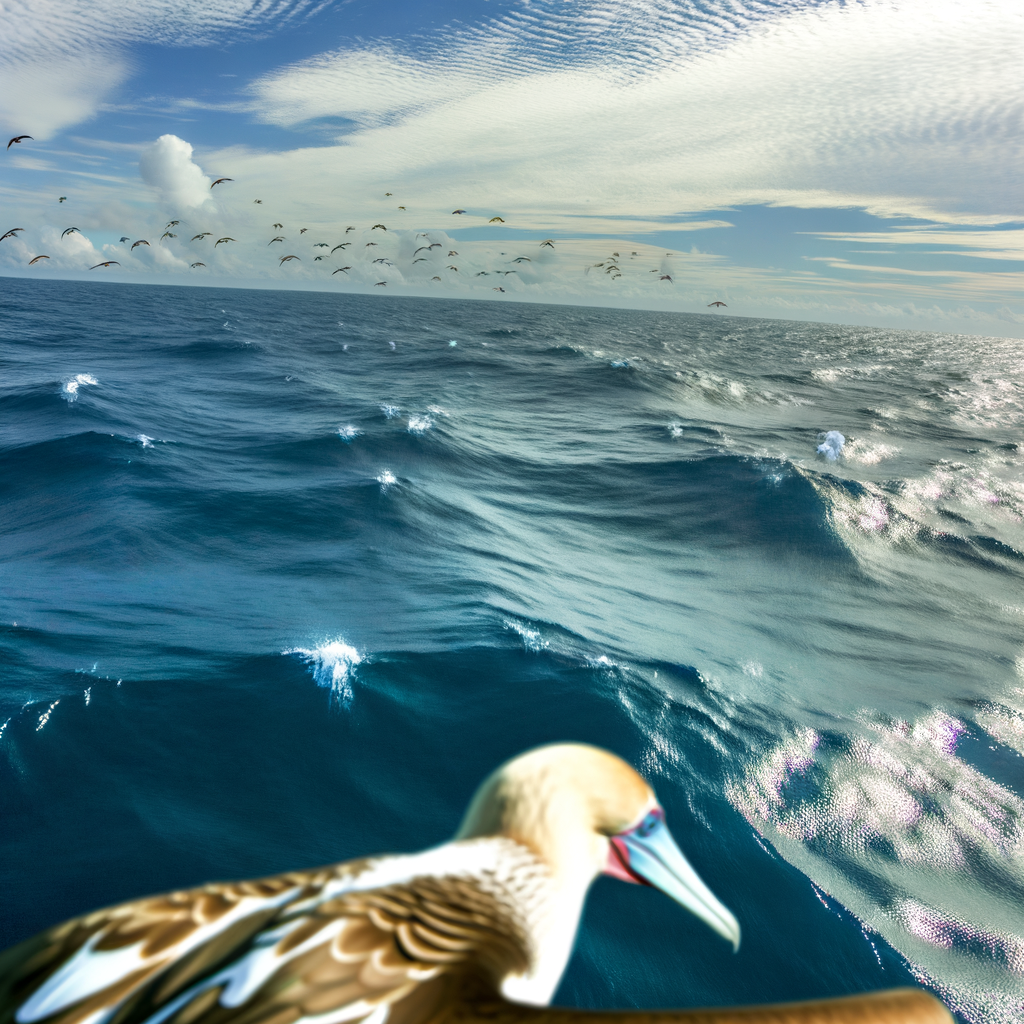
In a remarkable first for seabird research, scientists have captured footage of red-footed boobies catching flying fish mid-air. This behavior, long suspected but never directly observed, offers new insights into the feeding strategies of one of the ocean’s most agile avian predators. The study, conducted in the Chagos Archipelago Marine Protected Area in the central Indian Ocean, reveals how these tropical birds navigate vast expanses of water and exploit wind patterns to hunt efficiently.

The research team from Lancaster University fitted two red-footed boobies with lightweight, bird-borne cameras, capturing unprecedented footage of the birds swooping just above the ocean’s surface and snatching flying fish from the air. Out of 15 feeding attempts recorded, 14 were made while the birds were in flight. According to lead author Dr. Ruth Dunn, this is the first time such behavior has been documented on video directly from the birds’ perspective. “We suspected this happened, but this is the first time that we’ve had bird-borne footage like this showing them foraging and catching fish mid-air,” Dunn explained. “It could suggest they are catching a significant portion of their diet in this way.”
The red-footed booby, known scientifically as Sula sula, is a striking seabird with vivid red legs and a pale blue bill. They inhabit tropical and subtropical regions of the Atlantic, Pacific, and Indian Oceans. Their long, narrow wings are perfectly adapted for gliding, allowing them to cover hundreds of kilometers across open ocean with minimal energy expenditure. This aerodynamic efficiency plays a crucial role in their hunting strategy, especially in the wind-swept environments they call home.
To complement the footage, the researchers also equipped 18 additional red-footed boobies with GPS trackers. The data revealed that these birds rely heavily on wind patterns, particularly crosswinds and tailwinds, to move efficiently across the sea. This strategy enables them to conserve energy by reducing the need for constant wing flapping. I found this detail striking, as it highlights how intimately seabirds are attuned to their environment, using natural forces not just to travel, but to optimize their foraging behavior.
Interestingly, while some seabirds like albatrosses may struggle to catch prey in high winds, red-footed boobies appear to thrive under such conditions. The researchers propose that this could be due to the behavior of their primary prey—flying fish. These fish are capable of gliding above the water’s surface for extended distances, especially in windy conditions. Dr. Dunn suggests that stronger winds may allow flying fish to remain airborne longer, making them easier targets for the boobies. “We found that the birds foraged in windy conditions and we think that this might be because flying fish are able to glide in the air for longer in these conditions, making them more accessible to the boobies,” she said.
The footage captured by the cameras is both scientifically valuable and visually stunning. One clip shows a red-footed booby diving toward the ocean, wings outstretched, before deftly snatching a flying fish from the air. Another sequence captures a bird weaving through a shoal of flying fish, demonstrating remarkable agility and precision. These moments provide a window into a rarely seen aspect of marine life and underscore the importance of innovative research methods in understanding animal behavior.
Professor Stephen Votier, a co-author of the study, emphasized the broader implications of the findings. “This is the first step in helping us to understand more about how wind influences the behaviour and distribution of tropical seabirds,” he noted. By examining how these birds respond to environmental variables like wind, scientists can begin to predict how species might adapt—or struggle—in the face of changing oceanic conditions.
The study, published in the journal Proceedings of the Royal Society B, is titled “Commuting in crosswinds and foraging in fast winds: the foraging ecology of a flying fish specialist.” It highlights the value of combining technological tools like GPS tracking and miniaturized cameras with ecological observation. These methods not only enrich our understanding of seabird ecology but also inform conservation strategies in marine protected areas.
As climate patterns shift and ocean ecosystems evolve, understanding the interplay between wildlife and environmental forces becomes increasingly important. The red-footed booby’s apparent adaptation to windy conditions and its reliance on airborne prey like flying fish may offer clues about the resilience of certain species. At the same time, it raises questions about how other seabirds, less adapted to such conditions, might fare in a rapidly changing world.
This research adds a compelling chapter to the study of tropical seabirds and their remarkable adaptations. It also serves as a reminder of the intricate and often unseen interactions that shape life above and below the ocean’s surface. For anyone fascinated by avian behavior, marine ecology, or the innovative ways science continues to unveil the secrets of the natural world, this study is a captivating read.