
🚨Urgent: Missile Strikes Shelter in Ukraine! Rush Emergency Aid!
Remembering V-J Day in Times Square Through a Coast Guard Veteran’s Eyes
Guest Contributor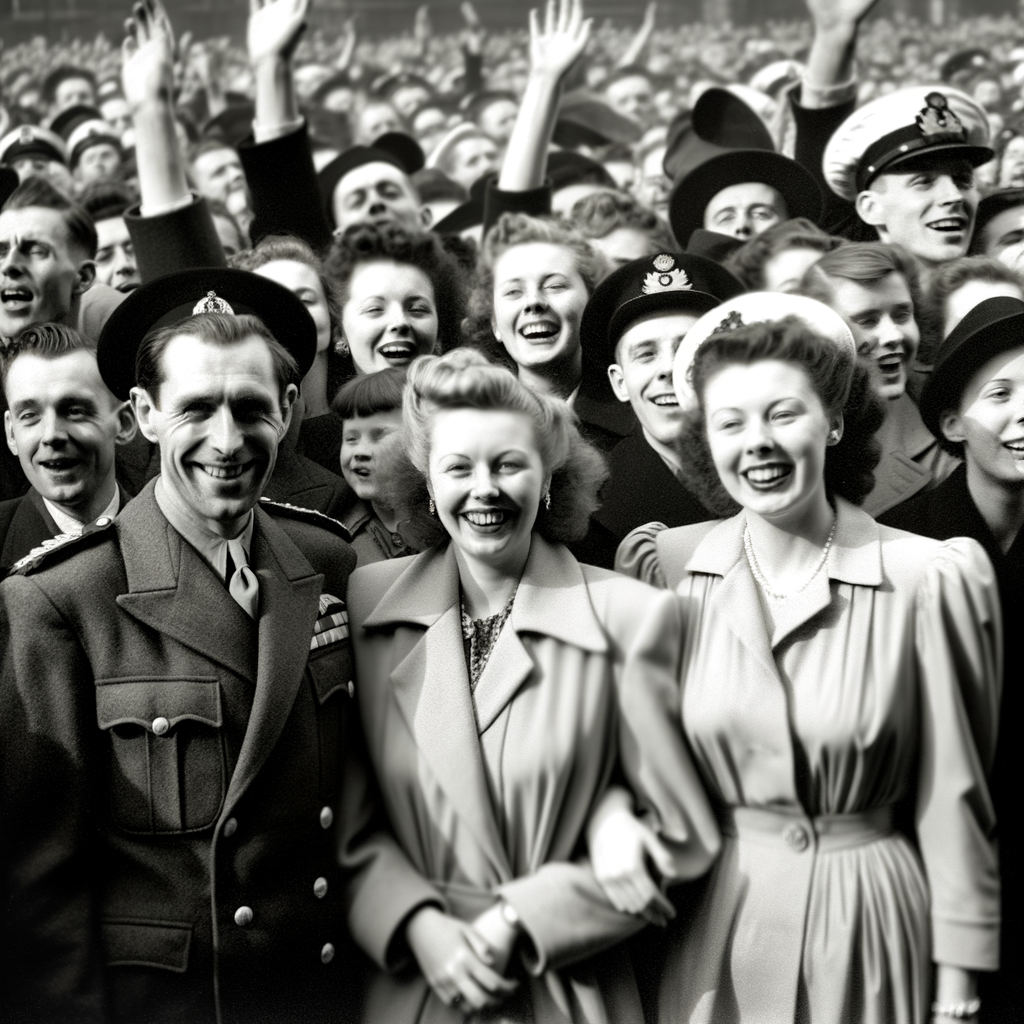
In August 1945, as the world erupted in celebration at the end of World War II, one young woman found herself in the heart of it all—Times Square, New York City. Ena Slaughter, now 100 years old, had just joined the U.S. Coast Guard SPARS when she witnessed one of the most iconic public gatherings in American history: the V-J Day celebration that marked Japan’s surrender and the close of a global conflict. Her memories of that day remain vivid, a testament to the deep emotional resonance of the moment and the generation that lived through it.

Slaughter had been in the service for only two weeks when the news broke. Like thousands of others, she was granted leave to join the spontaneous street party that overtook Times Square on August 14, 1945. “Did we hoop it up!” she recalled with a laugh, describing the overwhelming joy and unity that filled the streets. The scene was so crowded, she said, it took an hour just to move a single block. “There were so many people everywhere. I think the whole nation turned out,” she said. “Everybody was hugging everybody, and it was so wonderful that war was over.”
I found this detail striking: the idea of an entire city, perhaps even a nation, pressing into one space to share in collective relief and happiness. It’s a powerful reminder of how deeply the war touched every American life and how profound the end of that chapter truly was.
Before donning her Coast Guard uniform, Slaughter had already contributed to the war effort as a “Rosie the Riveter” at Wright Field in Dayton, Ohio. Like many women of her generation, she stepped into roles traditionally held by men, helping to keep the country’s defense efforts moving while the men were overseas. Her decision to enlist came after her Army husband returned home to recover from surgery. “The war is still on. My husband’s still in service. What else could I do to help?” she said. That sense of duty and shared sacrifice was a hallmark of the era, and Slaughter’s story embodies it fully.
She joined the SPARS, the women’s reserve of the U.S. Coast Guard. Established in 1942, the program allowed women to take over shore-based duties, thereby freeing up men for sea service. Around 12,000 women served in SPARS during the war, handling a wide range of assignments. Slaughter worked in a medical laboratory, where she conducted tests and gave injections—critical tasks that supported the health and readiness of service members.
Slaughter’s reflections, shared eight decades later, are filled with gratitude. “You go in thinking you’re going to help the big U.S.,” she said. “But they’re giving back to you much more than I could ever give the United States.” It’s a humble acknowledgment of the opportunities and experiences that military service offered, even amid the hardships of war. Her words also reflect a broader truth about service: that it often shapes those who serve just as much as they shape the institution.
Now living in San Diego, Slaughter remains a living connection to a transformative moment in American history. Her firsthand account of the V-J Day celebration in Times Square offers a rare glimpse into the emotional landscape of that time. The image of a young woman, barely into her military service, swept up in a sea of strangers united by relief and hope, is both poignant and inspiring.
Her story also highlights the critical role women played during World War II, both on the home front and in uniform. As a Rosie the Riveter and a SPAR, Slaughter was part of a movement that challenged traditional gender roles and laid the groundwork for future generations of women in the military. The contribution of women like her is an essential chapter in the narrative of the war and the evolution of the U.S. armed forces.
As the nation marks the 80th anniversary of the end of World War II, stories like Ena Slaughter’s take on renewed importance. They remind us not just of the historical milestones, but of the personal experiences that gave those moments their meaning. The crowded streets of Times Square, the hugs between strangers, the sense of shared triumph—these are the details that bring history to life.
And perhaps most importantly, they offer lessons in resilience, unity, and service that still resonate today. In honoring veterans like Slaughter, we honor a generation that faced extraordinary challenges with courage and commitment. Their legacy continues to shape the values and spirit of the country they served.