
Rescuers Save Six Shivering Domestic Ducks Under Bridge in Michigan
Guest Contributor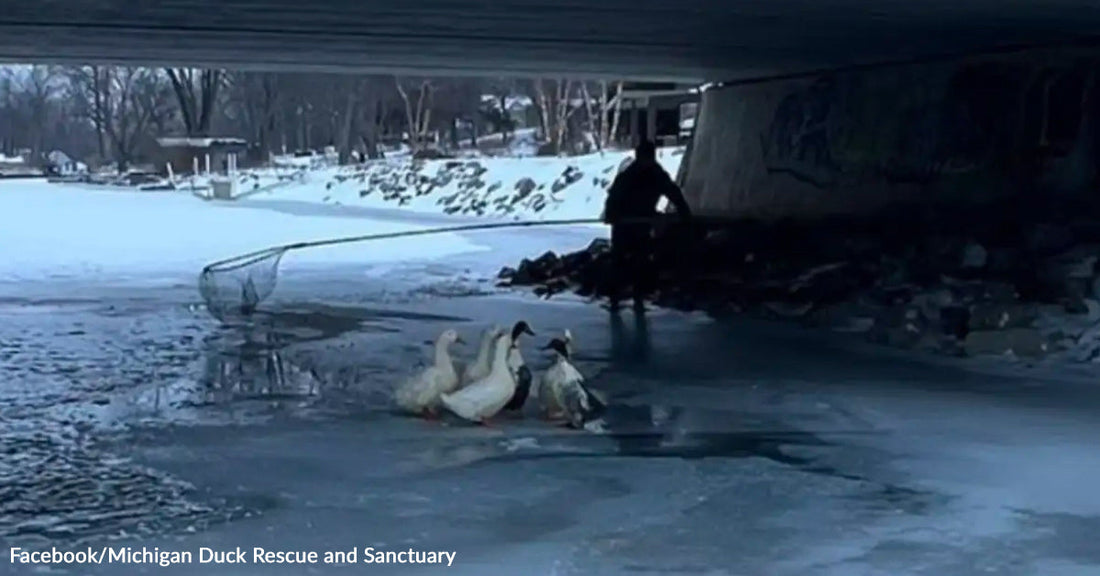
On a frigid Michigan afternoon, when most people were avoiding slick roads and icy winds, rescuers from Michigan Duck Rescue and Sanctuary were out driving slowly along frozen streets, looking for animals in trouble. They had received word that a group of domestic ducks had been dumped near a bridge in Grosse Ile Township. All the wild ducks in the area had already migrated to warmer places for the winter, but these birds, raised by humans, were stranded in an unforgiving landscape. The story of their bridge rescue is a vivid reminder of how vulnerable domestic animals are when people abandon them, and how lifesaving a single compassionate decision can be.
According to the organization, the team had to navigate hazardous winter conditions just to reach the site. The roads were icy, the air biting, and the temperature had already dipped below zero. Out in that cold, the rescuers searched carefully around the bridge, scanning the shoreline and the water. The ducks they were looking for had no natural migration pattern to guide them and no survival instincts honed by life in the wild. Instead, they waited in the only place they knew, shivering in the snow and clinging to a precarious patch of open water.

When the rescuers finally located them, they found six domestic ducks huddled together under the bridge, using what little shelter it offered. The organization described them as “absolutely beautiful domestic angels,” a phrase that captured both their appearance and their helplessness. The birds were crowded around a small opening in the ice, staying in the water because it was the only area not yet completely frozen. All around them, the river was sealing over. As the ice thickened, the ducks faced a double threat. The closing water cut them off from food, and the brutal wind and freezing temperatures put them at risk of frostbite and exposure.
Michigan Duck Rescue and Sanctuary reported that they knew they had to move quickly. Waiting even a short time might mean the remaining water would freeze, trapping the ducks without access to nourishment or escape. The team started by placing fencing along the sea wall that bordered the area. This improvised barrier was crucial. Without it, the panicked ducks might scatter across the ice or into more dangerous parts of the river, making a safe capture far more difficult.

Once the fencing was in place, rescuers worked together to surround the ducks on all sides. The goal was not to chase them but to gently guide them in a controlled direction. They carefully coaxed the ducks out of the icy water and onto the frozen surface where they could be more easily contained. According to their account, “once we were able to coax them out of the water and out onto the ice, it was pretty easy sailing from there.” What had begun as a tense water rescue became, for a brief moment, a smooth and coordinated effort on the ice.
One striking detail from the sanctuary’s report is the temperament of the ducks themselves. Despite everything they had been through, the team described them as “very sweet and gentle.” There is something quietly moving about animals retaining a trusting nature after being abandoned. These birds had depended on humans from the beginning, and that dependence did not vanish even when they were left to fend for themselves in a frozen river.
With all six ducks safely contained, the rescuers transported them back to the Michigan Duck Rescue and Sanctuary facility. That journey represented a complete shift in their reality. Only hours earlier, the ducks had been shivering under a bridge with limited food and no real protection from the cold. Now they were headed toward warmth, safety, and consistent care. For people who care about animal welfare, this moment highlights why humane rescue organizations are so important, especially in harsh climates where domestic animals simply cannot survive alone.
Back at the sanctuary, staff members immediately set about making the ducks comfortable. The team prepared a cozy area filled with fresh, dry straw and provided generous amounts of food and water. The rescue later wrote that the ducks “lavished in the soft pile of fresh and dry straw with all the food and water they could possibly eat.” It is a simple image yet an affecting one. The contrast between the icy river and a warm bed of straw captures the entire arc of their journey from danger to security.
The sanctuary summarized the outcome with a sentiment that applies to every domestic duck in human care. They wrote that the birds were now “safe, comforted and loved, as it should be with all domestic ducks.” That statement underscores a key point. Domestic ducks are not equipped to handle life in the wild, especially in regions that experience freezing winters. Unlike their wild counterparts, they often lack critical survival behaviors and cannot migrate to more hospitable areas. Leaving them outside to fend for themselves is not release. It is neglect.
This particular bridge rescue story illustrates a broader pattern that many shelters and sanctuaries encounter. Animals that have relied on human food and shelter are left in parks, waterways, and rural areas with the assumption that they will adapt. Yet in practice, organizations like Michigan Duck Rescue and Sanctuary are regularly called on to save domestic birds from hunger, cold, and predators. Public awareness about this distinction between wild ducks and domestic ducks is vital. Understanding that these birds are essentially farm animals helps people see why abandonment is so dangerous.
There are several humane alternatives to dumping animals. Responsible rehoming, contacting local rescues, or reaching out to sanctuaries are all options that can prevent stories like this one from starting in the first place. The six ducks under the bridge were fortunate. Someone noticed them and alerted people who knew how to help. Many other animals are not as visible or as lucky. That is why sharing accounts of successful animal rescues can play an important role in education, inspiring others to act when they see creatures in distress.
I found it especially striking that throughout the ordeal the rescuers referred to the birds with such affection, calling them angels and celebrating their gentle nature. The language reflects not only relief at a successful operation but also a deep respect for the lives they saved. Their work on that icy afternoon in Grosse Ile Township turned what could have been a quiet tragedy into a story of safe return, warm straw, and full food bowls. For anyone who has ever wondered whether individual actions matter, these six ducks standing together under a bridge in winter serve as a clear reminder that compassion, paired with practical effort, can change everything.