
🚨Urgent: Missile Strikes Shelter in Ukraine! Rush Emergency Aid!
Resilient Cat’s Journey from China to Minnesota In Shipping Container Inspires Adoption Hope
Guest Contributor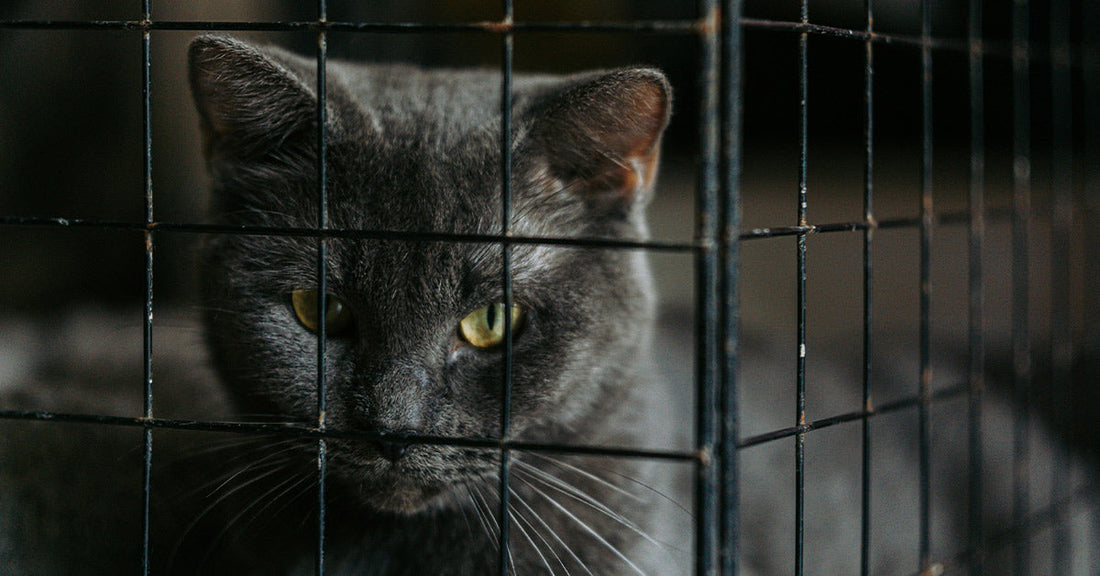
After an astonishing 8,000-mile journey from China to Minnesota, a resilient feline named Xiao Mao is now on the road to recovery and may soon be ready to find a forever home. Her story, which began inside a shipping container and nearly ended in tragedy, is now turning into one of survival, trust, and newfound companionship. This tale of international pet rescue has captured the attention of animal lovers and shines a light on the dedication of local rescue organizations like Pet Haven Inc. of Minnesota.

The cat’s miraculous survival has left animal care professionals both amazed and puzzled. Kerry D'amato, executive director of Pet Haven, described the situation as “actually amazing,” noting that Xiao Mao endured three weeks in the container without any known access to food or water. “She must have been drinking condensation, maybe eating bugs and rodents there,” D'amato speculated. The shipping container was eventually opened in Oakdale, Minnesota—revealing the emaciated and frightened stowaway.

WCCO first introduced viewers to the cat back in June, when she was being cared for by Northwoods Humane Society in Wyoming, Minnesota. After a brief stay there, she was transferred to Pet Haven in St. Paul, the state’s oldest animal rescue organization. Upon arrival, Xiao Mao was in critical condition: severely underweight, ill, and extremely fearful of humans. “She would charge at us, hiss and lunge,” D'amato recalled. But thanks to a specialized rehabilitation program and a surprising feline friendship, Xiao Mao’s transformation has been nothing short of remarkable.
Named Xiao Mao, which translates to “little cat” in Mandarin Chinese, the cat has been participating in Pet Haven’s Wildflower program. Designed for shy or shut-down animals, the program helps dogs and cats learn to trust again through gradual socialization. D'amato explained that the initiative gives animals the tools they need to build relationships with humans and, eventually, become adoptable. Impressively, the program boasts a 100% graduation rate for placing animals into loving homes.
A pivotal part of Xiao Mao’s healing has come through her bond with another rescue cat named Prince, who hails from the Leech Lake Band of Ojibwe Reservation. According to D'amato, their connection was immediate and unmistakable. “I don’t know where Prince got his name, but maybe it’s Prince Charming because I will tell you, this boy is charming,” she said. The companionship between the two has played a significant role in Xiao Mao’s emotional recovery. “She is definitely smitten,” D'amato added, highlighting the positive shift in Xiao Mao’s demeanor.
Today, Xiao Mao is a different cat. She now chirps in response to her caregivers, approaches when called, and shows signs of curiosity and engagement. Her eyes are bright, her ears perked, and the once-defensive animal now signals trust and openness. I found this detail striking: the transformation from a terrified, malnourished creature to a cat ready to bond again speaks volumes about the power of patient, compassionate care.
Pet Haven plans to make Xiao Mao and Prince available for adoption as a bonded pair in the coming months. Their story serves as a reminder that even the most traumatized animals can find healing and happiness with the right support. For those considering pet adoption, these two cats offer not just companionship but a living testament to resilience and recovery.
However, Pet Haven is currently facing overcrowding and is urging the community to consider fostering or adopting animals to help alleviate the pressure. As a nonprofit that operates without federal funding and relies almost entirely on donations, the organization depends heavily on community support to continue its mission. Those who are unable to adopt can still make a meaningful impact through financial contributions or volunteering their time.
This extraordinary journey—from an industrial port in China to a rescue center in St. Paul—highlights not only the unpredictable nature of global shipping but also the enduring spirit of animals and the people who care for them. For Xiao Mao and Prince, the future looks far brighter than the dark container they left behind. And for prospective pet owners, their story may be the inspiration needed to open their homes to animals in need.