
🚨Urgent: Missile Strikes Shelter in Ukraine! Rush Emergency Aid!
Robin Lee Graham’s Solo Circumnavigation Journey of Resilience and Endurance
Guest Contributor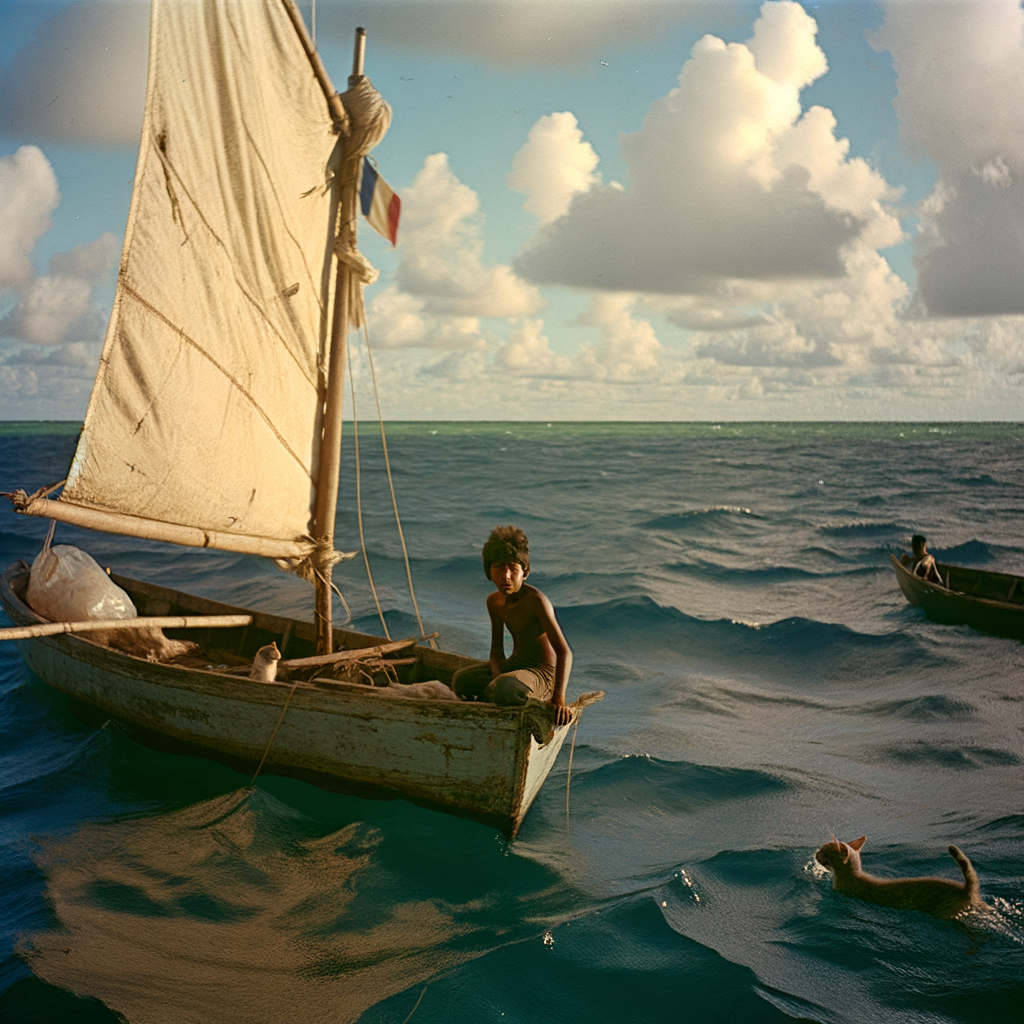
In 1965, a 16-year-old boy named Robin Lee Graham set sail from San Pedro, California, on a 24-foot sloop called the Dove, aiming to become the youngest person to sail around the world alone. Over the next five years, Graham would battle massive storms, emotional isolation, and mechanical failures—all in pursuit of a dream that would take him more than 30,000 miles across the globe. His story is one of youthful ambition, resilience, and the emotional toll of solitude at sea. For anyone intrigued by solo circumnavigation or the limits of human endurance, Graham's journey remains a remarkable chapter in maritime history.

Robin Lee Graham didn’t come to the sea by accident. His father, an experienced sailor, passed on both the skills and the passion for ocean travel. After the family moved to Hawaii in the early 1960s, Graham began taking longer and riskier trips with friends. At just 15, he and two others attempted to sail from Honolulu to Lanai in a small aluminum boat. Caught in a storm, they were feared lost until they made it to shore and contacted authorities. Rather than discouraging his son, Graham’s father responded by buying him a larger boat, knowing his son would only try again.
That boat, the Dove, became the vessel for Graham’s historic voyage. Setting out with only two cats for company, he left California in July 1965 and headed first for Hawaii. From there, his path took him across the Pacific to places like Samoa, Tonga, and Fiji. The journey was anything but smooth. Early on, a squall snapped his mast, forcing him to divert to Apia for repairs. Later, another storm dismasted the Dove again, and Graham had to sail over 2,600 miles under makeshift rigging to reach Mauritius.
Along the way, Graham met Patti Ratterree, a fellow American traveler. Their relationship blossomed as she met him at various ports during his journey. Eventually, the two married in South Africa before Graham departed for the final legs of his voyage. In his own words, shared in a 1969 National Geographic article, Graham described needing his parents' written permission to marry because he was still a minor. Their wedding and honeymoon offered a brief respite before he faced the Atlantic Ocean alone.
Crossing from Cape Town to South America, Graham stopped only once—for supplies at Ascension Island. He described the loneliness during this leg as a constant ache, something he had to fight daily to keep his sanity. After reaching Suriname, he continued through the Panama Canal, where Patti joined him for the passage, and then on to the Galapagos Islands before setting his course for California.
When he finally anchored at Long Beach on April 30, 1970, Graham had spent 1,739 days at sea and covered more than 30,000 miles. At 21, he became the youngest person to circumnavigate the globe solo—a record he held for 17 years. His achievement was widely celebrated. He was featured in multiple National Geographic cover stories, secured sponsorships, and inspired a book and a 1974 film titled The Dove.
Yet the return to land brought its own challenges. Fame and the abrupt end of his solitary lifestyle left Graham feeling unmoored. A year after his return, Patti found him contemplating suicide. She intervened, and together they decided to search for a new kind of peace. Their journey led them far from the sea, ultimately settling in Montana near Flathead Lake. As of 2025, they still live there, surrounded by reminders of the voyage that shaped their lives—boat-shaped furniture, ocean-themed stained glass, and photos from distant shores.
I found this detail striking: despite the grandeur of his accomplishment, Graham’s deepest struggle may have been readjusting to life on land. His story reminds us that even the most celebrated achievements can carry hidden burdens, especially when pursued in isolation. His emotional resilience, as much as his seamanship, stands as a testament to the human spirit.
Robin Lee Graham’s solo circumnavigation remains a compelling tale of adventure, love, and endurance. For those interested in sailing around the world, overcoming adversity, or the emotional complexities of long-term solitude, his story continues to resonate more than half a century later.