
The Great Pacific Garbage Patch May Be Leaving a Visible Mark on the Ocean
Guest Contributor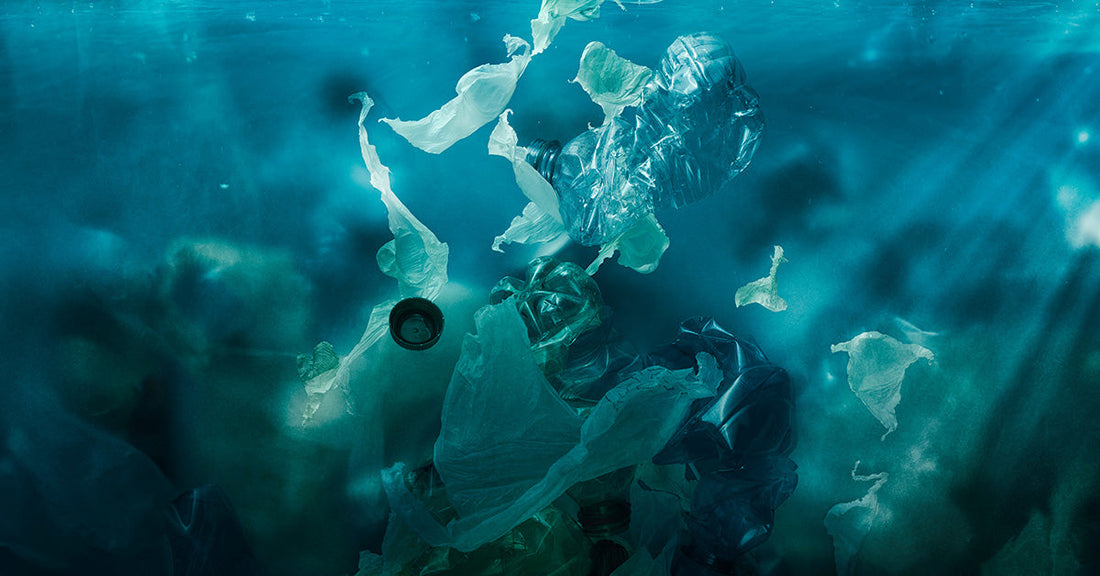
Far out in the Pacific Ocean, between Hawaii and California, something unsettling is happening. A region already infamous as the Great Pacific Garbage Patch is not only filling with plastic; it may now have so much of it that the pollution is literally changing the color of the ocean. Scientists report that parts of this area have become significantly bluer and greener over the last two decades, creating a cyan tint that could be a visible signature of microplastics from space. The finding adds a new and sobering layer to what many already see as one of the most alarming ocean plastic pollution examples on the planet.
The Great Pacific Garbage Patch is often imagined as a giant floating island of trash. In reality, much of it is more like a diffuse soup of plastic fragments. There are large pieces like discarded fishing nets, food packaging and other debris, but a substantial portion is made up of tiny particles called microplastics. Many of these pieces are too small to see with the naked eye, even though they are present in enormous numbers and spread across a vast swath of the ocean.

The new research, published in the journal Communications Earth & Environment by scientists from the University of Bergen in Norway, set out to understand how these tiny plastic scraps might affect how the ocean looks from above. The color of seawater is influenced by what is in it, from phytoplankton that tint it green to sediment or dissolved materials that can deepen or mute its shade. Yet according to the researchers, there has been a clear gap in understanding how microplastics might alter this visible signature.
To tackle this, ocean optics research scientist Dan Koestner began an unusual line of work in the lab. He created blended “smoothies” from plastic waste, then used lights and lasers to investigate how those microplastics interacted with different wavelengths of light. By carefully measuring how the particles scattered and reflected light, the team began to identify what kind of optical fingerprint plastic might leave in ocean water.
With those measurements in hand, the next step was to scale the problem up. The researchers wanted to know how much plastic would need to be present before a satellite could detect a change in color from orbit. The Great Pacific Garbage Patch provided a near-perfect real-world test site, since rotating ocean currents in that region tend to concentrate floating plastic over time.
The team analyzed twenty years of satellite data, from 2002 to 2022, focusing on the waters in and around the Garbage Patch. They discovered a significant brightening in the blue and green wavelengths within that region compared with surrounding ocean areas. Based on those spectral changes, they concluded that these waters likely shifted toward a distinct cyan hue over the study period.
Of course, the color of ocean water can change for many natural reasons. Factors like increased phytoplankton, different types of microscopic organisms or varying nutrient levels can all alter what satellites see. To explore these possibilities, the researchers ran simulations to test different scenarios, including changes in phytoplankton communities alone. They found that when plastics were added to the models, the chances of reproducing the cyan signature seen in the satellite data increased substantially.
Study author and PhD candidate Shea Cheatham explained that the team was able to identify a specific spectrum of light that microplastics tend to produce. This distinctive pattern appears to line up with the brightening in blue and green light observed from space over the Garbage Patch. At the same time, the researchers emphasize that their work is not the final word. Cheatham notes that there is still more to do to show that the color pattern is directly and exclusively caused by plastics in the water.
The next step will involve heading out into the Great Pacific Garbage Patch itself to gather direct measurements on site. This kind of fieldwork is both complex and expensive, which is one reason satellite-based approaches are so appealing. If scientists can confirm that microplastics are indeed responsible for the observed color shifts, the same analytical method could then be applied to other regions suspected of harboring high densities of these particles.

Such a remote detection tool could be especially valuable given how dispersed and elusive microplastics can be. Current methods for tracking them often involve physically collecting water samples and painstakingly counting or characterizing particles. Koestner points out that researchers lack a simple and comprehensive way to quantify very small microplastic particles across large ocean areas. A satellite signal tied to microplastic concentrations could significantly expand the reach of monitoring efforts while reducing cost and time.
Estimating the total amount of plastic in the ocean remains a major scientific challenge. Researchers have suggested that up to about 13 million metric tons of plastics enter the ocean each year. Yet only a relatively small fraction has been directly observed floating at the surface, on the order of 250,000 tons. This gap is sometimes called the “missing plastic paradox.” One possible explanation is that much of the material breaks down into ever smaller fragments that are difficult to find and measure.
Cheatham notes that there is still no complete picture of where all the plastic ends up. Microplastics may sink to different depths, become incorporated into marine food webs or disperse in ways that are hard to track. What is clear is that even at small sizes, these particles can cause harm. They can be consumed by marine organisms, move through the food chain and have already been detected in seafood that people eat. They can also transport pollutants on their surfaces and may interfere with how the ocean stores and moves carbon.
Marine biology professor Richard Thompson from the University of Plymouth, who was not involved in the research, highlights how difficult it is to tease out a plastic-related signal in ocean color. Microplastics often mix with phytoplankton and other natural debris, which complicates efforts to interpret what satellites see. He notes that this is precisely why the new findings are important. If plastic-related changes can be reliably detected from space, it would be far faster and less costly than counting debris piece by piece at sea.
I found one detail especially striking. Koestner reflects that if microplastics are accumulating to the point where they are altering the ocean’s color on a scale visible from satellites, that is a deeply alarming sign of how far the problem has progressed. The Great Pacific Garbage Patch has long been a symbol of humanity’s plastic footprint. Now it may also be a visible marker, in shifting shades of cyan, of the growing influence of microplastics on the very appearance of our oceans.