
Pete Davidson’s Father Gave His Life Saving Others at the World Trade Center
Guest Contributor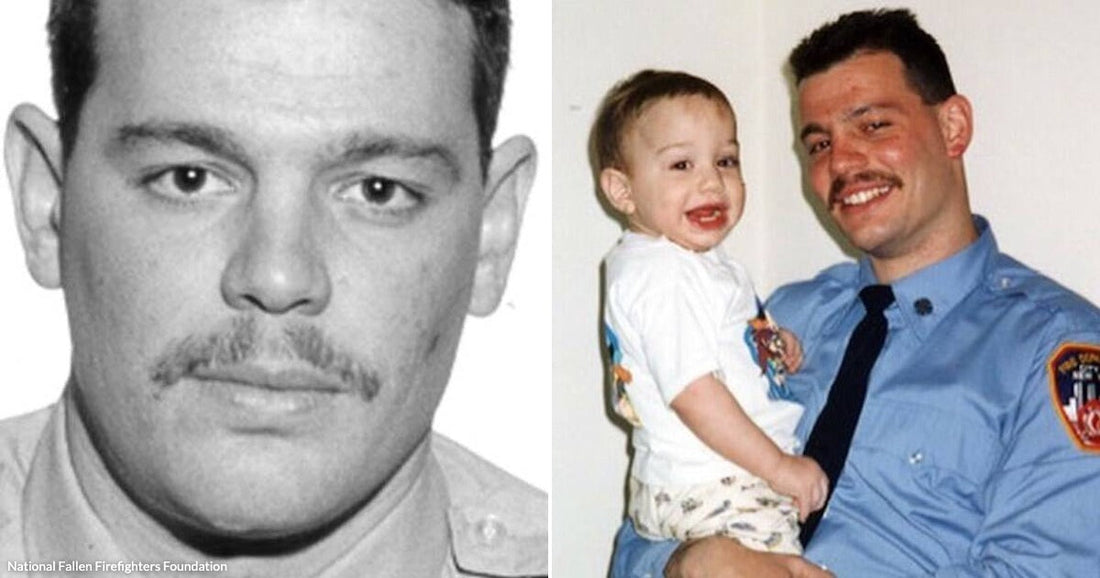
Pete Davidson has become one of the most recognizable comedians of his generation, but at the heart of his story is a quiet, devastating truth. Long before the success, headlines, and tattoos, there was a Staten Island kid who lost his dad in the September 11 attacks. That dad was Scott Davidson, a New York City firefighter who died while helping evacuate the World Trade Center Marriott Hotel. When people search for “Pete Davidson’s dad” or “Scott Davidson 9/11,” they often find a single defining fact about him: he was a firefighter who died a hero. Yet his life, as the record shows, was rich, full, and dedicated to serving others in ways that went far beyond that terrible morning.
Scott Matthew Davidson was born on January 4, 1968, in Brooklyn and moved with his family to Staten Island when he was two years old. Raised by his parents, Steven and Carla, he grew up in a tight-knit family with his brother Michael, exploring their borough with the enthusiasm of kids who felt like the world was wide open to them. From an early age, one thing in particular set Scott apart. He loved sports, and he wasn’t just enthusiastic, he was talented.

Instagram/Pete Davidson
In elementary school, he became an all-star baseball player in the Great Kills Little League. By high school, at St. Joseph By-The-Sea, his passion shifted strongly toward basketball. He played four years there and stood out enough to be named Most Valuable Player in the Jacques Classic All-Star High School game in 1986. Coaches and teammates remembered him not just for his skills, but for a relentless style of play. One of his coaches, Tony Petosa of the College of Staten Island Dolphins, recalled how Scott and teammate Tim Reardon would dive after every loose ball, sometimes even banging heads as they both went for it. That willingness to throw himself into the game says a lot about who he was.
Scott’s connection to basketball continued at the College of Staten Island, where he studied history while playing for the CSI Dolphins. There, he rose to captain of the basketball team and earned recognition as CSI’s Male Athlete of the Year. He also received the Melvin Barmel Memorial Award, a sign of how his contributions were valued both on and off the court. His college coach remembered his hustle and heart more than any individual stat line. It is no coincidence that people later described his work as a firefighter in similar terms.

After graduating in 1990, Scott earned a teacher’s license to work as a substitute. Even as he pursued graduate school for teaching, though, he had his eyes on another calling. He wanted to join the New York City Fire Department and often described firefighting as the “greatest job in America.” That aspiration sat alongside his commitment to education, illustrating how deeply he wanted to serve others, whether in the classroom or on the front lines of emergencies.
Before he earned his firefighter’s badge, Scott supported himself as a bartender at the Armory Inn in Westerleigh. His personal life was changing too. In November 1993, he and his wife, Amy, welcomed their son, Pete. Only a few months later, Scott passed the firefighter’s exam and joined the FDNY. Over the next several years, he would balance multiple roles: firefighter, substitute teacher, bartender, coach, and father.
Even with the demands of his new career, Scott never left sports behind. He played basketball in Fire Department and Jewish Community Center leagues and spent time coaching and refereeing. He worked with intramural and CYO programs at St. Clare’s School, sharing his love of the game with younger athletes. His father Steven later described him as a “true team player,” known for fearless defensive play and for always going the extra mile. That love of sports filtered down to his children. Pete became active in football, baseball, and basketball, while his younger sister Casey, born in 1997, showed early promise of her own.
By the time he was assigned to Ladder Company 118 in Brooklyn Heights, Scott had built a life that revolved around serving others and building community. He continued to keep his teaching license current and often worked as a substitute teacher in Brooklyn. He still tended bar and spent his remaining free time with his family. It was a full, if busy, life, grounded in everyday commitments that only later would be framed by the tragedy of 9/11.
On the morning of September 11, 2001, Scott was on duty at Ladder 118. At 8:46 a.m., the first plane hit the North Tower of the World Trade Center. At 9:03 a.m., a second plane struck the South Tower, and Ladder 118 was called to respond. As the fire truck sped across the Brooklyn Bridge toward lower Manhattan, a photographer captured what would become a haunting image: the last run of Ladder 118. All six men aboard that truck, including Scott, would die that day. The photograph later appeared on the front page of The Daily News, a stark witness to their final journey.
When the company arrived, they parked near West and Vesey Streets and disappeared into a landscape of ash, smoke, and confusion. The crew, including Scott, was directed to help evacuate the Marriott World Trade Center, the hotel that stood between the Twin Towers. They went inside and began guiding people to safety. According to Scott’s father, by the time the North Tower collapsed onto the hotel at 10:28 a.m., the men of Ladder 118 had helped save around 200 people who otherwise might have been trapped in the rubble. Their rig and its crew did not come back.
The aftermath of the attacks left the entire world grieving, but the impact on families like the Davidsons was especially deep. Pete was only seven years old when his father died. In later reflections, he said he was almost grateful to have been so young because he did not fully understand the scale of what had happened. As he grew older, though, the emotional weight of that loss surfaced in painful ways. He struggled with his mental health, at one point pulling out his hair and dealing with suicidal thoughts as a teenager.
Comedy became one of his avenues for coping. He started doing stand-up and eventually rose into the public eye, joining the cast of Saturday Night Live in 2014. Over the years, he has honored his father in visible and deeply personal ways. He tattooed his father’s badge number on his arm. He has spoken openly about Scott’s death and how it shaped his life. Perhaps most notably, he co-wrote and starred in the 2020 film “The King of Staten Island,” a fictionalized story inspired by his own experience. While the film changes many details, it is dedicated to his father and serves as a cinematic tribute to a man who, at 33, devoted himself to his family, his city, and his calling.
Remembering Scott Davidson solely as “Pete Davidson’s dad” or “a firefighter lost on 9/11” overlooks the full picture of who he was. The records of his life describe an athlete who never stopped hustling, a teacher who kept showing up for students, a bartender who built community in his neighborhood, a coach who invested his time in kids, and a firefighter who called his job the greatest in the world. On September 11, 2001, that dedication reached its most visible expression as he helped evacuate the Marriott World Trade Center. Yet the heroism of that day was rooted in habits he had practiced his entire life: show up, give everything, and put others first.