
🚨Urgent: Rush Aid to People & Pets in Nepal's Devastating Floods! Help Now!
Nine Year Old Aussie Dumped For Loving Too Much Finds Her Person
Guest Contributor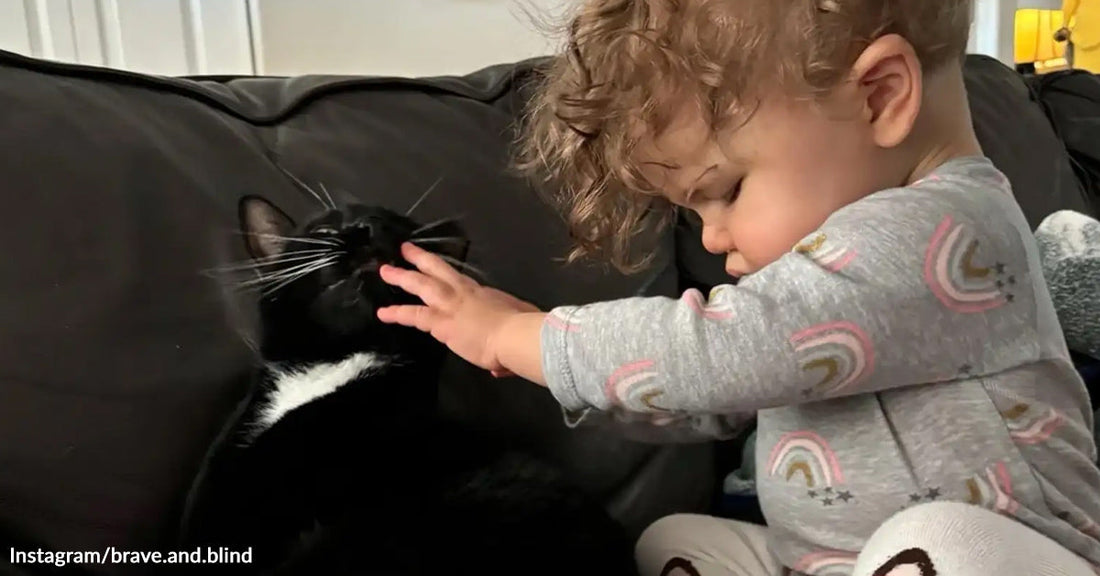
There is something quietly extraordinary about the bond between a child and an animal companion, and it is especially moving when that friendship helps bridge a challenge like blindness. In the story of Zelda, a blind toddler, and her fiercely devoted cat Wheatie, readers find an uplifting example of how a “seeing-eye cat” relationship can form naturally from love, patience, and trust.
Wheatie is a sleek black cat with bright yellow eyes and a reputation for being selective about her affections. She is not particularly fond of strangers and tends to avoid other animals. Around most of the household, she can be unpredictable and standoffish. Yet all of that changes when she is with Zelda. From the moment Zelda came home as a newborn, Wheatie treated this tiny human differently, as if she recognized something special in her.

Zelda’s parents, Alexis Wiggins and her husband, already shared their home with three cats and a dog when they welcomed their daughter. Wheatie had been with them for about two and a half years by then and was their youngest and most mercurial pet. Wiggins has said she was especially worried about how Wheatie might react to a fragile baby. Instead of staying aloof or acting out, Wheatie became the one animal that consistently stayed close to Zelda from those earliest days.
According to Wiggins, while other pets kept a cautious distance from the new arrival, Wheatie was the cat who would linger nearby. As Zelda grew and began to reach out and explore her surroundings, Wheatie did not run away when tiny hands patted her fur, tugged at her tail, or traced the outline of her body. The cat would simply lie there next to the baby, allowing Zelda to learn the shape and feel of her closest animal friend. I found this detail striking because it shows a level of patience not often associated with a cat that is otherwise wary of almost everyone.
Today, Zelda is 19 months old, and the connection between the blind toddler and her cat is even more profound. Wheatie walks alongside Zelda as she navigates the hallway, brushing against her legs so the child can track her position through touch. When Zelda lounges on the couch, Wheatie curls tightly against her, soliciting gentle pets. At night, they share a pillow, falling asleep next to each other in quiet companionship. These small, repeated moments have turned Wheatie into something like an emotional support cat, even if no one in the house ever planned it that way.
Wheatie’s behavior suggests that she may sense that Zelda is different. Wiggins remembers the frightening weeks after Zelda’s birth when she realized something was wrong with her baby’s eyes. At about five weeks old, Zelda’s eyes appeared red and swollen. One doctor dismissed the issue as allergies, but her parents trusted their instincts and sought out an eye specialist. They were initially told that Zelda might have eye cancer, which would be life-threatening. Later, specialists diagnosed chronic bilateral detached retinas. Zelda is blind.
Wiggins has said that hearing the word “blind” was painful, yet oddly a relief compared with the fear that her child could die from cancer. In that context, a diagnosis of permanent blindness felt like a difficult but survivable reality. The story does not claim that Wheatie understands the specifics of retinal detachment or visual impairment, but it is clear from her actions that she responds to Zelda with unusual care. That perception makes their seeing-eye cat dynamic feel especially meaningful.
Around Zelda, Wheatie is attuned and strategic. She appears more focused when trying to attract the toddler’s attention, guiding her subtly from place to place. In the hallway, she keeps pace at Zelda’s side, close enough for physical contact. Around other pets, Wheatie becomes Zelda’s protector. Wiggins describes how the cat will “zoom in out of nowhere” if another animal gets too close to the little girl, as if inserting herself as a barrier between her best friend and anything that might be overwhelming.
The emotional bond runs both ways. Zelda bounces with excitement and laughs when she hears Wheatie nearby. She reaches for her cat by sound and touch, tracing her cheeks and feeling the familiar shape of her head. Those giggles are a reminder of how children who are blind often rely heavily on texture, temperature, and sound to map the world around them. In this home, the warm, purring presence of a black cat has become one of the most reassuring constants in Zelda’s environment.
The nighttime routine further shows how deep this interspecies friendship runs. According to Wiggins, Zelda knows if Wheatie has not yet come into the bedroom. On those evenings, she becomes fussier, as though aware that her sleeping companion is missing. Once Wheatie arrives and settles in, Zelda relaxes. The cat’s steady presence seems to anchor her as she drifts to sleep.
In the coming weeks, Zelda will be fitted for her first mobility cane. It is an important milestone for any child who is blind, promising greater independence and a new way to move safely through the world. Wiggins jokes about the idea of Wheatie becoming a true seeing-eye cat as Zelda learns to use her cane, but also recognizes that the cat may already be providing a kind of informal guidance. Even if Wheatie never walks in a harness or follows formal training, she has already carved out a role as Zelda’s loyal shadow, guard, and friend.
What makes this story especially touching is its simplicity. There is no elaborate therapeutic program built around the cat, no staged viral moment. The relationship formed because a cautious, feisty animal decided to trust a baby and then chose, day after day, to stay close as that baby grew into a curious toddler. For families interested in emotional support animals or stories about the bond between blind children and pets, the connection between Zelda and Wheatie offers a powerful example of how compassion can develop in unexpected ways.
Wiggins says that some of her favorite moments are when Zelda and Wheatie are alone in a room together, unaware they are being watched. In those quiet intervals, she sees them simply as two young, affectionate beings bonding with one another, each offering comfort and companionship to the other. The story of Zelda and her “seeing-eye cat” is a reminder that love, once it finds its way in, can reshape even the most cautious hearts.