
Baby Rhino and Zebra Lose Their Mothers to the Same Tragedy Then Become Inseparable
Guest Contributor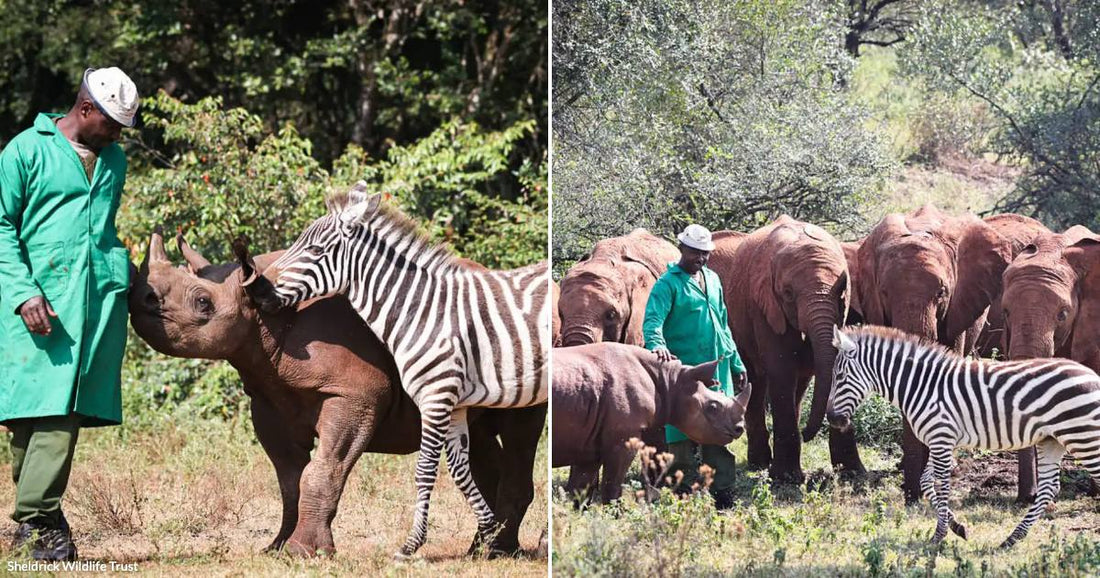
A baby rhino and a baby zebra might sound like an unlikely duo, but at the Sheldrick Wildlife Trust in Kenya, this pair has become a symbol of hope, resilience, and the quiet power of companionship. The organization is known primarily for its elephant rescues and rehabilitation efforts in East Africa, yet its nurseries are also a refuge for other orphaned and injured wildlife, including giraffes, zebras, and rhinos. In this sanctuary, a young black rhino named Tytan and a little zebra named Notty have formed a bond that has touched hearts around the world and highlighted the importance of wildlife rescue in Kenya.
Founded in 1977, the Sheldrick Wildlife Trust has grown into one of the largest and most respected wildlife rescue operations in East Africa. While elephants are at the core of its work, the Trust’s mission extends far beyond a single species. It provides a second chance for animals whose lives have been disrupted by accidents, human-wildlife conflict, and other tragedies. The Trust reports that to date it has rescued and successfully rehabilitated 20 rhinos, a notable contribution at a time when every individual matters.

Rhinos have long been under pressure from poaching and habitat loss, so it is quietly significant that Kenya’s rhino population is steadily increasing. According to Edwin, a keeper at the Sheldrick Wildlife Trust who appears in a recent video update, the country is now home to more than 2,000 rhinos. He notes this is encouraging news for conservation, and the Trust is clearly proud to be part of that positive trend. Tytan’s story is just one example of how a single rescue can ripple outward into a larger conservation narrative.
Tytan’s life changed dramatically when his mother died after falling down a cliff. At only eight months old, he was far too young to survive on his own. Edwin explains that if Tytan had not been found and brought into the Trust’s nursery, he would almost certainly have fallen prey to hyenas or lions. Instead of facing that fate, the young black rhino entered a world of careful, around-the-clock care, with keepers watching over him as he adjusted to life without his mother.

Sheldrick Wildlife Trust
Just one week after Tytan’s arrival, rescuers discovered a tiny orphaned zebra whose story echoed his own. Her mother had also fallen off a cliff and died, leaving the foal alone and vulnerable. The Sheldrick Wildlife Trust transported her to the same Nairobi nursery and named her Notty. Two young animals from different species, both suddenly without their mothers and in need of comfort, found themselves side by side in an unfamiliar environment.
According to the Trust, Tytan and Notty became best buddies almost immediately and have been inseparable ever since. Their friendship is not only charming on the surface; it also speaks to how animals can seek out and provide emotional support in unexpected ways. Tytan may be a powerful rhino in the making, yet he is still very young and, as the Trust describes, enjoys regular naps on the forest floor with Notty nearby and keepers standing watch. Their shared routine hints at a sense of security and calm that comes from being together.

Sheldrick Wildlife Trust
Life at the nursery follows a thoughtful rhythm designed to prepare animals for an eventual return to the wild whenever possible. Each day, Tytan, Notty, and the rest of the “herd” are released into the adjacent park to explore, graze, and experience natural surroundings under supervised conditions. This daily exposure helps them develop the skills and confidence they will need outside the nursery’s protective boundaries. In the evenings, Tytan returns to the nursery, where he drinks milk, snacks on alfalfa, and curls up on a bed of hay, with a keeper close by throughout the night.
The team has already planned the next stages of Tytan’s journey. When he reaches about five years of age, his keepers will begin leaving his stockade open at night. This gives him the choice to stay outside in the park as he grows more independent. Over time, they expect that he will return less frequently, gradually embracing the solitary life that is natural for black rhinos and eventually establishing a territory for himself in the wilds of Nairobi.
For now, though, Tytan is only one and a half years old and, as Edwin puts it, “lucky to be alive.” The Sheldrick Wildlife Trust envisions a future in which he roams freely as a wild rhino in Kenya, but the organization is in no hurry to rush him through the vital steps of rehabilitation. At this early stage, his days are dedicated to grazing happily in the forest, resting among the trees, and enjoying the steady presence of Notty and his human caretakers.
Tytan is not the only rhino whose life has been changed by the Trust. In a video shared on September 22, Edwin checks in on both Tytan and Maxwell, another black rhino who lives at the nursery. Maxwell is permanently blind and will remain under the Trust’s care for life. The organization describes him as the nursery patriarch, a beloved figure among the animals and staff. While Maxwell has a forever home with the Trust, Tytan is just beginning his journey, with the hope that he will one day return fully to the wild.
In the video, Notty can be seen faithfully trailing after Tytan, a small striped shadow following her sturdy friend as he moves through the sanctuary. It is a striking image of interspecies friendship, but it also reflects the Trust’s holistic approach. The team does not simply keep animals alive. They nurture their emotional wellbeing, foster natural behaviors, and encourage bonds that help each individual feel secure as they grow and heal.
The Sheldrick Wildlife Trust’s work has an impact that extends long past the moment of rescue. On Instagram, one follower asked if any non-elephant orphans ever return to visit the organization in the way ex-orphan elephants sometimes do. The Trust replied that many former orphans of all species continue to visit them throughout their wild lives. That detail suggests that, for some animals, this sanctuary is not just a place of survival, but a remembered home base that remains part of their story long after they have stepped back into the wild.
Tytan and Notty’s unlikely friendship, set against the backdrop of Kenya’s recovering rhino population and the careful work of wildlife rescuers, offers a hopeful glimpse into what dedicated conservation can achieve. It shows how a single organization can provide specialized care to individuals like Tytan, lifelong refuge to animals like Maxwell, and a safe harbor to little survivors like Notty, all while contributing to the broader goal of sustaining species in their native habitats. Their intertwined paths underscore that rescue and rehabilitation are not only about survival, but also about giving animals the space and support to grow, connect, and eventually, when possible, reclaim their place in the wild.
Read more at https://www.goodgoodgood.co/articles/baby-rhino-zebra-sheldrick-wildlife-trust